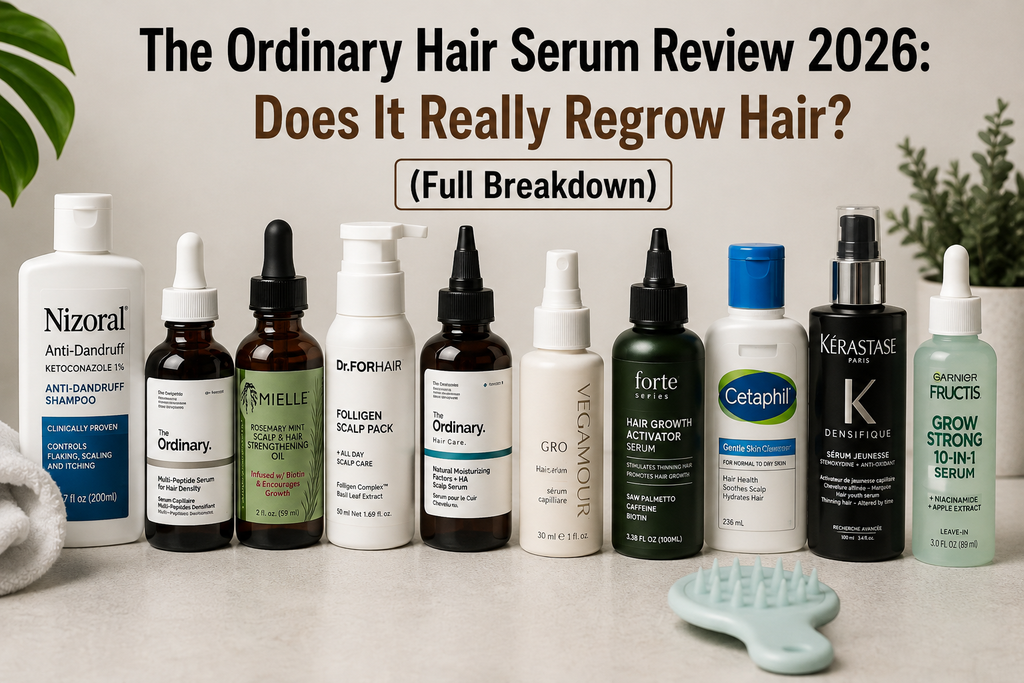
The Ordinary Multi-Peptide Serum for Hair Density has become one of the most talked-about hair products online, with the hashtag surrounding it racking up millions of views and the formula landing on multiple “best hair serum” award lists. At under $25, it promises thicker, denser, fuller-looking hair without a prescription. But affordable pricing and viral popularity don’t automatically mean a product works.
This review breaks down exactly what’s in the bottle, what the clinical research actually shows about each ingredient, how it compares to proven treatments like minoxidil, and what real, non-sponsored results tend to look like over 90 days of consistent use. If you’re trying to decide whether to add this serum to your routine or whether your money is better spent elsewhere, you’ll find the answer here.
What Is The Ordinary Multi-Peptide Serum for Hair Density?
The Multi-Peptide Serum for Hair Density is a lightweight, water-based, leave-in scalp treatment from The Ordinary, the affordable ingredient-focused skincare brand owned by Deciem. It comes in a 60 mL glass dropper bottle and is designed to be massaged into a clean, dry scalp, typically at night.
Unlike minoxidil, the serum contains no drug-grade actives. Instead, it relies on a blend of trademarked peptide and botanical complexes that are marketed to support the scalp environment and encourage the hair growth cycle rather than directly stimulating follicles the way a pharmaceutical would.
Key Ingredients in the Formula
- Redensyl — targets hair follicle stem cells to encourage new hair growth
- Procapil—supports scalp micro-circulation and helps anchor existing hair
- Capixyl — a peptide and red clover extract combination aimed at reducing follicle inflammation
- Baicapil—a blend of Chinese skullcap, soy sprout, and wheat germ extracts that targets multiple stages of the hair growth cycle
- AnaGain — pea sprout extract intended to wake up dormant follicles
- High-solubility caffeine — commonly used to counteract DHT’s effect on hair follicles
This is a noticeably broader ingredient stack than most drugstore hair serums, which usually lean on just one or two of these complexes.
Does It Actually Work? What the Clinical Data Shows
This is where most reviews stop short. Marketing pages love to cite “clinical studies,” but it’s worth knowing what those studies actually measured.
The most frequently cited trial compared a topical blend of Redensyl, Capixyl, and Procapil against 5% minoxidil in 106 men with androgenetic alopecia over 24 weeks. The peptide combination scored better than minoxidil on both researcher-rated and photographic evaluation scores, which sounds impressive. However, independent analyses of this trial have pointed out an important limitation: the primary outcomes were largely subjective (global photo assessments and investigator perception) rather than objective hair-count measurements, which makes the results more open to interpretation than a hard clinical endpoint would be. It’s also worth noting the study was funded by ingredient manufacturers, and results for individual ingredients used alone are far less conclusive than the blended-formula results widely cited in marketing.
Baicapil has its own separate six-month trial involving 61 participants, which found a meaningful shift in the ratio of growing-to-shedding hairs compared to a placebo group, suggesting more follicles moved into an active growth phase.
The honest takeaway: the ingredients in this serum have some real, published research behind them, and the combination formula has outperformed minoxidil on subjective assessment scales in at least one trial. But this is not the same volume or rigor of evidence that exists for minoxidil, which has decades of peer-reviewed, placebo-controlled research behind it. Dermatologists reviewing the product have generally described the evidence for caffeine as limited but present, while noting that evidence for several of the other botanical ingredients providing meaningful benefit on their own remains thin.
Real User Results: What to Actually Expect
Across dozens of independent reviews — not brand-sponsored posts — a consistent pattern emerges:
- 0–4 weeks: No visible change. Most users report the formula feels lightweight, sinks in without residue, and doesn’t irritate the scalp.
- 4–8 weeks: Reduced itching and flaking is one of the most commonly reported early changes, along with improved scalp comfort.
- 8–12 weeks: This is when users most commonly start noticing visible differences — fuller-looking hairlines, less obvious thinning at the part, and new baby hairs along the temples.
- 3–6 months: Users who stick with daily application report the most noticeable density and thickness improvements, particularly around the hairline and part.
Several reviewers have also used the serum off-label on eyebrows, reporting new growth in sparse areas — though this isn’t an approved or tested use of the product.
A consistent theme across reviews: results depend heavily on consistency. Users who use it sporadically report far less benefit than those who apply it nightly without gaps, and multiple reviewers note that skipping applications for even a week or two produces a visible step backward in scalp condition.
Side Effects and Tolerability
The good news is that tolerability is one of this serum’s strongest points. It’s fragrance-free and doesn’t contain the common irritants found in many scalp treatments, which is likely why most users report no adverse reaction at all.
That said, a minority of users report the following:
- Mild scalp tackiness or a slightly sticky feel immediately after application
- Temporary tingling from the caffeine content
- Rare reports of scalp sensitivity in people with generally reactive skin
Because it isn’t a drug, it doesn’t carry minoxidil’s known side effects like initial shedding, unwanted facial hair growth, or the requirement for indefinite use to maintain results. As with any new topical product, it’s worth patch-testing on a small area of skin before full application and consulting a dermatologist or trichologist first if you have an existing scalp condition.
The Ordinary Hair Serum vs. Minoxidil
| The Ordinary Multi-Peptide Serum | 5% Minoxidil | |
|---|---|---|
| Type | Cosmetic peptide/botanical blend | FDA-approved drug |
| Price | ~$20–24 for 60 mL | ~$15–40/month depending on brand |
| Evidence base | Limited but growing published research | Decades of peer-reviewed clinical trials |
| Onset of visible results | 8–12+ weeks | 8–16 weeks |
| Common side effects | Minimal; occasional tackiness | Initial shedding, scalp irritation, unwanted hair growth in some users |
| Best for | Early thinning, scalp health, low-commitment maintenance | Diagnosed androgenetic alopecia, more advanced thinning |
If you have a clinically diagnosed pattern hair loss condition, minoxidil remains the more heavily evidenced option. The Ordinary’s serum is better positioned as a lower-risk, lower-cost option for early-stage thinning, general scalp health, or as a complementary step alongside other treatments—not necessarily a direct replacement for a proven drug.
How to Use It for the Best Results
- Apply to a clean, dry scalp — product buildup or oil on the scalp can reduce absorption.
- Use a minimum of three to four drops, focusing on the areas of concern (hairline, part, crown).
- Massage in thoroughly rather than just dropping it on top of the hair.
- Apply nightly for consistency; most visible results are reported with daily use over 8–12+ weeks.
- Avoid layering with heavy oils or leave-in conditioners immediately afterward, which can dilute absorption.
- Track progress with monthly photos taken in the same lighting and angle—visible changes are gradual and easy to miss without a comparison baseline.
A single 60 mL bottle typically lasts one to three months depending on how much you use per application and how consistently you apply it.
Who Should — and Shouldn’t — Try This Serum
Good fit for:
- People in the earlier stages of thinning or shedding
- Anyone wanting a lower-cost, lower-commitment entry point before considering prescription options
- People with sensitive scalps who’ve reacted poorly to stronger topical treatments
- Those looking to improve general scalp condition (reduced flaking, itching) alongside density goals
Probably not the right fit for:
- Anyone with advanced, long-standing pattern baldness where a dermatologist has already recommended a clinical-strength treatment
- People looking for fast, dramatic results within a few weeks
- Anyone hoping to use it as a substitute for addressing an underlying medical cause of hair loss (thyroid issues, iron deficiency, hormonal conditions)—a doctor should rule these out first
Frequently Asked Questions
How long until I see results from The Ordinary hair serum? Most users report early comfort improvements (less itching, less flaking) within four to eight weeks, with visible density changes typically appearing between eight and twelve weeks of consistent nightly use.
Can I use The Ordinary hair serum with minoxidil? Many users layer the two, applying minoxidil and the peptide serum at different times of day. There’s no known negative interaction, but it’s worth checking with a dermatologist, particularly if you have a sensitive scalp.
Does The Ordinary hair serum cause shedding like minoxidil? No consistent pattern of initial shedding has been reported with this serum, which is one of its advantages over minoxidil for people who find that early shedding phase discouraging.
Is it safe for color-treated or chemically processed hair? Yes—reviewers with colored and chemically treated hair report no adverse interaction, though as with any scalp product, patch testing is a sensible first step.
How does it compare to more expensive serums like Vegamour? The Ordinary’s version costs roughly a third of Vegamour’s price for a similar volume and shares a similar botanical-and-peptide approach rather than pharmaceutical actives, making it one of the more budget-friendly options in this category.
Final Verdict
The Ordinary Multi-Peptide Serum for Hair Density earns its popularity honestly: it’s backed by more published (if imperfect) research than most drugstore hair serums, it’s well tolerated by the vast majority of users, and it costs a fraction of premium alternatives. It is not a proven replacement for minoxidil in diagnosed androgenetic alopecia, and anyone with significant, ongoing hair loss should still get a professional diagnosis first. But as a low-risk, budget-friendly option for early thinning, scalp health, and general hair density—used consistently for at least three months—it holds up well against both the marketing hype and the more skeptical scrutiny of independent reviewers.
Sources referenced in this article:
- Hims — The Ordinary Hair Serum Review: A Doctor Weighs In
- International Journal of Trichology — Topical Alternatives for Hair Loss
- PubMed — Safety and efficacy of REGENDIL infused hair growth product
- PureWow — The Ordinary Hair Serum Review
- TODAY — The Ordinary Hair Serum Review