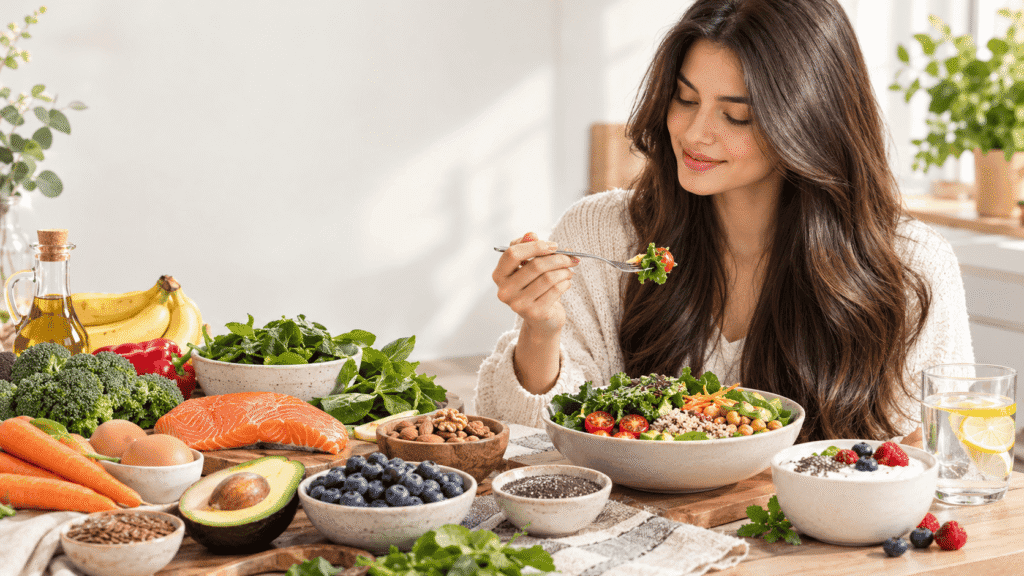
Short answer: Hair growth nutrition means getting enough protein, iron, zinc, omega-3 fats, and vitamins C, D, and biotin to support healthy hair follicles. A balanced diet can reduce shedding caused by deficiencies, but it cannot override genetics or make hair grow faster than its natural rate. Limits: nutrition supports healthy hair, but it cannot fix every type of hair loss on its own — food is not a magic cure.
Hair growth nutrition means eating enough protein, iron, zinc, omega-3 fats, and vitamins C, D, and biotin to support healthy hair follicles. A balanced diet can reduce shedding caused by deficiencies, but it cannot override genetics or make hair grow faster than its natural rate.
When your hair starts looking dry, thin, or begins shedding more than usual, it is easy to blame shampoo, oil, or styling products. But hair health is also connected to what happens inside your body.
Your hair grows from follicles in the scalp, and those follicles need a regular supply of nutrients to function properly. Protein, iron, zinc, healthy fats, and several vitamins all play a role in maintaining the normal hair-growth cycle. A diet that is too low in calories or missing important nutrients can contribute to hair thinning and shedding.
However, food is not a magic cure. Hair loss can also be caused by genetics, hormones, stress, illness, medications, thyroid problems, or scalp conditions. Nutrition supports healthy hair, but it cannot fix every type of hair loss on its own.
This guide explains which nutrients matter for hair growth, which foods provide them, and how to build simple meals that support stronger, healthier hair over time.
Why Nutrition Matters for Hair Growth?

How Hair Growth Nutrition Supports the Hair-Growth Cycle
Hair is not just something you wash, oil, or style. It is a living structure that grows from follicles beneath the scalp. Each follicle goes through a natural cycle of growth, rest, and shedding, and this cycle depends on your overall health and nutrient supply.
Hair is made mostly of keratin, a protein. This is why protein is one of the most important nutrients for hair. If your diet does not provide enough protein, your body may prioritize using protein for more essential functions, which can affect hair growth and strength.
Iron is another key nutrient because it helps red blood cells carry oxygen throughout the body. Hair follicles need oxygen and nutrients to support normal growth. Low iron levels can cause hair to shed faster than it grows in some people.
Zinc also supports normal hair-tissue growth and repair, while omega-3 fatty acids and other healthy fats help maintain scalp health. Vitamins such as A, B, C, D, and E also support the body’s overall processes that keep hair strong.
Nutrition Supports Hair—It Does Not Force Growth
A healthy diet can help your hair grow stronger and stay healthier, but it cannot make hair grow beyond its natural speed. If your body already has enough nutrients, eating extra protein, biotin, or hair vitamins will not automatically produce faster growth.
The real benefit of good nutrition is prevention and support:
- It provides the building blocks for keratin and new hair.
- It helps maintain healthy oxygen delivery through iron.
- It supports scalp health through healthy fats and micronutrients.
- It may reduce shedding caused by nutrient deficiencies.
- It helps protect hair from becoming weak or brittle due to poor diet.
What Happens When Nutrition Is Poor?
Hair is one of the first places where poor nutrition may become visible. A diet that is very low in calories, protein, iron, or healthy fats can lead to dry, brittle hair or increased shedding.
This does not mean one missed meal will damage your hair. Hair problems usually appear when poor nutrition continues for weeks or months, or when the body has a real deficiency. Crash diets, extreme calorie restriction, and rapid weight loss can also disrupt the normal hair-growth cycle.
Key Nutrients for Healthy Hair
| Nutrient | Why it matters | Food sources |
|---|---|---|
| Protein | Hair is made of keratin, so protein provides its main building block. | Eggs, chicken, fish, yogurt, lentils, beans, and tofu. |
| Iron | Helps carry oxygen to cells, including hair follicles. | Red meat, chicken, fish, lentils, beans, spinach, and pumpkin seeds. |
| Zinc | Supports hair-tissue growth, repair, and keratin production. | Oysters, shellfish, meat, eggs, chickpeas, and pumpkin seeds. |
| Omega-3 fats | Support scalp health and provide healthy fats. | Salmon, sardines, mackerel, walnuts, chia seeds, and flaxseeds. |
| Vitamin C | Supports collagen production and helps absorb plant-based iron. | Oranges, berries, bell peppers, tomatoes, and broccoli. |
| Vitamin D | Important for overall health; low levels may be linked with some hair-loss cases. | Fatty fish, egg yolks, fortified milk, and fortified cereals. |
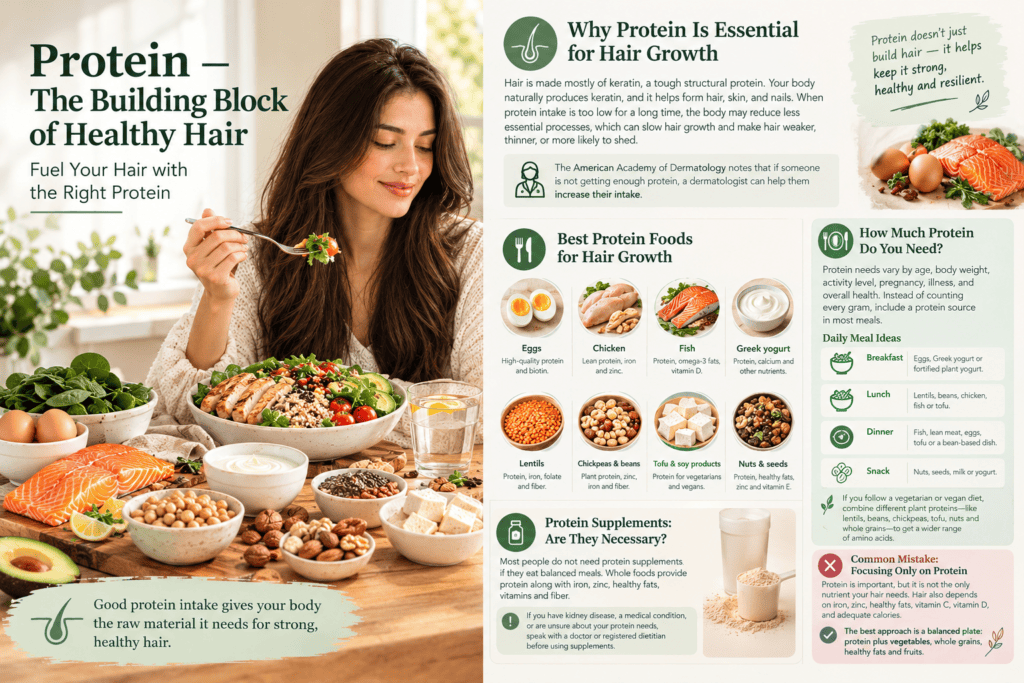
Protein—The Building Block of Healthy Hair
Why Protein Is Essential for Hair Growth
Hair is made mostly of keratin, a tough structural protein. Your body naturally produces keratin, and it helps form hair, skin, and nails. Because hair depends on protein, eating enough protein-rich foods gives your body the raw material it needs to maintain strong hair.
When protein intake is too low for a long time, the body may reduce less essential processes to protect vital organs. Hair growth can slow down, and existing hair may become weaker, thinner, or more likely to shed. The American Academy of Dermatology notes that if someone is not getting enough protein, a dermatologist can help them increase their intake.
Best Protein Foods for Hair Growth
You do not need expensive protein powders to support hair health. Most people can get enough protein from everyday foods.
How Much Protein Do You Need?
Protein needs vary by age, body weight, activity level, pregnancy, illness, and overall health. Instead of counting every gram, a simple habit is to include a protein source in most meals.
For example:
- Breakfast: Eggs, Greek yogurt, or fortified plant yogurt.
- Lunch: Lentils, beans, chicken, fish, or tofu.
- Dinner: Fish, lean meat, eggs, tofu, or a bean-based dish.
- Snack: Nuts, seeds, milk, or yogurt.
If you follow a vegetarian or vegan diet, combine different plant proteins through the day—such as lentils, beans, chickpeas, tofu, nuts, and whole grains—to get a wider range of amino acids.
Protein Supplements: Are They Necessary?
Most people do not need protein supplements for hair growth if they eat balanced meals. Whole foods provide protein along with iron, zinc, healthy fats, vitamins, and fiber.
Protein powder can be convenient for people who struggle to meet their needs through food, but it should not replace meals. If you have kidney disease, a medical condition, or are unsure about your protein needs, speak with a doctor or registered dietitian before using supplements.
Common Mistake: Focusing Only on Protein
Protein is important, but it is not the only nutrient your hair needs. Hair also depends on iron, zinc, healthy fats, vitamin C, vitamin D, and adequate calories. Eating protein while following a very restrictive diet may not solve hair shedding if other nutrients are missing.
The best approach is a balanced plate: protein plus vegetables, whole grains, healthy fats, and fruits.
Iron—Oxygen Supply for Hair Follicles
Why Iron Matters for Hair Growth
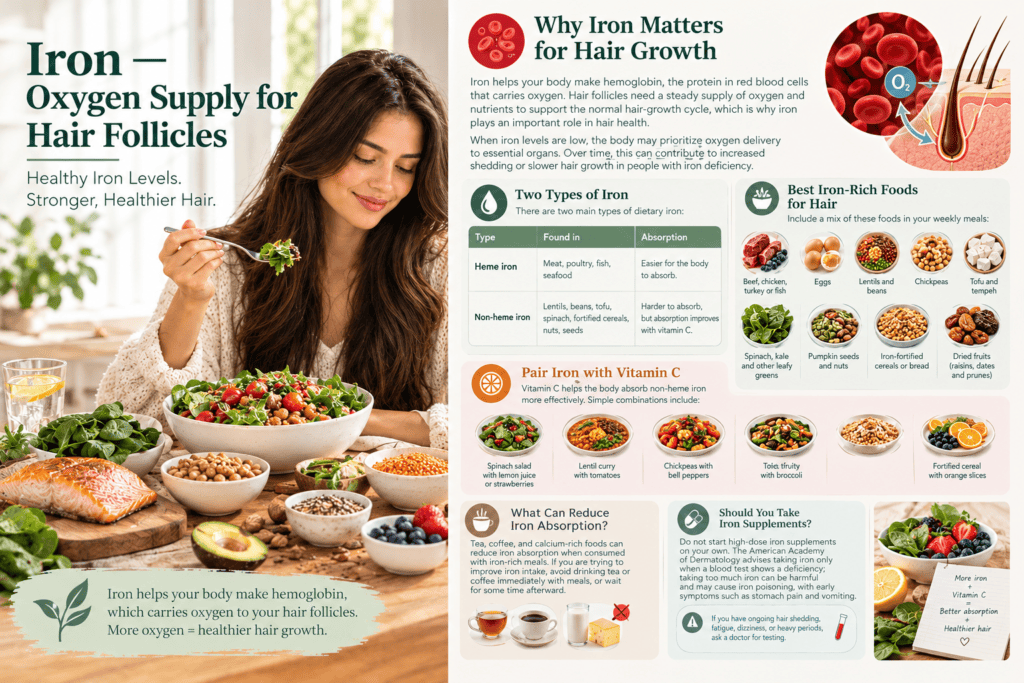
Iron helps your body make hemoglobin, the protein in red blood cells that carries oxygen. Hair follicles need a steady supply of oxygen and nutrients to support the normal hair-growth cycle, which is why iron plays an important role in hair health.
When iron levels are low, the body may prioritize oxygen delivery to essential organs. Over time, this can contribute to increased shedding or slower hair growth in people with iron deficiency.
Two Types of Iron
There are two main types of dietary iron:
| Type | Found in | Absorption |
|---|---|---|
| Heme iron | Meat, poultry, fish, seafood | Easier for the body to absorb. |
| Non-heme iron | Lentils, beans, tofu, spinach, fortified cereals, nuts, seeds | Harder to absorb, but absorption improves with vitamin C. |
Best Iron-Rich Foods for Hair
Include a mix of these foods in your weekly meals:
- Beef, chicken, turkey, or fish
- Eggs
- Lentils and beans
- Chickpeas
- Tofu and tempeh
- Spinach, kale, and other leafy greens
- Pumpkin seeds and nuts
- Iron-fortified cereals or bread
- Dried fruits such as raisins, dates, and prunes
Pair Iron with Vitamin C
If you eat mostly plant-based iron foods, pair them with vitamin C. Vitamin C helps the body absorb non-heme iron more effectively.
Simple combinations include:
- Spinach salad with lemon juice or strawberries
- Lentil curry with tomatoes
- Chickpeas with bell peppers
- Tofu stir-fry with broccoli
- Fortified cereal with orange slices
What Can Reduce Iron Absorption?
Tea, coffee, and calcium-rich foods can reduce iron absorption when consumed with iron-rich meals. If you are trying to improve iron intake, avoid drinking tea or coffee immediately with meals, or wait for some time afterward.
Should You Take Iron Supplements?
Do not start high-dose iron supplements on your own. The American Academy of Dermatology advises taking iron only when a blood test shows a deficiency; taking too much iron can be harmful and may cause iron poisoning, with early symptoms such as stomach pain and vomiting.
If you have ongoing hair shedding, fatigue, dizziness, or heavy periods, ask a doctor for testing. A blood test can check whether low iron or another issue is contributing to hair loss.
Zinc—Hair Repair and Scalp Support
What Zinc Does for Hair
Zinc is an essential mineral, meaning your body cannot make it and must get it from food. It supports many processes involved in cell growth, immune function, wound healing, and tissue repair.
For hair, zinc supports the normal growth and repair cycle of hair follicles. Research reviews note that hair loss can be a sign of established zinc deficiency, and correcting that deficiency may help hair regrow.
Zinc Deficiency and Hair Loss
Zinc deficiency can cause hair thinning or hair loss, along with skin changes, nail changes, diarrhea, and frequent infections in some cases.
However, this does not mean that extra zinc will make hair grow faster in someone who already has normal zinc levels. Studies show limited evidence that zinc supplements improve hair growth in people without a documented deficiency.
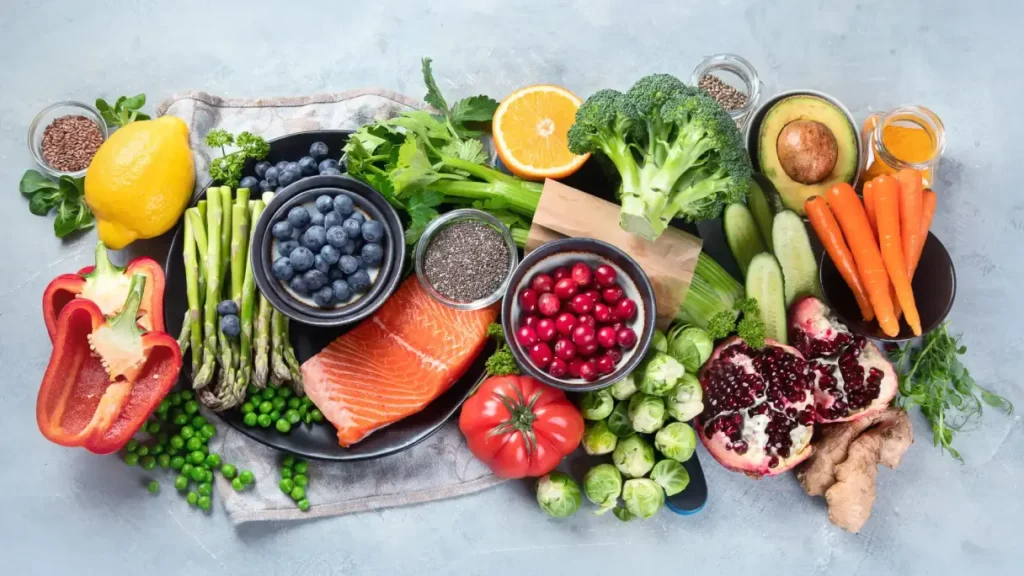
Best Zinc-Rich Foods
A Note for Vegetarians and Vegans
Plant-based zinc sources are healthy, but they contain phytates, compounds that can reduce zinc absorption. This does not mean plant-based eaters cannot get enough zinc; it means they should include zinc-rich foods regularly and eat a varied diet.
Good plant-based options include lentils, chickpeas, baked beans, tofu, pumpkin seeds, cashews, almonds, and fortified cereals.
Zinc Supplements: Use Caution
Zinc supplements may help when a doctor confirms deficiency, but high doses can cause nausea, vomiting, diarrhea, and long-term problems such as interference with iron and copper balance.
Omega-3 Fats and Healthy Fats — Nourishment for the Scalp
Why Healthy Fats Matter for Hair
Healthy fats are not the enemy of hair health. Your body needs them to absorb fat-soluble vitamins, support cell membranes, and maintain overall scalp health. Omega-3 fatty acids are especially important because the body cannot make them efficiently on its own, so they must come from food.
Omega-3s also support normal immune and inflammatory responses. While they are not a direct hair-loss treatment, including them in a balanced diet helps create the internal conditions needed for healthy hair and scalp.
Types of Omega-3 Fats
There are three main omega-3 fatty acids:
| Type | Main sources | Why it matters |
|---|---|---|
| ALA | Flaxseed, chia seeds, walnuts, soybean oil, canola oil | Plant-based omega-3; the body converts some ALA into EPA and DHA, but conversion is limited. |
| EPA | Fatty fish and seafood | Supports normal inflammatory and cardiovascular processes. |
| DHA | Fatty fish, seafood, algae-based sources | Important for cell membranes and overall health. |
Best Omega-3 Foods for Hair and Scalp
Add these foods regularly rather than relying only on supplements:
- Salmon
- Sardines
- Mackerel
- Herring
- Trout
- Tuna
- Walnuts
- Chia seeds
- Flaxseeds or ground flaxseed
- Hemp seeds
- Soybeans and edamame
- Avocado
- Olive oil
Fatty fish such as salmon, mackerel, sardines, and herring are especially good sources of EPA and DHA. Plant foods such as walnuts, chia seeds, and flaxseeds provide ALA omega-3s.
How to Add Omega-3s to Daily Meals
You do not need a complicated diet. Small, repeatable additions work best:
- Add ground flaxseed to oatmeal, yogurt, or a smoothie.
- Sprinkle chia seeds over fruit or yogurt.
- Eat a small handful of walnuts as a snack.
- Use olive oil for salads and cooking.
- Include salmon, sardines, or mackerel a few times per week.
- Add avocado to toast, salads, or rice bowls.
For people who eat fish, Cleveland Clinic suggests at least two servings of fish per week as a practical way to get omega-3s.
Fish Oil Supplements: Do You Need Them?
Fish oil can be useful for some people, especially when a doctor recommends it for specific health reasons. But supplements are not automatically better than food, and their benefits for hair growth are not clearly proven for everyone.
Most experts agree that getting omega-3s from foods is the best first approach. If you take blood thinners, have a bleeding disorder, are pregnant, or take regular medication, speak with a doctor before starting fish oil supplements.
Other Healthy Fats for Hair
Omega-3s are important, but they are not the only healthy fats. Include a variety of unsaturated fats in your diet:
- Olive oil
- Avocado
- Almonds
- Cashews
- Peanut butter or natural nut butter
- Sunflower seeds
- Pumpkin seeds
These foods provide energy and help the body absorb vitamins A, D, E, and K. A balanced intake of healthy fats supports both scalp health and overall nutrition.
Vitamin C, Vitamin D, and Biotin — Vitamins That Support Hair Health
Vitamin C: Iron Absorption and Collagen Support
Vitamin C is important for hair health because it supports collagen production and helps the body absorb iron from plant-based foods. This matters because iron carries oxygen through the blood, and hair follicles need oxygen and nutrients for normal growth.
If you eat lentils, beans, spinach, tofu, or fortified cereals, add a vitamin C-rich food to the same meal. This can improve the absorption of non-heme iron, the type of iron found in plant foods.
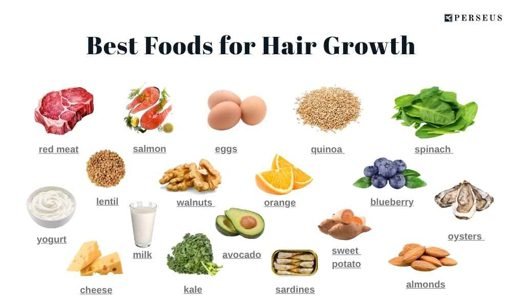
Good vitamin C foods include:
- Oranges, grapefruit, and lemons
- Strawberries
- Kiwi
- Bell peppers
- Broccoli
- Tomatoes
- Cantaloupe
- Baked potatoes
Simple pairing: Eat spinach and lentils with lemon juice, tomatoes, or bell peppers. Avoid drinking tea or coffee with the meal, because they can reduce iron absorption.
Vitamin D: A Common Deficiency to Check
Vitamin D supports bone health, immune function, and many other body processes. Very few foods naturally contain vitamin D, so many people get it from sunlight, fortified foods, or supplements.
Some research has found a connection between low vitamin D levels and certain types of hair loss, but that does not mean vitamin D supplements will regrow hair for everyone. If you have ongoing shedding, ask a doctor whether a vitamin D blood test is appropriate.
Food sources of vitamin D include:
- Salmon, trout, tuna, and mackerel
- Egg yolks
- Fortified milk or plant milk
- Fortified breakfast cereals
- Fortified orange juice or yogurt
- Cheese and beef liver in small amounts
Do not take high-dose vitamin D without testing or medical advice. Too much vitamin D can be harmful over time.
Biotin: Popular, But Not a Magic Hair Vitamin
Biotin, also called vitamin B7, is often marketed for hair, skin, and nails. It is true that biotin deficiency can cause hair loss, but true deficiency is uncommon in people who eat a varied diet.
There is currently no strong evidence that biotin supplements improve hair growth or hair quality in people who are not deficient.
Biotin-rich foods include:
If you take biotin supplements, tell your doctor before blood tests. High doses of biotin can interfere with certain laboratory test results.
Vitamins Support Hair—They Do Not Replace a Balanced Diet
Vitamin C, vitamin D, and biotin all play useful roles, but no single vitamin can fix hair loss caused by genetics, hormones, stress, illness, or scalp conditions. A balanced diet that includes protein, iron, zinc, healthy fats, fruits, and vegetables is more effective than relying on one supplement
When to See a Professional
See a doctor or dermatologist if you notice:
- Sudden or heavy shedding
- Bald patches
- A rapidly receding hairline
- Scalp pain, flaking, redness, or sores
- Thinning that continues despite a balanced diet
Hair loss can be related to genetics, hormones, thyroid issues, stress, medications, autoimmune conditions, or scalp problems. The right treatment depends on the cause.hair-care+1
Bottom Line
Healthy hair starts with consistent basics: enough protein, iron-rich foods, zinc, healthy fats, fruits, vegetables, and adequate hydration. Supplements may help when a real deficiency exists, but they are not a replacement for a balanced diet
Want to keep learning? Browse all our hair care guides, read our honest product reviews, and explore more nutrition articles for healthy hair.