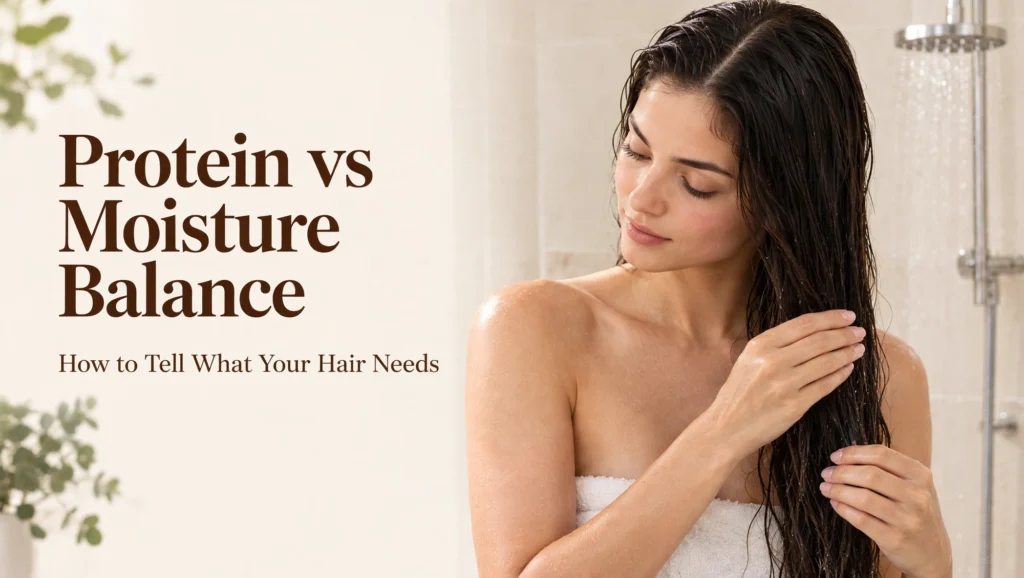
Short answer: Protein vs moisture balance for hair breakage is simple in principle: hair needs both. Too much protein makes hair stiff, dry, and snap-prone; too much moisture makes it soft, stretchy, and mushy, and it also snaps. The fix is not more of everything — it is to read your hair’s feel, stretch, and breakage pattern, then adjust one side at a time for 2-3 weeks.
Researcher note: Research-based summary, not a doctor’s advice. This is a routine guide, not a diagnosis. Protein overload is usually from overuse of protein treatments, not from a normal shampoo; moisture overload is usually from over-conditioning or no protein at all.
What Protein Does, What Moisture Does
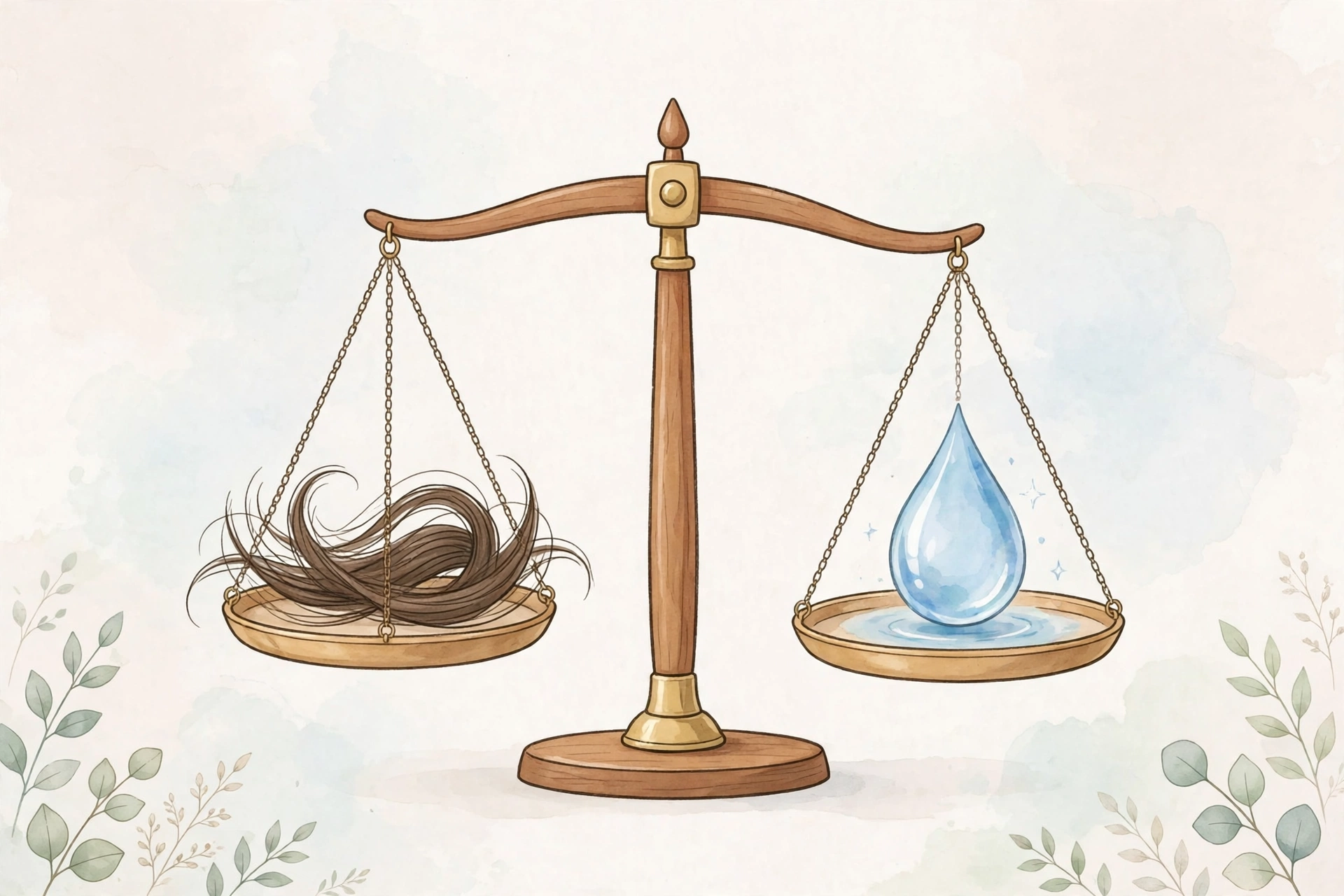
Protein (keratin, wheat, soy, silk proteins) fills gaps in damaged cuticle and adds structure. Moisture (water, humectants, oils, conditioners) adds flexibility and slip. Healthy hair stretches a little and returns; it does not snap dry or stretch like gum. Damaged hair loses both structure and flexibility, which is why balance, not one ingredient, matters.
The American Academy of Dermatology’s healthy hair tips make the same point from the routine side: gentle washing and conditioning habits protect the hair you already have.
Signs of Too Much Protein vs Too Much Moisture
| Sign | Too much protein | Too much moisture |
|---|---|---|
| Feel when dry | Stiff, rough, straw-like | Soft, limp, no body |
| Stretch test (wet strand) | Snaps quickly, little stretch | Stretches a lot, feels gummy, then snaps |
| Breakage pattern | Short, dry snaps | Stretchy, mushy snaps |
| Likely cause | Protein mask + protein shampoo every wash | Heavy conditioner, no protein, over-washing with conditioner only |
If the “too much protein” column sounds familiar, Healthline’s guide to too much protein in hair walks through the causes and how to reverse them.
How to Fix It, One Side at a Time
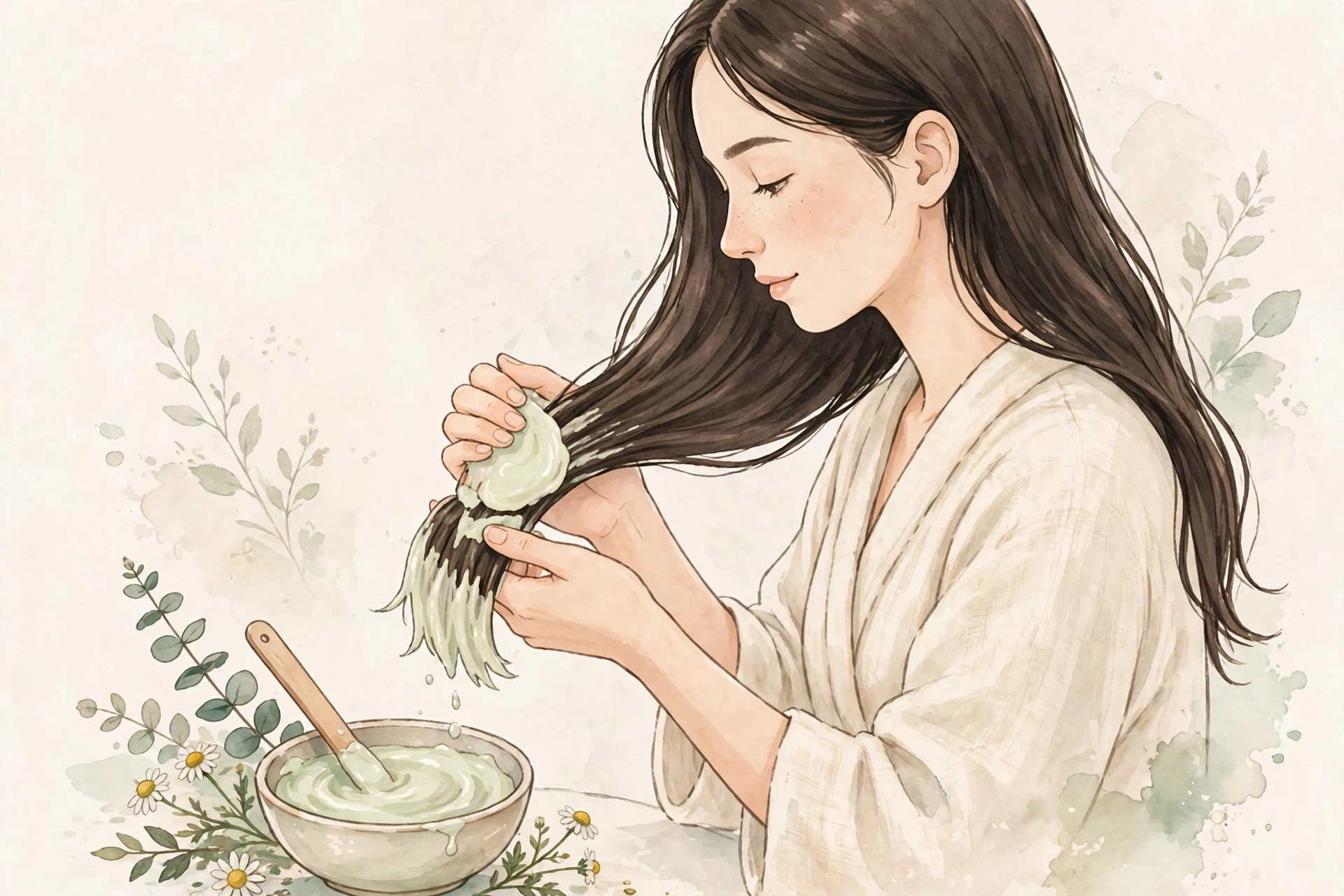
If your hair is protein-heavy: pause protein treatments for 2-3 weeks and switch to a moisturising conditioner while you choose a gentle shampoo for breakage-prone hair. Wash gently and give the stiffness time to ease.
If your hair is moisture-heavy: add one light protein treatment every 1-2 weeks, switch to a lighter conditioner, and avoid heavy oils every day — our guide on coconut oil for hair breakage explains when oils help and when they weigh hair down.
Change only one side, then judge in 2-3 weeks by feel, stretch, and snap count before adjusting again. Do not add protein and moisture treatments on the same day and expect a clear answer.
A Simple 2-3 Week Routine
- Week 1: note your hair’s feel when dry, the wet-strand stretch test result, and roughly how many snaps you find. Also check how often to wash breakage-prone hair so wash frequency is not the hidden variable.
- Week 2: adjust one side only — pause protein, or add one light protein treatment.
- Week 3: re-check feel, stretch, and snap count against your Week 1 notes.
Keep shampoo gentle throughout; a shampoo alone does not fix balance, but a harsh shampoo makes both problems worse.
Verdict
Balance is not a product, it is a habit: read the feel, adjust one side, wait 2-3 weeks, repeat. Most breakage-prone hair does best with regular moisture plus occasional light protein — not daily protein, and not protein-free everything. Pair the routine with a gentle anti-breakage shampoo such as the OGX Anti Hair Fall Coconut Caffeine Shampoo and you cover both the cleansing and the conditioning side of the equation.
Frequently Asked Questions
How do I do the stretch test?
Take one wet strand and stretch it gently. Healthy hair stretches a little and returns; a stiff strand that snaps means protein-heavy hair, and a gummy strand that stretches and stretches means moisture-heavy hair.
Does shampoo cause protein overload?
Rarely on its own — overload usually comes from repeated protein masks and treatments, not from a normal shampoo.
Is protein bad for hair?
No — hair is made of protein. The problem is too much of it, too often, without enough moisture.
Can I fix balance in one wash?
No — give it 2-3 weeks of consistent adjustment before judging the result.
When should I see a doctor?
Sudden, heavy, or patchy loss, or scalp pain or sores — balance does not explain those, so get professional advice.
▶ Watch on YouTube: Healthy hair care tips from dermatologists — board-certified dermatologists explain how washing and conditioning habits protect hair. Video credit: American Academy of Dermatology.