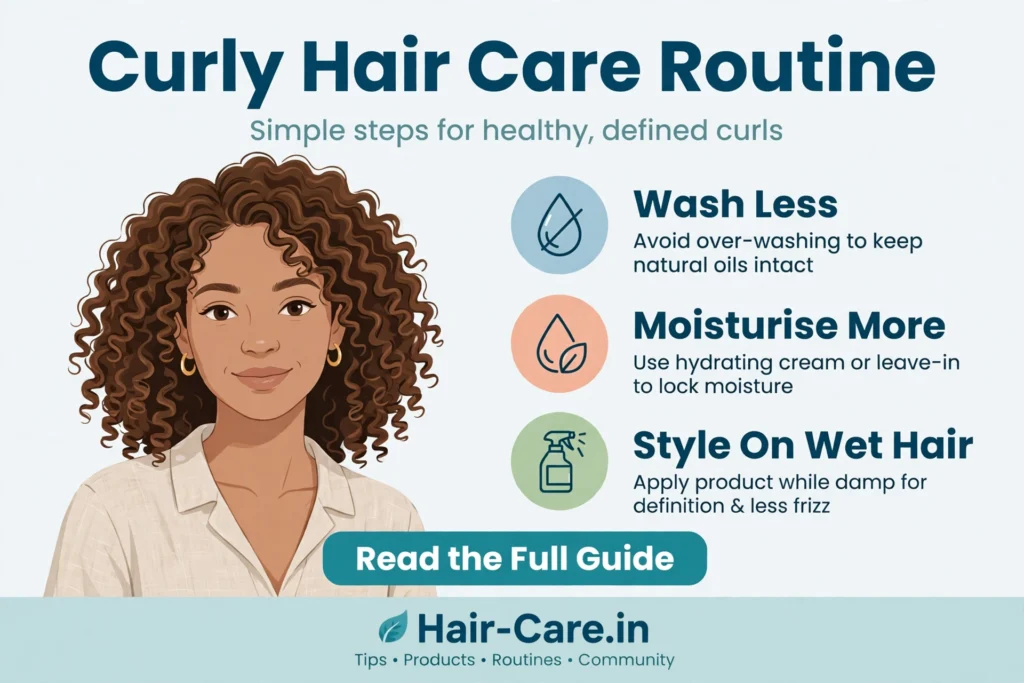
Short answer: A curly hair care routine works best when it respects one simple fact: curly hair is drier than straight hair because the scalp’s natural oils struggle to travel down twisted strands. Wash 1 to 3 times a week with a sulfate-free shampoo focused on the scalp, condition generously, detangle only when your hair is wet and coated with conditioner, and style on soaking wet hair with a leave-in conditioner plus a curl cream or gel. Dry gently, either by air-drying or with a diffuser on low heat, and never brush dry curls. I am a hair-care researcher, not a doctor: this guide summarises widely reported routine principles and published dermatologist tips, not medical advice.
Why curly hair needs a different routine
Curly hair is not simply straight hair with a bend in it. Each twist and turn in a curl is a point where the strand’s outer cuticle layer lifts slightly, which lets moisture escape more easily and lets humidity in. That is why curls tend to be drier, frizz more readily, and tangle more often than straight hair. The scalp’s natural oils, which keep straight hair conditioned from root to tip, have a much harder journey along a coiled strand, so the ends of curly hair are usually the driest and most fragile part.
This is also why routines designed for straight hair so often fail curls. Daily washing strips away the little oil that does reach the lengths. Brushing dry hair breaks the curl pattern into frizz. High-heat blow-drying without protection dries out the cuticle further. A good curly hair care routine does the opposite: it washes less often, adds moisture at every step, handles hair gently while wet, and protects curls between wash days. Dermatologists who treat textured hair make the same points in their published guidance, including the 6 curly hair tips from dermatologists shared through the American Academy of Dermatology.
One more thing to know before you start: not all curls behave the same. Loose waves, defined ringlets, and tight coils differ in how quickly they dry out and how much product they can absorb. Think of this routine as a framework, then adjust the amounts and the wash frequency to what your own hair tells you. If frizz is your main struggle, our companion guide on frizzy hair: causes and how to control it goes deeper into why frizz happens and what calms it.
Wash day, step by step
Wash day is the foundation of the whole routine. Done gently, it cleans the scalp without stripping the lengths; done harshly, no amount of styling product can rescue the result. Here is the sequence I recommend based on the routine principles most consistently reported across curly-hair guides and wash tutorials such as Shower Envy’s curly hair wash guide.
- Soak thoroughly with lukewarm water. Hot water roughs up the cuticle and speeds moisture loss, so keep the water comfortably warm, not hot. Make sure every strand is fully saturated before any product touches your hair.
- Shampoo the scalp, not the lengths. Use a sulfate-free shampoo and massage it into the scalp with your fingertips, not your nails, for a minute or two. The small amount of lather that runs down the lengths is enough to clean them. Piling the lengths on top of your head and scrubbing creates tangles and breakage.
- Condition generously from mid-length to ends. Apply a generous amount of conditioner where your hair is driest, and leave it for 3 to 5 minutes. This is the step that puts back the moisture shampoo removed. If your ends feel rough, they need more conditioner, not more shampoo.
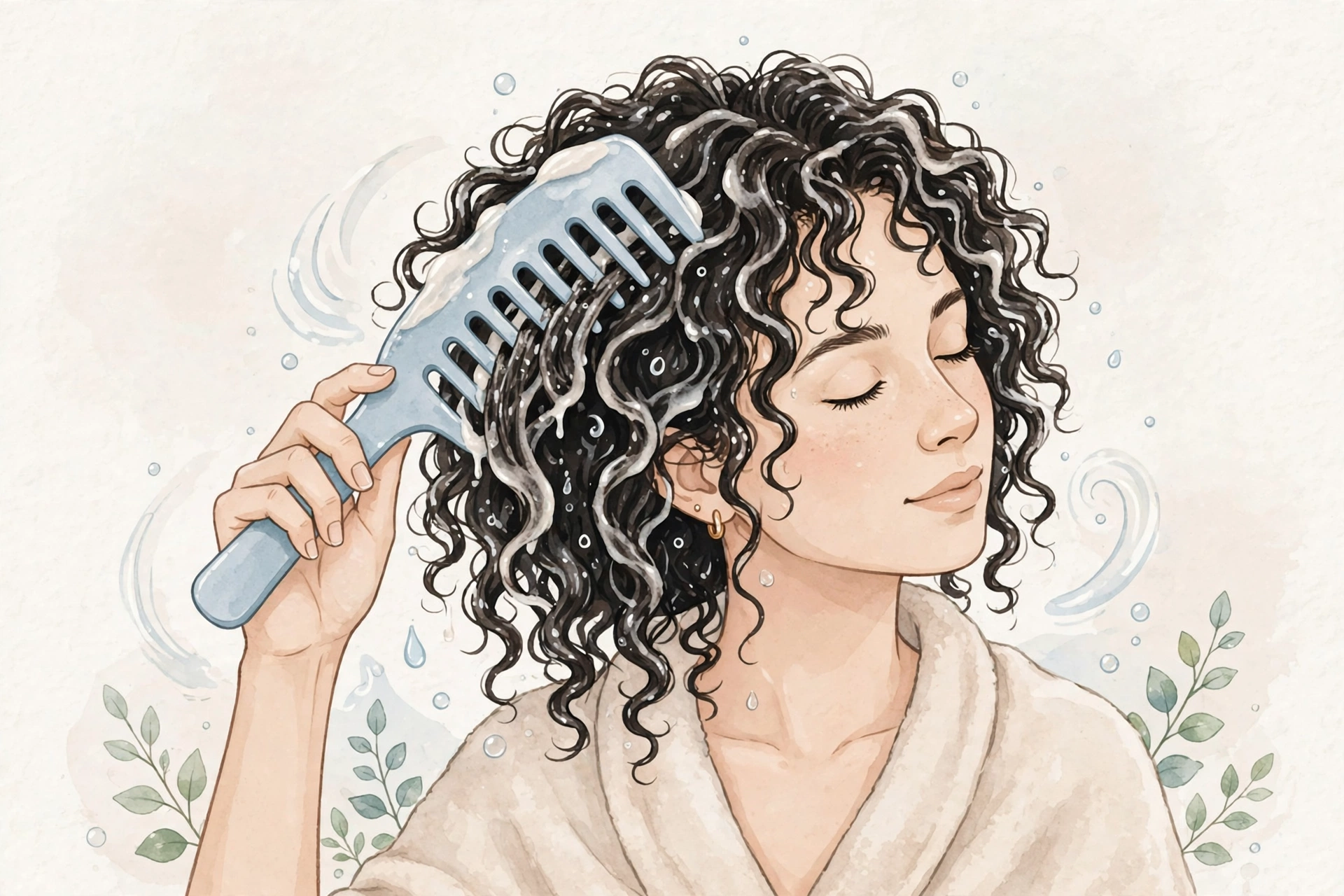
- Detangle only now, while the conditioner is in. With conditioner coating every strand, work through tangles using your fingers or a wide-tooth comb, always starting at the ends and working upward toward the roots. Rushing from the roots down packs knots tighter. Be patient: this single habit prevents most wash-day breakage.
- Rinse with cool water. A cool final rinse helps the cuticle lie flatter, which reads as shine and smoothness rather than frizz. You do not need ice-cold water; just turn the temperature down for the last pass.
- Dry by squeezing, never rubbing. Wrap hair in a microfibre towel or a plain cotton T-shirt and squeeze gently to absorb water. Ordinary terry-cloth towels are rough, and rubbing lifts the cuticle and manufactures frizz.
If your scalp gets oily quickly or you work out often, you may need this full routine twice a week; if your curls are tight and dry, once a week is usually enough. The key point is consistency: a gentle wash day, repeated regularly, beats an aggressive one done rarely. For more on building the overall rhythm of your week, see our hair care routine: simple steps for healthy hair.

Styling on wet hair
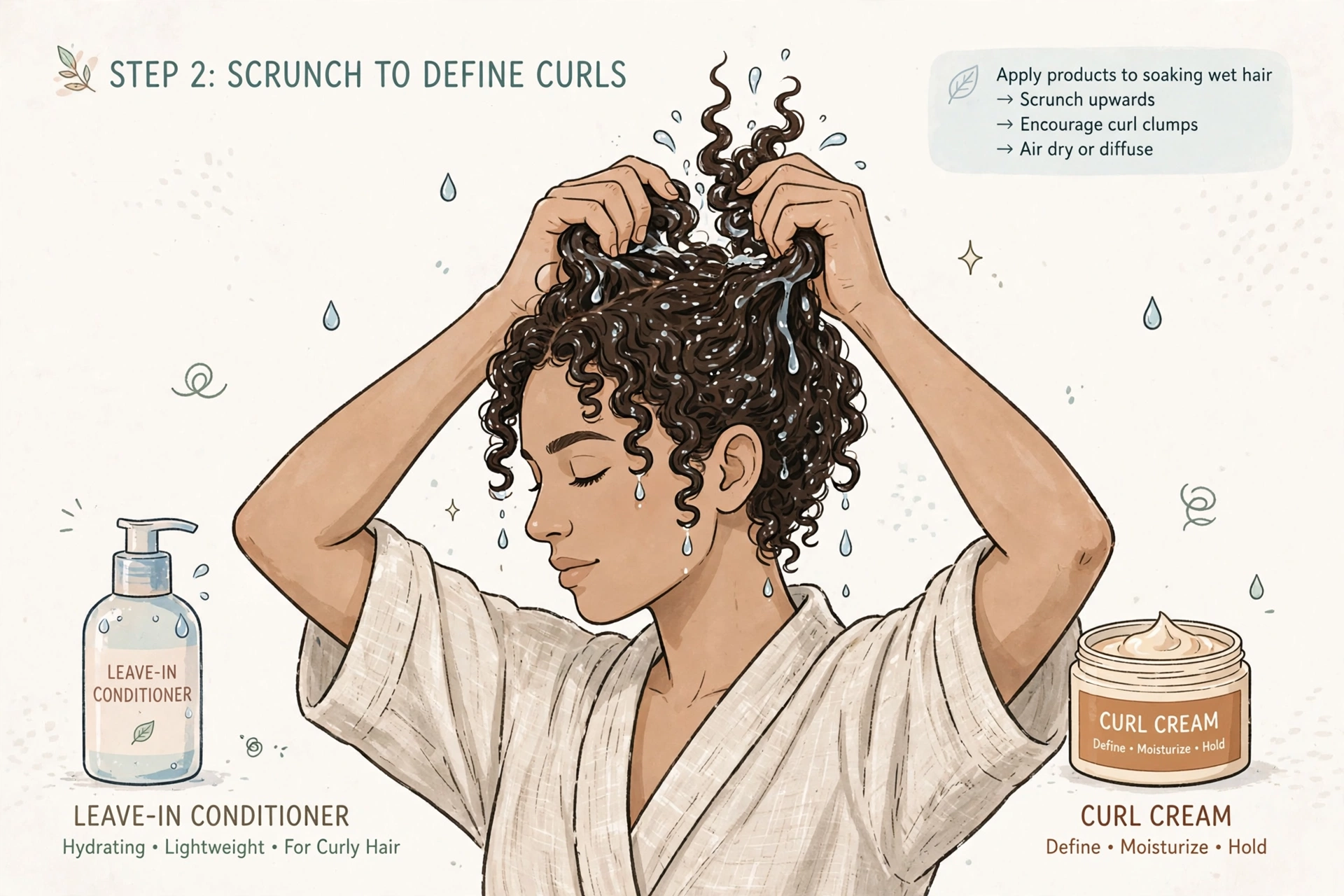
If wash day prepares the hair, styling is what sets the curl pattern for the next several days. The golden rule of curly styling is simple: products go onto soaking wet hair. Wet hair lets products distribute evenly and encourages strands to clump into defined curls instead of separating into frizz. Once you start styling, keep your hair dripping wet until every product is in.
- Leave-in conditioner first. While hair is still soaking, smooth a leave-in conditioner through the lengths. This is the moisture base that everything else seals in.
- Curl cream next. Work a curl cream through section by section. This adds soft definition and helps curls clump together. Use less than you think at first; you can always add more.
- Seal with a light gel or mousse. A gel or mousse forms a light cast around each curl as it dries, which holds the shape and blocks humidity. Many curl routines follow the LOC method: liquid, then oil, then cream. A pea-sized amount of light oil before the cream can help very dry curls, but skip heavy oils if your hair is fine, since they can weigh curls down.
- Scrunch upward. Cup sections of hair in your palms and scrunch toward the scalp. You should hear a squelching sound: that means the hair is wet enough and the product is evenly distributed.
- Plop, optionally, for 15 to 30 minutes. Lay a cotton T-shirt or microfibre towel flat, flip your wet curls onto it, and wrap it up. Plopping removes excess water without disturbing the curl pattern and speeds up drying.
- Dry without touching. Either air-dry completely or use a diffuser attachment on low heat and low speed, hovering around the curls rather than blasting them. Touching hair while it dries breaks up curl clumps and creates frizz, so hands off until it is fully dry.
Once dry, if a gel cast feels crunchy, scrunch it out gently with dry hands or a drop of light oil. What remains should be soft, defined curls that hold their shape. If you are shopping for a curl-friendly cleanser to pair with this routine, our Briogeo Curl Charisma shampoo review looks at one sulfate-free option made specifically for curls.
Between wash days
Curls rarely look their best on day two or three without a little help, but that does not mean rewashing. A refresh routine takes five minutes and keeps your style going until the next wash day.
- Mist with water or diluted leave-in. Lightly dampen the hair with a spray bottle of water, or water mixed with a little leave-in conditioner. Curls reactivate with moisture, not with more product alone.
- Scrunch to reactivate. After misting, scrunch upward just as on wash day. Most curls spring back into shape once they are damp again.
- Spot-treat frizz only. Smooth a tiny amount of curl cream or gel over frizzy sections rather than recoating the whole head, which leads to buildup.
- Protect curls at night. Sleep on a satin or silk pillowcase, or gather hair into a loose pineapple on top of your head inside a satin bonnet. Cotton pillowcases absorb moisture and rough up the cuticle overnight.
- Cover hair in the shower on non-wash days. A shower cap keeps refresh-day curls dry and intact while you shower.
If refreshes stop working and hair feels coated or limp, that is usually product buildup, and it is a sign your next wash day should include a clarifying wash. Our general hair care routine guide covers how to balance cleansing and conditioning across the week.
Weekly deep treatment
Once a week, give your curls a deeper dose of moisture than daily conditioner provides. After shampooing, apply a deep conditioning mask to clean, damp hair from mid-length to ends, comb it through gently, and leave it for 20 to 30 minutes. Covering your hair with a shower cap, optionally with a warm towel over it, traps gentle heat that helps the mask absorb.
Rinse with cool water and continue with your usual wet-hair styling. A weekly mask is especially worthwhile for tight coils, colour-treated curls, or hair that feels rough even right after conditioning. It is not a repair treatment in the medical sense: no mask can permanently mend split ends, and badly split ends still need trimming. Think of it as intensive maintenance, not a cure.
What to avoid
A routine is only as good as what it leaves out. The following are the most commonly reported curl saboteurs in curly-hair research and product guidance, including wash tutorials like Pump Haircare’s guide to washing curly hair.
- Harsh sulfates (SLS/SLES) in every wash. Strong cleansing surfactants strip the limited natural oil curly hair has. A sulfate-free shampoo for regular washes is the standard recommendation; reserve stronger cleansers for occasional clarifying.
- Drying alcohols. Short-chain alcohols such as isopropyl alcohol evaporate quickly and take moisture with them. Fatty alcohols like cetyl or cetearyl alcohol are different: they are conditioning, not drying.
- Heavy waxes and mineral oils. These coat the hair and block moisture from getting in, leading to dry-feeling hair underneath a greasy film.
- Non-water-soluble silicones without clarifying. Some silicones build up layer after layer unless removed with a stronger shampoo. If you use them, clarify occasionally.
- Brushing dry curls. A brush on dry curls shatters the curl pattern into frizz and snaps fragile strands. Detangle wet, with conditioner, or not at all.
- Rough towels and high heat. Terry-cloth rubbing and hot blow-drying without a diffuser both rough up the cuticle. Gentle drying is one of the cheapest upgrades you can make.
Reading an ingredient list takes a minute and saves months of trial and error. If you want a starting point for choosing gentler cleansers, our guide to the best shampoos for men and women explains what to look for on the label.
Ingredients that help
No ingredient works miracles, but certain well-studied ones consistently show up in products curls respond well to:
- Shea butter. A rich plant butter that softens and seals moisture into dry curls. Best for medium to thick curls; fine hair may prefer lighter options.
- Argan oil. A light-feeling oil often used to smooth frizz and add shine without heavy buildup.
- Coconut oil. One of the few oils shown in laboratory studies to penetrate the hair shaft and reduce protein loss during washing. Use sparingly on fine hair.
- Glycerin. A humectant that draws moisture into the hair. Works best in moderate humidity; in very dry air it can pull moisture out of the hair instead.
- Aloe vera. A gentle, water-based moisturiser and scalp soother found in many leave-ins and gels.
- Panthenol (pro-vitamin B5). A conditioning agent that helps hair retain moisture and look fuller.
As a researcher I should add the usual caution: ingredient studies are usually done in laboratories or on small groups, and individual results vary. Patch-test new products, introduce one change at a time, and give any change two to three weeks before judging it.
Common mistakes
- Washing every day. Daily shampooing keeps curly hair in a permanent state of moisture debt.
- Skipping conditioner to save time. Conditioner is not optional for curls; it is the main detangling and moisturising step.
- Styling on damp, not wet, hair. Waiting until hair is half-dry before applying products gives patchy definition and more frizz.
- Using too much product. More product does not mean more definition. Start small, add gradually, and clarify when hair feels coated.
- Touching hair while it dries. Every touch breaks forming curl clumps. Hands off until fully dry.
- Expecting overnight results. Curls often need two to four weeks of a consistent routine before the pattern settles and frizz visibly reduces.
Frequently asked questions
How often should I wash curly hair?
Most curl types do well with 1 to 3 washes per week. Tighter coils and very dry hair usually need the lower end of that range, while an oily scalp or frequent workouts may push you toward the higher end. Watch your hair rather than the calendar: limp, coated-feeling hair wants washing; dry, frizzy hair wants more moisture between washes.
Can I brush curly hair?
Only when it is wet and coated with conditioner, using a wide-tooth comb or your fingers, working from the ends upward. Never brush dry curls: it breaks the curl pattern, creates frizz, and snaps strands.
What is the fastest way to define curls?
Apply a curl cream and then a light gel or mousse to soaking wet hair, scrunch upward to encourage clumping, then air-dry or diffuse on low heat without touching. Wet styling is the single biggest factor in definition; the products matter less than the timing.
Is co-washing good for curly hair?
Co-washing, washing with conditioner instead of shampoo, can work well for very dry curls because it cleans gently without stripping. But it is not for everyone: if you notice buildup, itchiness, or limp hair, clarify occasionally with a proper shampoo. Note that medicated dandruff shampoos are a different case: use them only on the scalp, leave on for the 2 to 10 minutes stated on the label, then follow with a moisturising shampoo on the lengths if needed. Curly-hair wash guides such as Pump Haircare’s tutorial make the same distinction between gentle routine cleansing and targeted scalp treatment.
When should I see a clinician about my hair?
See a clinician promptly if you notice sudden or patchy hair loss, or persistent scalp pain, redness, sores, or flaking that does not improve after a few weeks of gentle care. I am a researcher, not a doctor, and this guide cannot diagnose anything: those signs deserve professional evaluation rather than a new product.
Watch: curly hair tips from dermatologists
For a quick visual summary of the principles above, this short video from the American Academy of Dermatology covers dermatologist-approved curly hair tips in just over two minutes. It aligns well with the routine in this guide: gentle cleansing, plenty of conditioning, and careful handling.
Video: “6 curly hair tips from dermatologists” by the American Academy of Dermatology.
A researcher’s note: I write about hair care by reading published guidance, dermatologist recommendations, and product research, not from medical training. Nothing here is a diagnosis or a cure, and no routine can promise regrowth or permanently repair damage. If something about your hair or scalp worries you, a clinician is the right next step.