Healthy hair starts at the roots—literally. Whether your hair is straight, curly, thick, fine, natural, relaxed, colored, or thinning, a few consistent habits and the right knowledge can make a dramatic difference. This guide breaks down what your hair actually needs, how to care for your scalp, realistic growth expectations, and a simple 7-step routine you can follow every week.
Why hair health matters
Beyond aesthetics, hair quality reflects your overall health and lifestyle. A shiny, resilient mane usually means good nutrition, balanced hormones, and a healthy scalp. Conversely, dry, brittle, or slow-growing hair can point to nutrient gaps, over-styling, or scalp issues. The good news: most causes are manageable with small, repeatable changes.
Hair basics: structure and growth
- Hair shaft vs. follicle: The visible strand is the shaft; growth and health are controlled by the follicle under the skin.
- Growth cycle: Hair grows in phases—anagen (growth), catagen (transition), and telogen (rest). Most scalp hairs are in anagen, which lasts months to years depending on genetics.
- Growth rate: Average is about 1–1.25 cm (0.4–0.5 inches) per month. Expect changes from diet, stress, hormones, and care habits—not overnight miracles.
Scalp health: the foundation
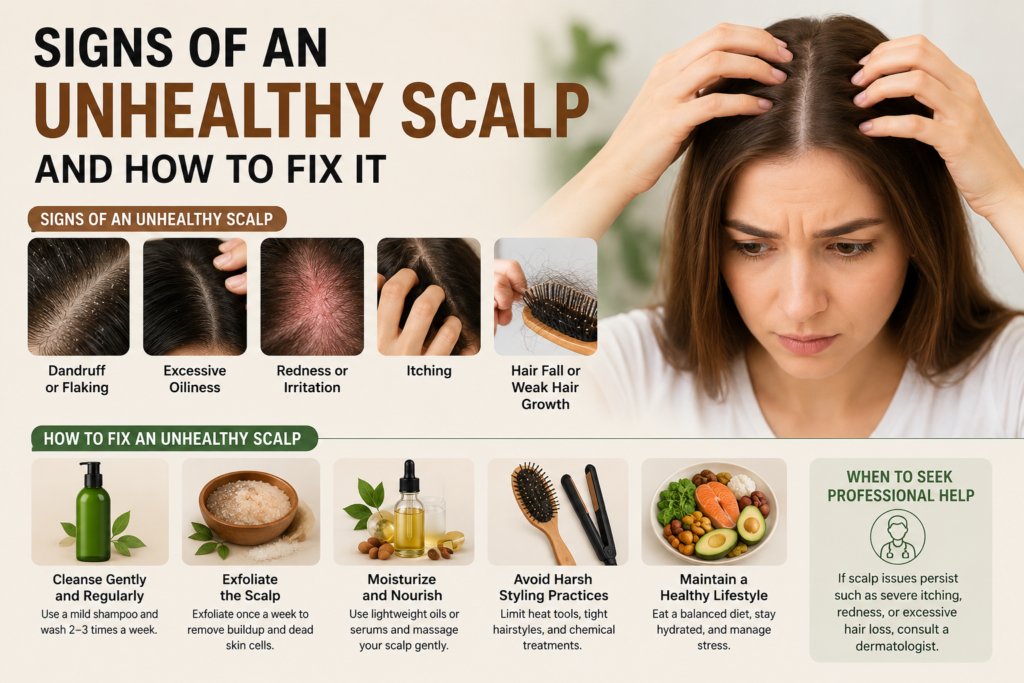
A healthy scalp equals healthy hair. Common scalp problems include dryness, dandruff, seborrheic dermatitis, and inflammation. Keep these points in mind:
- Clean, not stripped: Overwashing can remove natural oils and disrupt the scalp barrier; underwashing can lead to buildup and itch.
- pH balance: Scalp and hair thrive when products are close to natural pH (slightly acidic). Harsh alkaline products can roughen cuticles and cause breakage.
- Oil vs. sebum: Natural oils protect and hydrate. If your scalp overproduces oil, look for gentle cleansers and avoid heavy oils on roots.
- Look for signs: Persistent flaking, redness, pain, or sudden shedding needs professional evaluation.
Nutrition and lifestyle: the invisible drivers
- Protein: Hair is mostly keratin (a protein). Ensure adequate protein from eggs, fish, lean meats, legumes, or supplements when necessary.
- Iron and zinc: Low iron is a common cause of hair thinning, especially in women. Zinc supports hair repair and growth.
- Vitamins: Biotin, vitamin D, and B-vitamins are often linked to hair quality. A balanced diet usually covers needs; test before supplementing heavily.
- Healthy fats: Omega-3s and monounsaturated fats help scalp health and shine.
- Sleep and stress: Cortisol and poor sleep worsen hair shedding. Prioritize rest and stress management.
- Hydration: Water supports cellular function throughout hair growth cycles.
Gentle daily care: what to do (and avoid)
Do:
- Use sulfate-free, pH-balanced shampoos if you have dry or treated hair.
- Condition every wash—focus on mid-lengths to ends.
- Detangle wet hair with a wide-tooth comb, starting at ends.
- Trim regularly every 8–12 weeks to remove split ends and preserve length.
- Protect from heat: use a heat protectant and lower temperature settings.
Avoid:
- Excessive heat styling (daily flat-ironing or high-heat wands).
- Tight hairstyles that pull at the hairline (traction alopecia).
- Mixing many strong chemical processes without professional guidance (bleaching + perming = high risk).
- Over-reliance on heavy oils at roots—these can clog follicles and attract buildup.
Targeted strategies for different hair types
- Fine, straight hair: Use lightweight, volumizing products; avoid heavy oils and conditioners at roots. Protein-light formulas help maintain elasticity without stiffness.
- Thick/coarse hair: Rich creams and oils help with moisture and manageability. Deep condition weekly and use heat sparingly.
- Curly/kinky hair: Emphasize hydration and slip—creams, leave-in conditioners, and co-washes can reduce breakage. Finger-detangle to protect curl clumps.
- Colored or chemically treated hair: Use products formulated for color-treated hair, limit washing to preserve pigment, and prioritize protein-moisture balance.
Hair growth tips that actually help
- Be patient: Expect measurable results in 3–6 months for most interventions.
- Scalp massage: 4–5 minutes daily increases blood flow and can help follicle health—use fingertips, not nails.
- Minoxidil and medical options: Effective for specific types of hair loss; discuss with a dermatologist before starting.
- Avoid quick-fix “stimulating” products that make empty promises; prioritize evidence-backed ingredients like minoxidil (when appropriate), caffeine topicals (limited evidence), and properly dosed nutrients.
- Regular trims with proper cutting techniques reduce breakage and make hair appear healthier and fuller.
A simple 7-step weekly routine (for all hair types)
- Shampoo mindfully: Cleanse scalp with a gentle shampoo (frequency depends on oiliness; 2–3× weekly for most people).
- Condition properly: Apply conditioner from mid-lengths to ends; leave it in for 2–5 minutes, then rinse.
- Deep condition once weekly: Use a mask or deep conditioner for 10–30 minutes, with heat if needed to boost penetration.
- Scalp massage: 3–5 minutes during washing or with light oil once a week to stimulate circulation.
- Detangle carefully: Use a wide-tooth comb on damp hair with a leave-in detangler or conditioner.
- Protect from heat and UV: Apply heat protectant before styling and wear hats or UV-protectant sprays in strong sun.
- Night care: Sleep on a silk or satin pillowcase or use a silk scarf to reduce friction and breakage.
DIY treatments (use occasionally)
- Avocado and olive oil mask: For intense moisture—use sparingly on ends, not roots, especially if you have an oily scalp.
- Aloe vera gel: Soothing for irritated scalps; test a small area first.
- Egg protein mask: Good short-term protein boost for very damaged hair, but avoid if you have low-porosity hair or scent sensitivity.
When to see a professional
- Sudden or patchy hair loss
- Scalp pain, severe itching, persistent redness, or oozing
- Hair loss accompanied by other systemic symptoms (fatigue, irregular periods, weight changes)
- If over-the-counter measures don’t help after 3–6 months
Quick product guidance
- Choose products matched to your hair’s primary need (moisture vs. protein vs. color protection).
- Ingredients to look for: gentle surfactants, humectants (glycerin and propanediol), fatty alcohols (cetyl and stearyl) for conditioning, and ceramides or hyaluronic acid for hydration.
- Ingredients to use cautiously: high-concentration alcohols (can dry), unregulated “secret” growth blends, and mixing too many active treatments at once.
Common myths debunked
- “Trimming makes hair grow faster”: Trims don’t change follicle growth rates; they reduce breakage so hair appears longer and healthier.
- “Washing daily causes hair loss”: Washing removes loose hairs—actual increased shedding comes from underlying conditions, not cleaning.
- “Brushing 100 strokes stimulates growth”: Over-brushing causes breakage; gentle detangling is enough.
Final note
Healthy hair isn’t a single product or trick—it’s a system: consistent care, good nutrition, scalp attention, and realistic expectations. Start with the simple 7-step routine, keep one change at a time, track results for 8–12 weeks, and iterate based on what the data (and your hair) tell you.