Healthy hair doesn’t always look the same for everyone. Some people struggle with excessive hair fall, while others deal with dandruff, dryness, frizz, oily roots, or hair that seems thinner than it used to be.
The frustrating part is that hair problems rarely have just one cause. Your hair may be affected by your genetics, hormones, diet, stress, styling habits, hair products, scalp health, or even the way you wash and care for it.
The good news is that understanding the problem is the first step toward managing it.
In this complete guide, we’ll look at some of the most common hair and scalp problems, what may be causing them, and practical steps you can take to improve the health and appearance of your hair.
1. Hair Fall and Hair Loss
Seeing a few strands of hair on your pillow or in the shower is usually normal. Most people naturally shed hair every day as part of the normal hair-growth cycle.
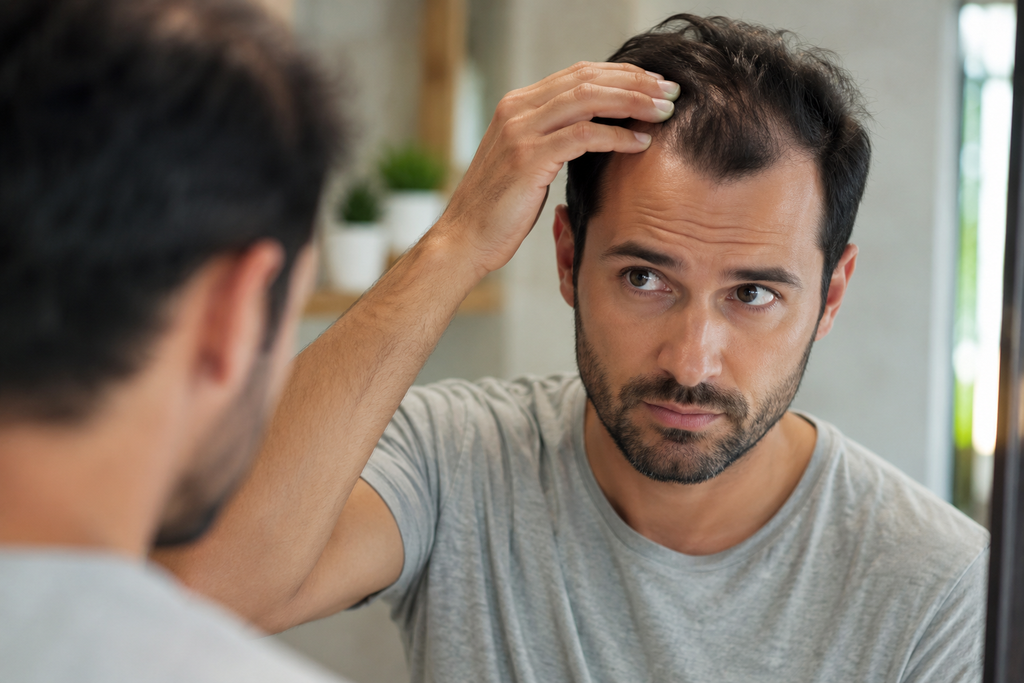
The concern starts when you notice significantly more shedding than usual, visible thinning, a widening part, or bald patches.
Hair loss can happen for many reasons. Genetics is one of the most common, but stress, nutritional deficiencies, illness, hormonal changes, certain medications, and scalp conditions can also play a role.
What can help?
Start by paying attention to when the hair loss began and whether it is getting worse. Avoid extremely tight hairstyles and excessive heat or chemical treatments. Eat a balanced diet with adequate protein and essential nutrients.
If hair loss is sudden, severe, or accompanied by bald patches or scalp symptoms, it’s worth speaking with a dermatologist. Finding the underlying cause is much more useful than simply trying random hair-growth products.
Explore more: [Hair Fall: Causes, Types, and What You Can Do]
2. Dandruff and Flaky Scalp
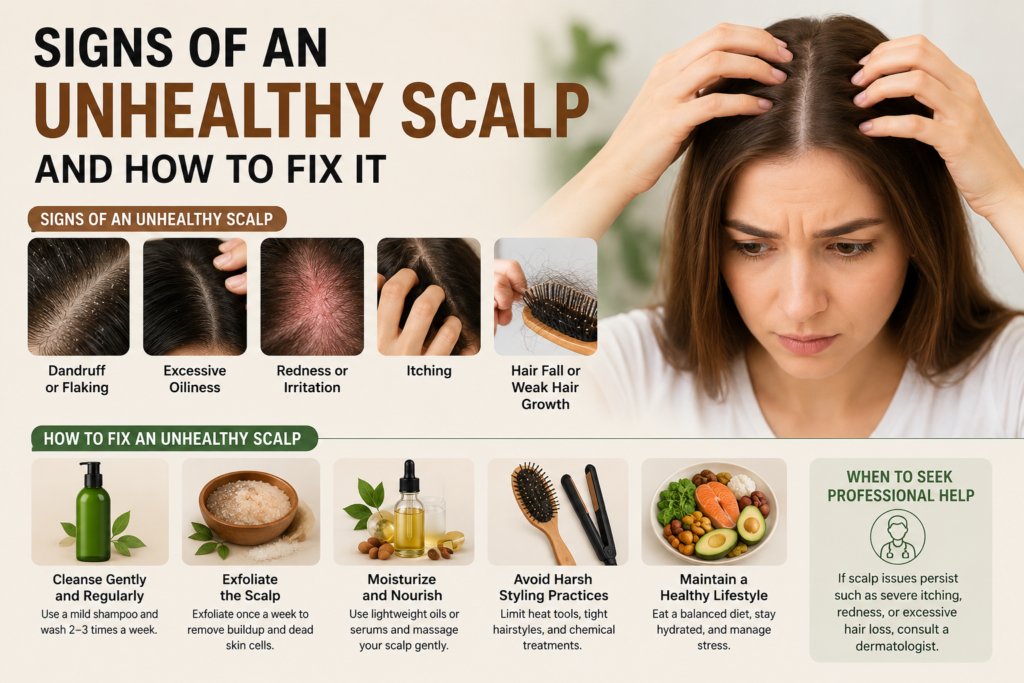
Dandruff is one of the most common scalp concerns. You may notice white or yellowish flakes, itching, or irritation.
Contrary to popular belief, dandruff isn’t simply caused by having a “dirty” scalp. It can be related to oil production, sensitivity to certain microorganisms that naturally live on the scalp, or inflammatory skin conditions.
Washing your hair too infrequently may make visible flakes more noticeable, but washing excessively with harsh products can also irritate the scalp.
What can help?
Regular scalp cleansing is important. Depending on the cause, anti-dandruff shampoos containing ingredients such as ketoconazole, zinc pyrithione, selenium sulfide, or salicylic acid may help.
The right choice depends on your symptoms and scalp condition. If your scalp is very red, painful, severely itchy, or doesn’t improve with appropriate care, consult a dermatologist.
Explore more: [Dandruff: Causes, Types, and How to Control It]
3. Dry and Damaged Hair
Dry hair often feels rough, looks dull, and becomes difficult to manage. You may also notice more tangles or breakage.
Frequent heat styling, bleaching, coloring, chemical treatments, sun exposure, and harsh hair care routines can damage the outer layer of the hair.
Unlike the scalp, the hair shaft itself is not living tissue. Once it has been damaged, you can’t completely “heal” it back to its original condition. However, you can protect it from further damage and improve its appearance.
What can help?
Use a gentle shampoo and a suitable conditioner. Try to reduce excessive heat styling and always use heat protection when using hot tools.
Avoid aggressively rubbing wet hair with a towel. Instead, gently squeeze out excess water and handle the hair carefully while it is wet.
Regular trims can also help manage split ends and prevent damaged ends from making the hair look unhealthy.
Explore more: [How to Fix Dry and Damaged Hair]
4. Frizzy and Unmanageable Hair
Frizz happens when individual hairs don’t lie smoothly together. Humidity, dryness, hair texture, damage, and lack of moisture can all contribute.
People with naturally curly or wavy hair may experience more visible frizz, but anyone can deal with it.
Sometimes the problem isn’t that your hair needs more products. It may simply need a better routine.
What can help?
Choose products that match your hair type and avoid washing with very hot water. Conditioner can help improve manageability, while a leave-in conditioner may be useful for particularly dry or textured hair.
Try not to brush or comb the hair aggressively, especially when it’s wet and more vulnerable to breakage.
If you have curly or wavy hair, learning how your natural texture responds to different products and styling techniques can make a noticeable difference.
Explore more: [How to Control Frizzy Hair Naturally]
5. Oily Hair and Greasy Scalp
Some people find that their hair looks greasy only a day after washing. Others may notice an oily scalp combined with dry or damaged ends.
An oily scalp is often related to increased sebum production. Genetics, hormones, stress, and individual scalp characteristics can all influence oil production.
What can help?
The goal isn’t necessarily to avoid washing your hair. If your scalp becomes oily quickly, washing it regularly with a suitable shampoo may be completely appropriate.
Focus shampoo on the scalp rather than aggressively scrubbing the lengths of your hair. Conditioner can usually be applied mainly to the mid-lengths and ends if your roots become greasy easily.
Avoid constantly touching your hair throughout the day, as this can transfer oils and products onto the hair.
Explore more: [How to Manage Oily Hair and a Greasy Scalp]
6. Thin and Weak Hair
Thin hair and hair loss aren’t always the same thing.
Some people naturally have fine hair strands but still have a healthy amount of hair. Others may experience thinning because the number of growing hairs has decreased.
Hair that feels weak may also be more prone to snapping and breakage.
What can help?
Start by figuring out whether you’re dealing with naturally fine hair, actual thinning, or breakage.
Be gentle with your hair and avoid excessive chemical processing and high heat. A balanced diet with adequate protein is also important for normal hair growth.
If you notice progressive thinning, particularly around the hairline, crown, or part, consider getting professional advice. The sooner the underlying cause is identified, the more options you may have for managing it.
Explore more: [Thin Hair: Causes and Ways to Make Hair Look Fuller]
7. Split Ends and Hair Breakage
Split ends occur when the protective outer layer of the hair becomes damaged and the end of the strand begins to split.
Once a split end has formed, there is no permanent product that can truly repair it. Some conditioners and treatments can temporarily make damaged hair look smoother, but trimming is the only way to physically remove the split.
Breakage, meanwhile, can happen anywhere along the hair shaft.
Common causes include:
- Excessive heat styling
- Bleaching and chemical treatments
- Rough brushing
- Tight hairstyles
- Frequent friction
- Over-processing
The best approach is prevention. Treat your hair gently, reduce unnecessary damage, and keep your routine simple.
8. Scalp Problems
Your scalp is the foundation from which your hair grows, so ignoring scalp health can make hair care more difficult.
Common scalp concerns include itching, excessive oiliness, dryness, flaking, redness, and irritation.
Not every scalp problem is caused by the same thing. Dandruff, psoriasis, eczema, contact dermatitis, and fungal infections can have different symptoms and require different treatments.
That’s why copying someone else’s scalp routine isn’t always a good idea.
What can help?
Use products that your scalp tolerates well and avoid introducing multiple new products at once. If you experience persistent itching, inflammation, pain, sores, or unusual changes, get the problem properly evaluated rather than guessing at the cause.