Short answer: Hair breakage is not the same as hair falling out. Breakage means the hair shaft snaps somewhere along its length, so your hair never reaches full length, while shedding means full-length hairs with bulbs come from the follicle. You cannot biologically repair a strand that has already snapped — you can only stop the next one snapping. The two changes that matter most are reducing friction when you wash and detangle, and improving conditioning so strands slide past each other instead of catching. This is general cosmetic information, not medical advice — see a clinician for sudden or widespread breakage, scalp pain, inflammation, or patchy loss.
Breakage or Shedding? Check Before You Treat
Look at what is coming away. Short pieces on your pillow, in the shower drain, or on your brush with no bulb at the end, plus rough ends and hair that looks thinner at the ends than at the roots, usually point to breakage — a fibre problem. Full-length hairs with a small bulb, or visibly reducing density, point to the follicle, and no amount of conditioner will fix that. This article covers the fibre problem: cosmetic care of the hair shaft and how to reduce further breakage. If most of what you lose is full-length hairs, density is visibly reducing, or breakage appeared suddenly and widely, get that assessed instead of only changing products.
Why Hair Breaks in the First Place
Hair is dead fibre once it leaves the follicle. Every wash, brush stroke, heat pass, chemical treatment, tight style and night on a rough pillow wears the cuticle — the outer protective layer. Once the cuticle weakens, the inner layers rip, ends fray into split ends (trichoptilosis), and splits travel further up the shaft if they are not trimmed. Dryness makes it worse: dry strands have less slip, so they catch, tangle and snap instead of sliding. The ends are the oldest part of your hair, so they break first, which is why long hair often looks thinner at the bottom than at the top. If your roots are oily while your ends stay dry, our Oily Scalp and Dry Ends routine shows how to treat the two zones separately.
The Two Levers That Change the Most
- Reduce mechanical friction. How you wash, detangle, dry and tie your hair matters more than any single product, and both fixes are free or close to it.
- Improve conditioning slip. Conditioner, leave-in and a light oil on the ends help strands slide past each other. That slip is what stops a tangle turning into a snap.
Do these two before buying anything new.
The Step-by-Step Anti-Breakage Routine
- Wash gently. Shampoo the scalp, let suds run through the lengths, do not scrub the ends. Use lukewarm water.
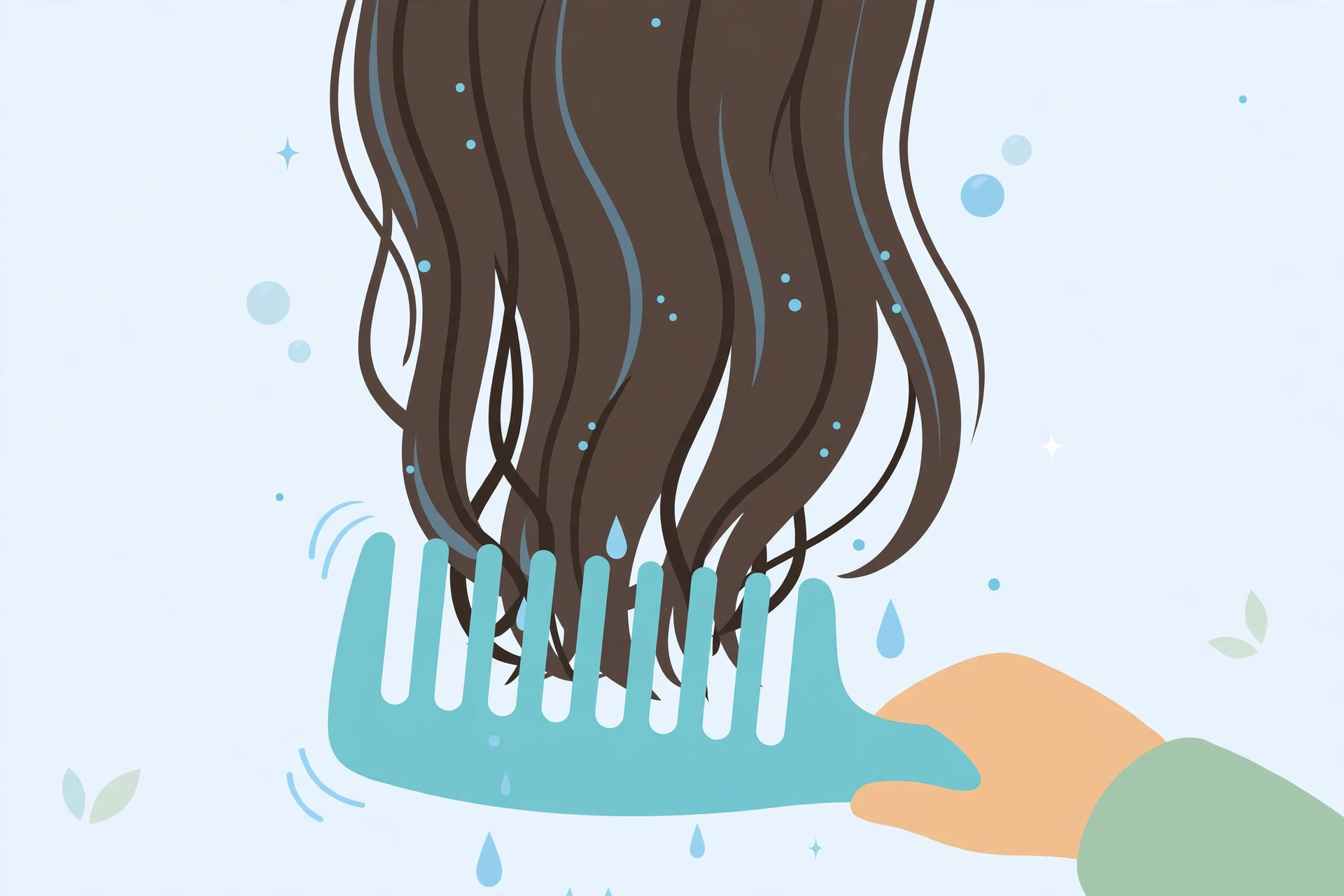
- Condition every wash. Coat mid-lengths to ends, detangle while conditioner is in with a wide-tooth comb, starting from the ends and working up slowly. Never rip through wet knots — wet hair is at its most fragile.
- Dry without friction. Squeeze or blot with a microfibre towel or old t-shirt, never rub. Air-dry when you can; if you blow-dry, use low heat and a heat protectant every time.
- Protect the ends daily. A few drops of leave-in or light oil on the ends only, in small quantities. Seal ends at night if they feel dry.
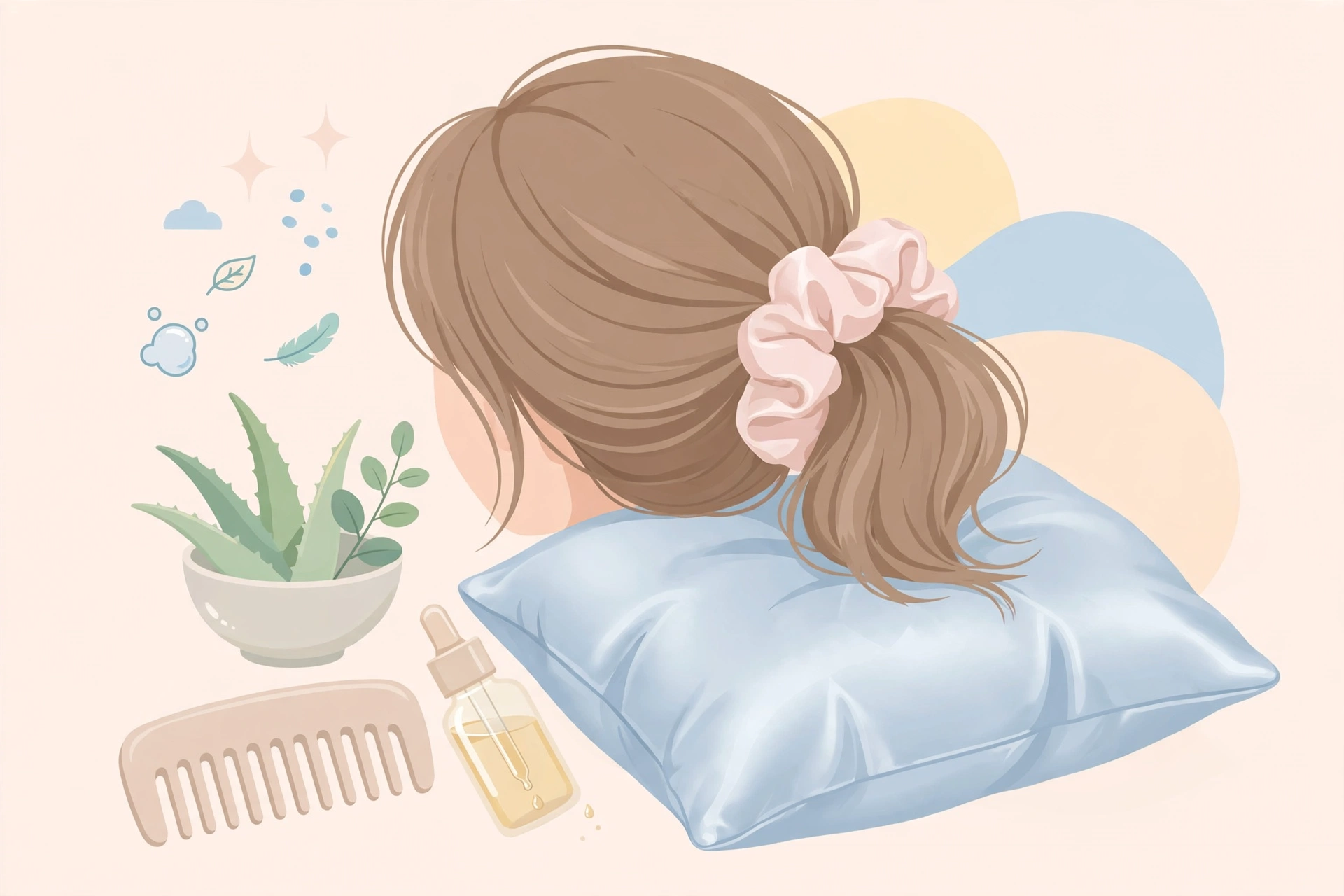
- Tie loosely. Use fabric, soft spiral or silk elastics with no metal parts, change the ponytail position through the week, and never pull a style painfully tight — sustained tension breaks hair right near the elastic.
- Sleep on silk or satin. A silk or satin pillowcase, or a loose braid or bun at night, cuts overnight friction.
Our how to wash hair guide covers this technique in detail, and our Hair Care Routine for Women puts the full daily-to-weekly schedule in order.
How Often Should You Wash Breakage-Prone Hair?
There is no single right number of washes per week. The right frequency is the one that keeps your scalp comfortable and your lengths protected, and it depends on your scalp and hair type.
- Oily scalp, fine hair: every 1-2 days. Fine hair shows oil quickly, and roots can look flat and greasy by day two.
- Normal scalp, medium hair: 2-3 times a week. Most people fall in this range, so it is a good starting point.
- Dry scalp, coarse or curly hair: every 3-4 days, or about once a week if your hair is very dry, with a conditioning-only wash between shampoos if needed.
- Dandruff-prone scalp: an antifungal shampoo 2-3 times a week, with a gentle wash on the other days.
How to wash gently, whatever your frequency
How you wash matters more than how often. Shampoo the scalp only, let the suds run through the lengths, and condition the mid-lengths to the ends on every wash, including on days when you skip shampoo and condition only. Detangle only when the hair is damp and has slip from conditioner, blot it dry instead of rubbing, and keep heat low.
Signs you are washing too often or too rarely
Washing too often can leave the lengths dry and squeaky, tangle more easily, and the scalp feeling tight. Washing too rarely can leave the scalp itchy, with build-up or flakes, and hair that mats and snaps when you finally detangle it. Adjust by one wash a week at a time, and judge the result over two to three weeks.
Heat, Chemical and Styling Rules
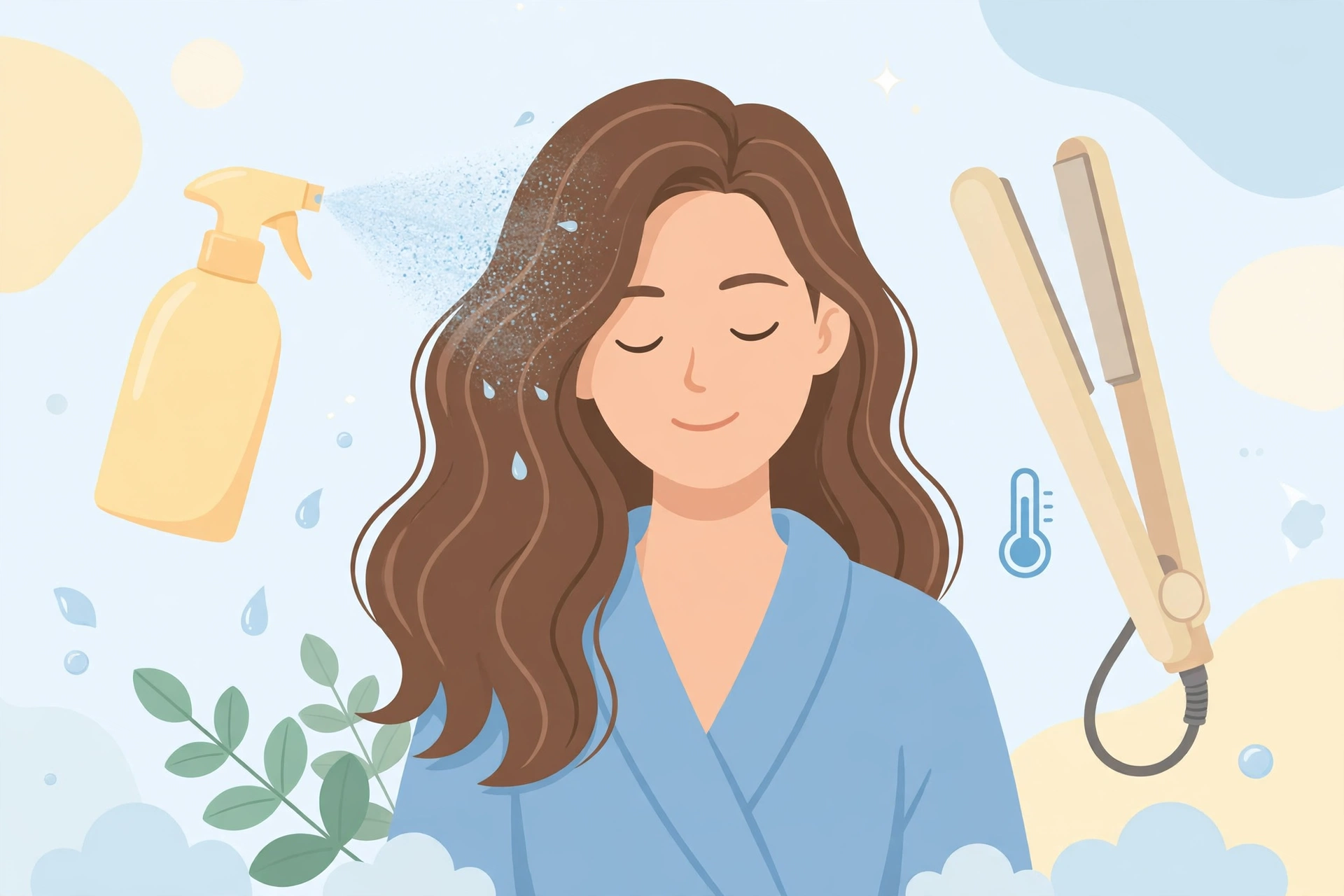
- Heat: lowest setting that works, fewer passes, heat protectant before every tool — dryer, straightener or curler. Skipping heat for months is the single clearest way many people report fewer split ends.
- Chemical: limit repeated bleaching and overlapping chemical treatments, and give hair recovery time between processes. No product permanently fuses a split end back together — treatments can temporarily seal and smooth it so it looks better, but they do not truly repair it. For a detailed cause-by-cause guide, see HairFolli’s breakage remedies guide.
- Brushing: start from the ends, work up through knots slowly, use a brush suited to your hair type. Brushing from roots down through a tangle is how strands snap.
What Trimming Can and Cannot Do
Trimming removes ends that have already split or frayed, which stops a split travelling further up the shaft. It is the only thing that genuinely removes existing damage, and it is why hair often looks dramatically better after a cut without anything else changing. Trimming does NOT prevent new breakage, and it does NOT make hair grow faster — growth happens at the follicle and is unaffected by what you do at the ends. Our How to Grow Hair Faster guide explains the difference between growth and retention. What trimming does is stop you losing length faster than you gain it. Avoid going more than about 6 months without a trim if your ends are fragile, because the longer a strand grows, the thinner and easier to break its ends become. The Hair Routine’s 7 ways to prevent split ends lists more ways to keep ends intact.
When to See a Clinician
See a clinician or dermatologist if breakage is sudden or widespread, if it comes with scalp pain, inflammation, soreness or patchy loss, if full-length hairs with bulbs are the main loss, or if density is visibly reducing. We are researchers, not doctors, and this is general information, not medical advice.
Watch: How Split Ends Happen and How to Prevent Them
Video credit: Dr. Sam Ellis — “Split Ends: Dermatologist Explains Damaged Hair Causes, Treatments, Prevention, & More!”
Frequently Asked Questions
How do I know if my hair is breaking or falling out?
Short pieces with no bulb, rough ends and thinner ends usually mean breakage. Full-length hairs with bulbs, or visibly reducing density, usually mean a follicle issue that needs assessment, not just better conditioning.
Can split ends be repaired without cutting?
No, not permanently. Products can temporarily seal and smooth split ends so they look better, but only a trim genuinely removes the damaged end and stops the split travelling up.
Does trimming make hair grow faster?
No. Growth happens at the follicle. Trimming stops you losing length to breakage faster than you gain it, so your hair keeps more of its length over time.
Is wet hair really more fragile?
Yes. Wet hair stretches and breaks more easily, so detangle gently with conditioner in and a wide-tooth comb, starting from the ends, and never rub it dry with a rough towel.
How long before breakage improves?
You should see fewer short pieces and smoother ends within a few weeks of gentler handling, but keeping length is a months-long game: new growth has to replace the damaged lengths, and no routine works overnight.
Is daily washing bad for breakage?
Not on its own. Daily washing only becomes a problem when it is rough — scrubbing the ends, skipping conditioner, or detangling dry, tangled hair. Wash gently, condition every time, and let how your scalp and ends feel decide the frequency.
Can I skip shampoo and just condition?
Sometimes. Conditioning-only washing, or co-washing, can suit dry or curly hair, but an oily or dandruff-prone scalp usually still needs shampoo to stay comfortable. If you skip shampoo, condition the lengths and watch for build-up or itch.
Does washing less make hair grow faster?
No. Washing does not change how fast hair grows at the follicle. Washing less can only help you keep more length by reducing breakage, and washing more often does not slow growth either.
Should I wash after exercise?
Yes, if you have sweated. Sweat and salt left on the scalp can leave it uncomfortable, so wash gently and condition the lengths afterwards rather than scrubbing hard to feel clean.