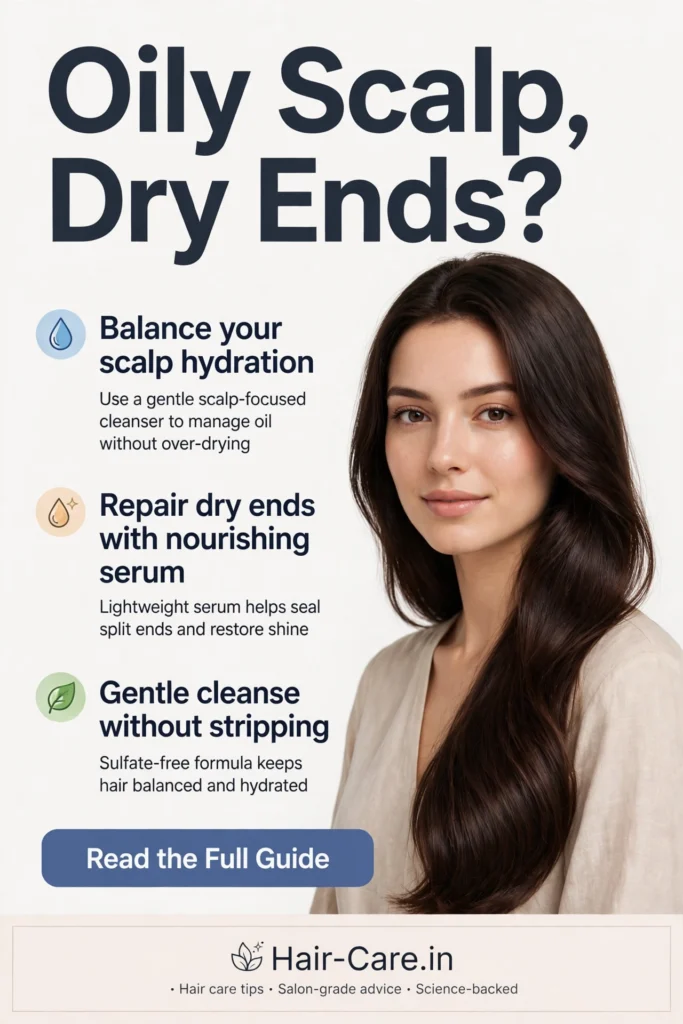
Short answer: Oily scalp and dry ends are not a contradiction — they are a zoning problem. Your scalp makes sebum, but that oil often does not travel all the way down the hair shaft, especially on long or curly hair, while your ends are the oldest, most weathered part of your hair. The fix is to treat the two zones differently in the same routine: shampoo the scalp only, condition the mid-lengths and ends only, and use a clarifying wash once a week for buildup. This is general cosmetic information, not medical advice — see a clinician for sudden or patchy hair loss, pain, sores, or thick crusts.
If your roots look greasy by midday while your ends feel like straw, you are dealing with one of the most common combination-hair patterns there is. The mistake most people make is treating the whole head the same way — one strong shampoo from root to tip, little or no conditioner. Below is a step-by-step routine that treats your scalp and your lengths as two separate zones, because biologically, that is what they are.
Why Your Roots Are Oily but Your Ends Are Dry
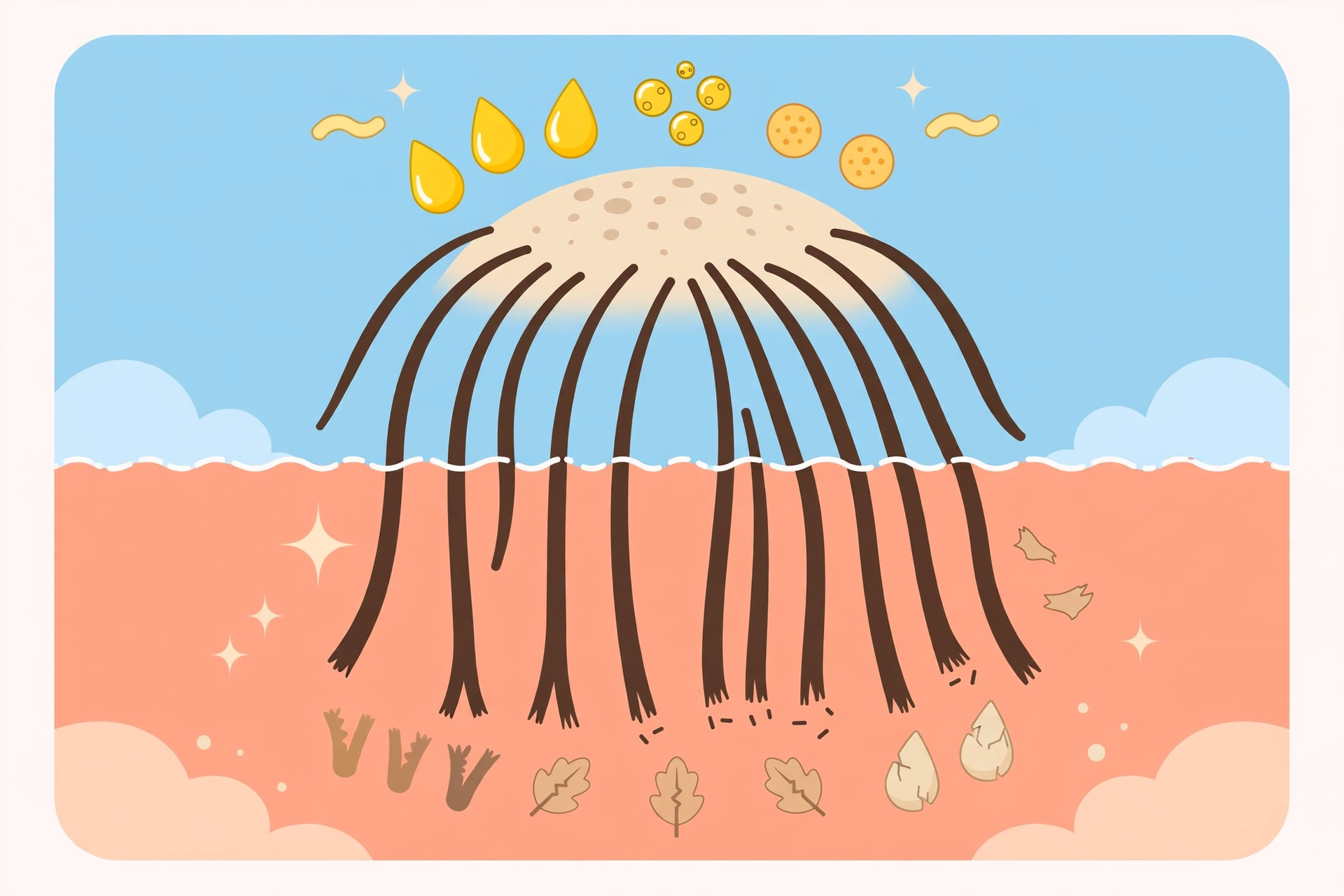
Your scalp is skin — skin with sebaceous glands that produce sebum, a mix of fatty acids, waxes, squalene and cholesterol. Sebum exists to keep skin supple, but as a hair conditioner it is unreliable. On straight, fine hair it can slide down the shaft and keep the lengths coated; on curly or coily hair, every bend and twist slows it down, so oil pools at the roots while the ends stay parched. (Our Curly Hair Care Routine goes deeper on curl-specific care.) Matrix’s guide to greasy roots and dry curly ends describes exactly the same sebum-travel problem for curls.
Length matters too. The ends of long hair are the oldest part of your hair — those ends may be years old, and they have survived years of heat styling, chemical treatments, sun exposure, friction from brushing and pillowcases, and plain mechanical wear. The cuticle there is raised or chipped, so moisture escapes and the hair feels rough and dull.
Your shower habits can widen the gap. Harsh shampoo scrubbed through the lengths strips the ends of what little oil they had. Skipping conditioner leaves them unprotected. Heavy silicone products applied near the roots add weight where you least want it, without nourishing the ends. And over-washing can irritate the scalp, which does nothing for the ends either.
One thing worth knowing: hormones and genetics set how much oil your glands produce. Washing does not teach your glands to make more or less oil — it only clears the oil already sitting on your scalp. Keep that in mind when we get to “hair training” below. This is why the combination is so common: the scalp’s oil production is usually normal, but the distribution system fails over distance and time.
The Two-Zone Rule in One Sentence
“Shampoo the scalp. Condition the ends. Never the other way round.”
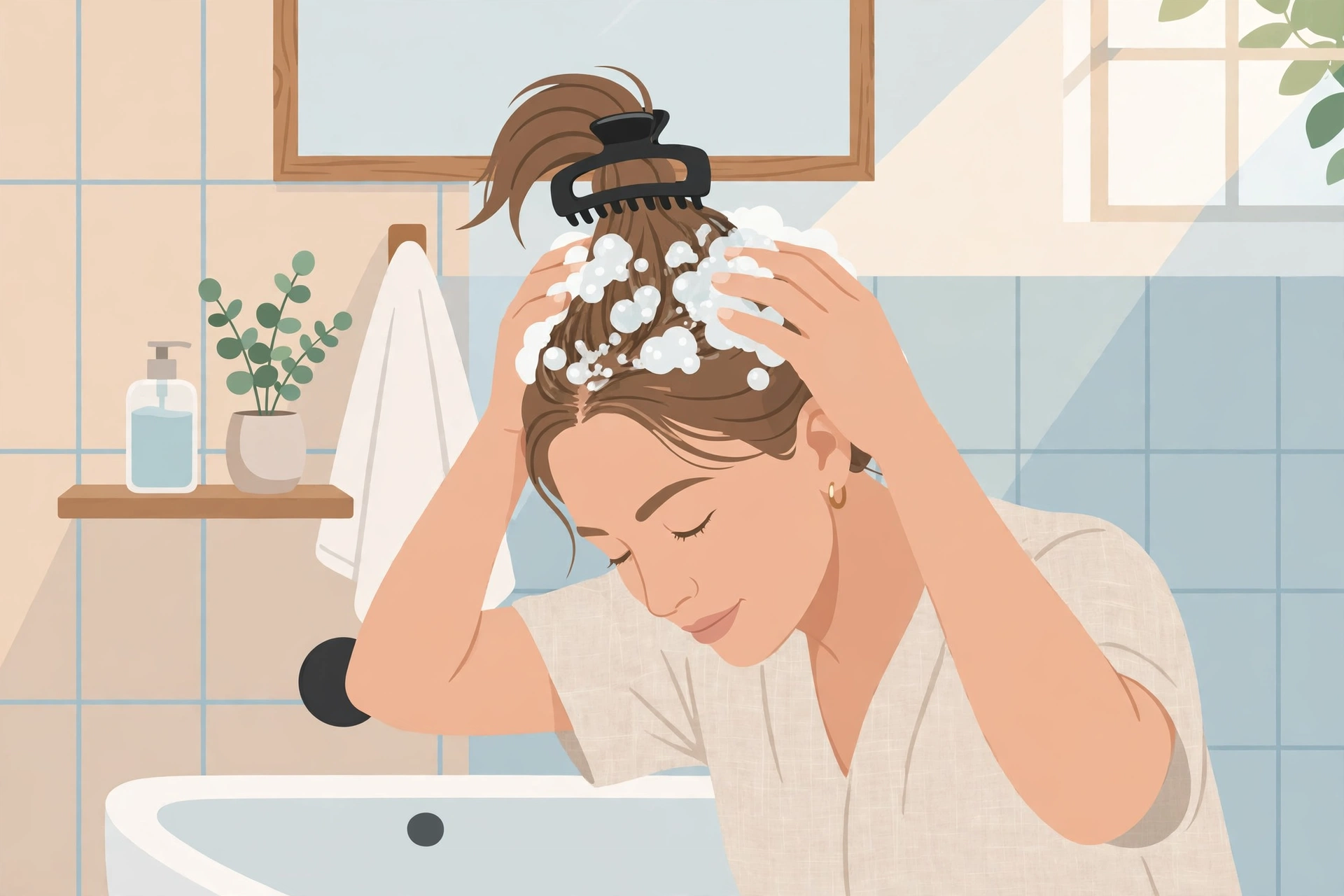
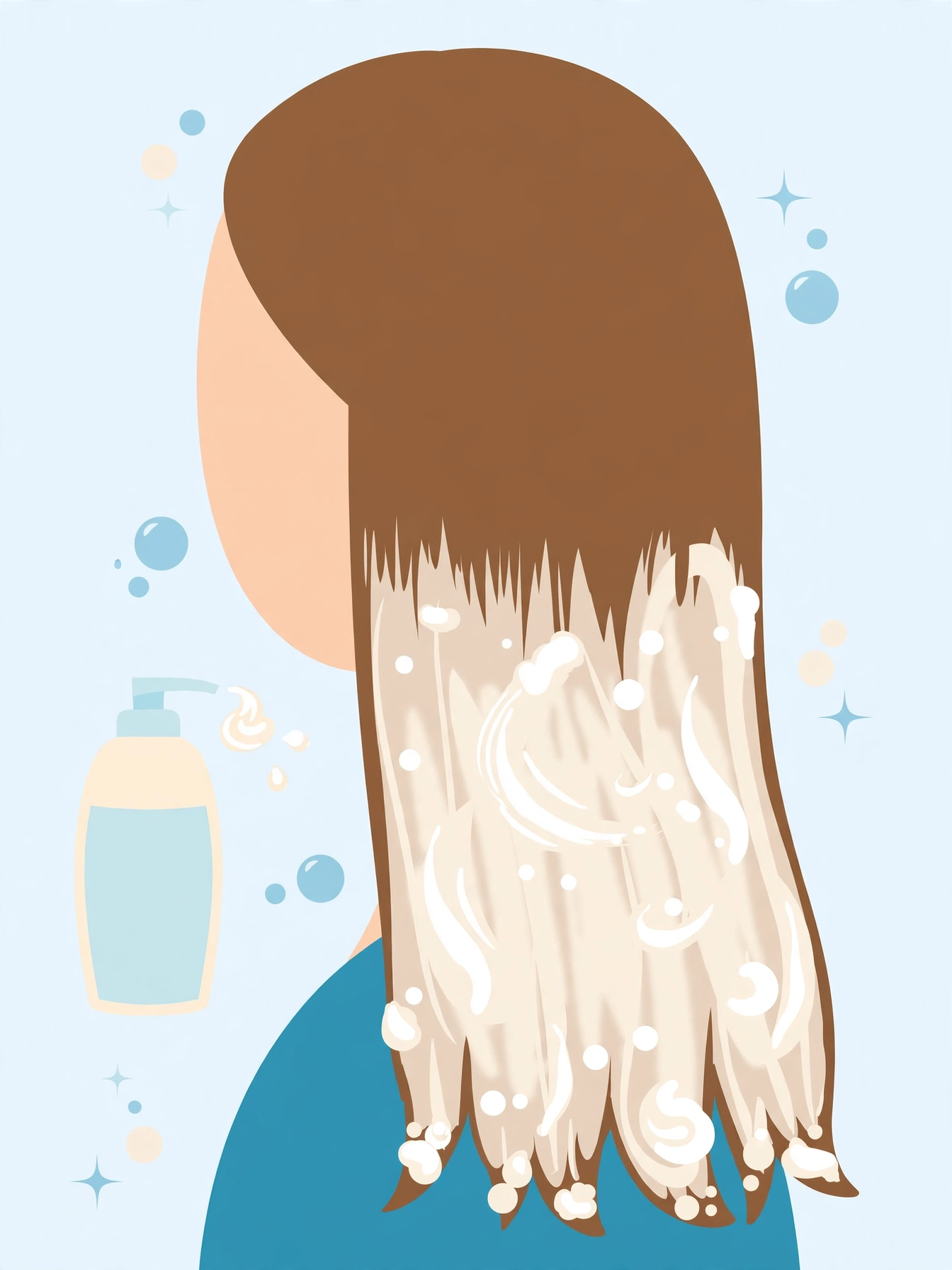
Work the shampoo lather into the scalp with your fingertips, let the suds slide down the lengths as you rinse, and keep friction off the ends. Coat the mid-lengths and ends with conditioner at every wash — and keep conditioner off the scalp. The American Academy of Dermatology (AAD) specifically calls out conditioning the ends at every wash, because those ends may be years old. Their guidance backs this split too: apply shampoo to the scalp instead of the entire length of the hair, and use conditioner after every wash. See their tips for healthy hair for the full dermatologist-reviewed list.
The Step-by-Step Two-Zone Routine
- Wet with lukewarm water. Hot water can strip both the scalp and the ends; comfortably warm water is enough and helps the shampoo distribute. Very hot water can leave the scalp feeling dry or irritated.
- Shampoo the scalp only. One gentle, balancing shampoo is enough on most days. Start with a small amount and adjust for your hair length and density, then massage it into the scalp with your fingertips — not your fingernails. On very oily days, or after heavy product use, double-wash: the first lather fights surface oil and may barely foam; the second actually cleans.
- Rinse and let the suds run through the lengths. Do not scrub the ends. The shampoo running through your hair as you rinse is often enough to clean the lengths. (Our how to wash hair guide covers this technique in detail.)
- Condition the mid-lengths to ends only. Keep conditioner off the scalp and roots, or your roots will look greasy faster. Leave it for 3 to 5 minutes so it can smooth the cuticle, then rinse. Our guide to the best conditioner for dry hair explains which ingredients matter most and which to avoid.
- A light leave-in or serum on the ends only. A few drops of a lightweight oil or serum seal moisture in and add shine. Never on the scalp. If your hair is fine, keep this step feather-light — heavy products can make fine hair feel weighed down.
- Once a week, clarify. A clarifying shampoo once a week clears the buildup a regular wash leaves behind — especially dry shampoo residue and product film. Follow it with a rich conditioner on the ends.
The conditioner-first method (for very dry ends)
If your ends are extremely dry, try this: wet your hair, apply conditioner to the mid-lengths and ends first, then shampoo the scalp, then rinse everything and re-apply conditioner to the ends if needed. The pre-conditioning shields dry lengths from the shampoo’s stripping action, and many people with oily-roots-dry-ends hair report this as the technique that finally balanced their hair.
For a visual walkthrough of the same idea, watch “Caring for your Oily scalp and Dry Hair” by Dr Rashmi Shetty on YouTube (credit: the Dr Rashmi Shetty channel):
How Often Should You Wash?
There is no single calendar answer. AAD guidance is to wash based on how often your hair gets oily or dirty — see their healthy hair tips for the reasoning. Straight hair with an oily scalp may need daily shampooing, and that will not damage healthy hair. Dry, textured, curly or thick hair needs less: curly hair often does well at 1–2 times a week, coarse hair once a week to start, and the AAD sets a floor of at least every 2–3 weeks for optimal scalp health for dry, textured hair.
For combination hair, a practical starting point is every 2–3 days, adjusted by scalp behaviour: greasy by midday means wash sooner; tight or flaky can mean you are washing too often or too harshly. If you sweat heavily during exercise, cleansing the scalp afterward may help remove sweat and buildup even on non-wash days. Between washes, use dry shampoo only at the roots and sparingly — overuse builds up and can make oiliness worse over time.
One more guide from the same advice: judge by comfort and itch, not by a fixed rule — an itchy or coated-feeling scalp is a sign to wash, even on a non-wash day.
What to Use — and What to Avoid
The logic is simple: the scalp needs cleansing ingredients that dissolve oil; the ends need conditioning ingredients that replace moisture. Mixing them up is where most routines fail.
| Zone | Use | Avoid |
|---|---|---|
| Scalp | Gentle balancing shampoo; salicylic acid or tea tree for oil and flakes; zinc pyrithione if dandruff comes with grease; a clarifying shampoo once a week | Harsh scrubbing; heavy silicones at the roots; co-wash alone — conditioner cannot emulsify sebum, so it will not truly clean an oily scalp |
| Ends | Rich moisturising conditioner, a weekly mask, a light leave-in or serum; look for argan, shea, ceramide, panthenol | Shampoo scrubbed through the ends; skipping conditioner; heavy oils that weigh fine hair down |
For a brand-side take on the same balancing act, see Hair.com by L’Oréal’s guide to oily scalp and dry ends.
How to Choose a Shampoo for an Oily Scalp
The two-zone routine above tells you where shampoo goes. Choosing which shampoo to use is a separate decision, and for an oily scalp the gentlest formula that still cleans well is usually the best starting point.
Look for gentle surfactants that clean without leaving the scalp feeling tight and squeaky — tightness after rinsing is a sign the formula is too stripping for regular use. Keep the formula lightweight, since heavy oils and silicones left on the scalp can add to oiliness and weight at the roots. Reserve a clarifying shampoo for occasional buildup, as in the routine above, rather than making it your everyday wash. If your scalp is sensitive, check fragrance and allergens before you commit: a fragrance-light option is the safer starting point, and patch-test a new shampoo the way you would any leave-in.
What to avoid is the other half of the choice. Do not wash twice a day with a harsh shampoo — a second lather is fine on a very dirty day, but harsh daily stripping usually makes oiliness worse, not better. And do not expect any shampoo to cure an oily scalp permanently: it manages oil, it does not change your skin type, since oil production is set by hormones and genetics, as noted above. If flakes come with the oiliness, the NHS dandruff guidance is a useful check on when flaking is ordinary and when it needs a clinician’s look.
Mistakes That Make Both Problems Worse
- Treating the whole head the same way. One strong shampoo from root to tip with no conditioner is the fastest route to oily roots and straw-like ends. The scalp and the lengths have different needs — treat them differently.
- Washing more and more often to fight grease. Extra washing strips the ends without retraining your oil glands. The glands make the same amount of oil regardless of how often you wash; all you achieve is drier ends.
- Brushing hard from root to end to “spread the oil.” On curly hair this breaks the curl pattern and causes frizz and breakage. On any hair type it mostly moves oil a centimetre or two — not down to the ends where it is needed.
- Expecting “hair training” to fix oiliness. No dermatological source supports the idea that spacing out washes teaches the scalp to make less oil. Wash based on how oily your scalp actually gets, not on a theory.
When to See a Clinician
This routine covers cosmetic care. See a dermatologist or clinician for sudden or patchy hair loss, pain, sores, thick crusts or yellow pus, widespread redness, lesions beyond the hairline, or no improvement after 3–4 weeks of consistent care. We are researchers, not doctors, and this is general information, not medical advice. Our guide to scalp problems explains which warning signs matter most.
Watch: Dermatologist Tips for an Oily Scalp
For a visual walkthrough of the same points, watch ‘Get Rid Of Oily Scalp For Good: Dermatologist Tips!’ by Dr Dray, a board-certified dermatologist, on YouTube (credit: the Dr Dray channel):
Frequently Asked Questions
Can oily scalp and dry ends happen at the same time?
Yes. It is one of the most common combination-hair patterns: sebum pools at the scalp while the ends — the oldest part of the hair — stay dry, especially on long or curly hair.
Should I use conditioner if my scalp is oily?
Yes, but only on the mid-lengths and ends, never on the scalp. Skipping conditioner leaves the ends fragile; putting it on the roots makes them greasy faster.
Does washing less often train my scalp to be less oily?
No evidence supports that. Washing clears existing oil; it does not change how much oil your glands produce. Wash based on how oily the scalp actually gets.
Is co-washing enough for an oily scalp?
No, not on its own. Conditioner cannot emulsify sebum, so co-wash alone leaves oily roots limp, heavy and still dirty. Use a low-lather or gentle shampoo for the scalp.
How long before I see a difference?
With a consistent two-zone routine, most people notice less grease and softer ends within a few weeks; a meaningful shift in oil and end condition typically takes 4–6 weeks. There is no overnight fix.
Should I wash oily hair every day?
If your scalp feels oily and uncomfortable, daily gentle washing is fine — straight hair with an oily scalp often needs it, and that will not damage healthy hair. Harsh daily washing is the problem, not frequency alone.
Does sulfate-free help oily scalp?
It can, if it cleans well enough. Some sulfate-free shampoos are too mild for a very oily scalp, so judge by whether your scalp feels clean after rinsing, not by the label alone.
Will dry shampoo fix oily scalp?
No. Dry shampoo absorbs oil temporarily, but it does not clean the scalp, and overuse builds up and can make oiliness worse over time. Use it only at the roots and sparingly between washes, not instead of washing.