Short answer: Your scalp is skin, not just the ground hair grows from, and the same visible flake can come from very different causes: dry scalp is a moisture problem needing gentle washing and moisture back, while dandruff is an oil-and-yeast problem needing a medicated shampoo. Read the signs first, then treat the problem you actually have, and see a clinician for sudden or patchy hair loss, pain, sores, or thick crusts. We are researchers, not doctors, and this is general information, not medical advice.
We are not doctors. We are researchers. A flaky, itchy or oily scalp is one of the most common hair complaints, and also one of the most mis-treated, because the same visible flake can come from very different causes. This article does the research job for you: it reads the signs your scalp is giving, separates the problems that look alike, and gives you one clear, honest routine — plus the point where you should stop guessing and see a clinician.
The short answer is: your scalp is skin, not just the ground hair grows from. When it is comfortable, clean and calm, hair has its best chance. When it is inflamed, overloaded with product, or stripped by over-washing, flakes, itch and shedding follow — and the fix depends on which problem you actually have.
What a Healthy Scalp Looks and Feels Like
A healthy scalp is, in a good way, unnoticeable. No persistent itch, no tightness after washing, no visible flaking, no soreness when you part your hair, and no greasy feeling a few hours after washing. Some oil is normal and necessary: sebum protects both scalp and hair, and a healthy scalp has an intact barrier and a balanced microbiome — the mix of bacteria and yeasts that lives on skin naturally and forms a first line of defence.
If your scalp does not match that description, the next sections are where to start. Do not jump to a medicated shampoo before you have read the signs, because the wrong treatment for the wrong problem often makes things worse.
Scalp Problems Signs: Read Your Flakes, Itch and Oil
The type of flake tells you a lot, and it is the first check worth doing in a mirror, in good light.
Five warning signs at a glance — if any of these keeps coming back, work through the table below before choosing a treatment:
- Persistent itching — constant itch, not an occasional one; scratching can damage the scalp and weaken follicles.
- Excessive flaking — visible flakes on the scalp or shoulders that keep returning.
- Excess oiliness — roots that look greasy again soon after washing.
- Redness or irritation — a red or inflamed scalp.
- Increased hair fall or slow growth — more shedding than usual, or growth that seems to have stalled.
One habit worth easing off while the scalp recovers is heat styling and tight hairstyles that pull at the roots.
| Sign you see or feel | What it usually points to |
|---|---|
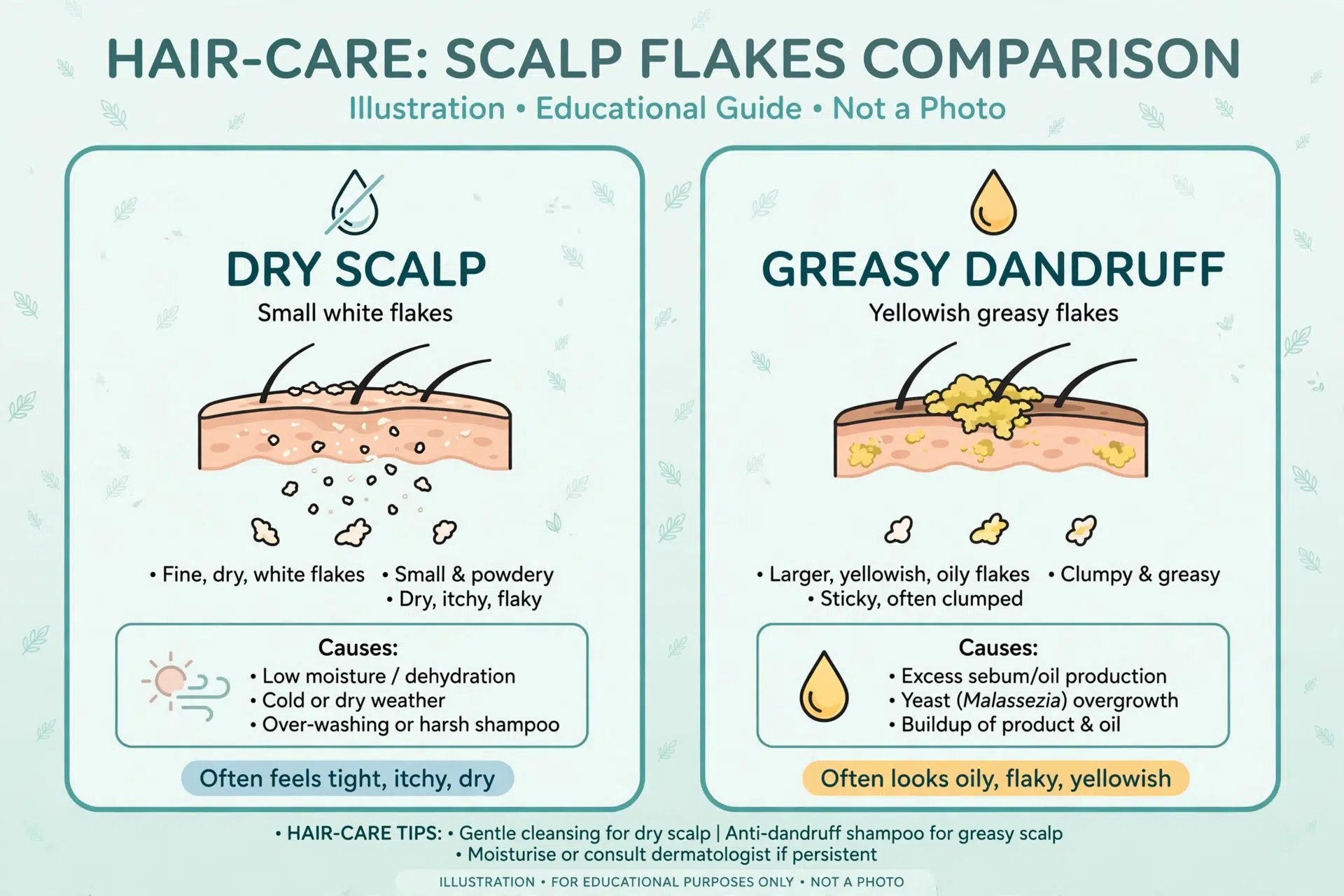
| Small, dry, white, powdery flakes that fall easily | Dry scalp — a moisture and barrier problem |
| Larger, greasy, yellowish flakes on red or irritated skin | Dandruff at its inflamed end, or seborrheic dermatitis |
| Flakes only on the scalp, little redness, mild itch | Mild dandruff — the mild end of the same spectrum |
| Flakes plus redness in eyebrows, beside the nose, behind the ears, or on the chest | Seborrheic dermatitis, which spreads beyond the scalp |
| Tightness, itch, small dry flakes, worse in cold or dry air | Dry scalp, often from over-washing, hot water, or harsh products |
| Scalp greasy again soon after washing, hair limp at the roots | Oily scalp — excess sebum, sometimes with buildup |
| Thick scale, crusts, sores, pain, or patches of hair loss | Not ordinary flaking — needs a clinician check |
Two important distinctions from the research: dry scalp is a moisture problem, while dandruff is an oil-and-yeast problem, so they need different treatments. And dandruff and seborrheic dermatitis are now understood as one continuous spectrum rather than two unrelated problems — dandruff is the mild, non-inflammatory end, seborrheic dermatitis is the inflamed end, with greasy yellow scale on visibly red skin that can spread beyond the scalp.
Prefer to watch? Dermatologist Dr Dray walks through the same dry-scalp-vs-dandruff check in this video:
Dry Scalp Remedies: Add Moisture Back, Gently
A dry scalp happens when the skin on your head loses too much moisture and natural oils, which leaves it tight, itchy and flaky. It is more common in cold months, in low humidity, and among people who wash often or use harsh products.
What helps, in order:
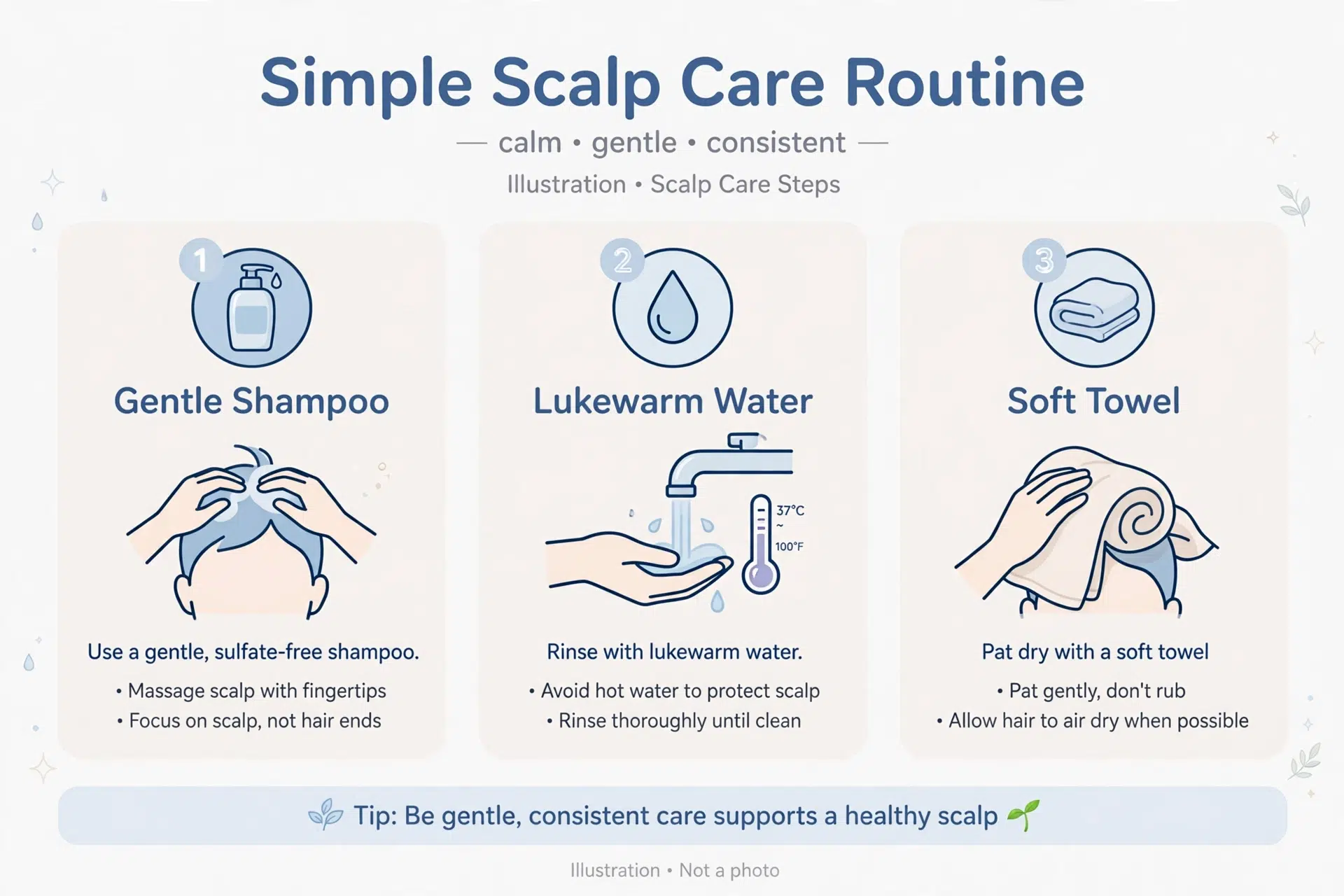
- Wash less often with a gentle, sulfate-free shampoo, and rinse with lukewarm water instead of hot water. Hot water strips the barrier you are trying to repair.
- Add moisture back with a humectant such as glycerin or hyaluronic acid, or a lightweight oil or scalp serum — light, not heavy, and not piled on.
- Condition the lengths well, and keep conditioner mainly off the scalp if your scalp is already sensitive.
- Avoid over-washing with harsh sulfates, scalding water, heavy scratching, and piling on fragranced styling products while the barrier recovers.
What does not help: treating a dry scalp with a strong anti-dandruff shampoo by default. If your flakes are small, dry and white and your scalp feels tight rather than oily, extra moisture — not an antifungal — is the first step. If flaking, itching or redness will not settle after a few weeks, a dermatologist can check for an underlying scalp condition.
Dandruff Remedies: Treat the Oil-and-Yeast Problem
Dandruff is not simply a sign that someone is not washing their hair properly. Scalp oil production, individual sensitivity, hair-care habits, and the microorganisms that naturally live on the skin — especially the yeast Malassezia, which feeds on scalp oils — all play a role. When that yeast multiplies excessively, it can trigger irritation and flakes.
What helps, in order:
- Wash regularly with an appropriate anti-dandruff shampoo, and let a medicated shampoo sit on the scalp for 3 to 5 minutes before rinsing, so the active ingredient has contact time. Rinsing it off instantly wastes most of its effect.
- Rotate a medicated shampoo (for example ketoconazole, zinc pyrithione, or selenium sulfide) with a gentle, fragrance-light cleanser, rather than using a medicated shampoo every single wash.
- Shampoo the scalp, not the hair lengths, and use conditioner only from mid-length to ends.
- Give any single change about two weeks before judging it, and change one variable at a time — otherwise you cannot tell what helped or irritated.
If symptoms improve quickly with anti-dandruff shampoo and stay controlled with regular care, mild dandruff is the likely story. If flakes are yellow and greasy, skin is red, flaking appears in other oily areas, or the condition keeps coming back frequently, treat it as seborrheic dermatitis and step up to professional advice rather than cycling through stronger shampoos on your own.
Oily Scalp Remedies: Clean the Scalp, Not the Whole Length
An oily scalp is frustrating, especially if the rest of your hair feels dry. Some people produce more sebum than others due to genetics and hormones, and over-washing with harsh products can make it worse: the skin responds to stripping by producing more oil to replace what was washed away.
What helps, in order:
- Focus shampoo on the scalp, where excess oil builds up, and apply conditioner mainly to the mid-lengths and ends. You do not necessarily need to shampoo the entire length every time.
- Wash as often as your scalp actually needs — for many oily scalps that is every day or every two days — with a mild, pH-balanced shampoo, rather than trying to “train” your scalp by washing less. Sebum production is hormonally controlled, not conditioned by washing habits.
- Clear buildup: a gentle scalp exfoliation once or twice a week, or a clarifying wash every 1 to 2 weeks if you use heavy styling products, removes the mix of product, sebum and dead skin that causes inflammation, flaking and itch.
- Brush before washing to loosen dirt and buildup, and rinse well — product left on the scalp breeds confusion, from breakouts to odour to flares.
What does not help: heavy oils left overnight on an oily scalp, which can trap yeast and stale odour, or dry shampoo used as a replacement for washing. Dry shampoo is handy, but it is not a shower in a can, and buildup from it adds to the problem it is covering.
A Simple Scalp Routine That Fits Most People
You do not need ten scalp products. Build a small, sane kit and stick with it for a month:
| Step | What to do | How often |
|---|---|---|
| Cleanse | Gentle, fragrance-light shampoo, applied to the scalp, left 3 to 5 minutes, rinsed lukewarm | Every 2 to 3 days for most scalps; daily to every 2 days for oily scalps |
| Treat (only if needed) | Medicated shampoo for dandruff or seborrheic flares, rotated with the gentle cleanser | Twice weekly during flares, then as needed |
| Exfoliate | Gentle scalp exfoliator, once or twice a week, or a clarifying wash | Weekly for buildup-prone scalps; monthly for dry, sensitive scalps |
| Moisturise | Lightweight scalp oil or serum, or conditioner on lengths only | As needed for dryness, not daily by default |
| Rest | A water-rinse-only day, or a day without active products | 1 to 2 days between active steps |
Patch-test new leave-ins on the forearm 48 hours before they meet your scalp. If a product stings, or your ears itch, that is data — you might be reacting, and you should stop that product rather than push through.
Scalp Problems That Need a Dermatologist, Not Another Shampoo
Stop guessing and see a dermatologist promptly for: sudden or patchy hair loss; persistent dandruff or itching that will not quit after a few weeks of correct care; pain, redness, or sores on the scalp; scaly or crusted lesions; thick, sticky crusts or oozing; hair thinning that does not improve after several months; or flaking that spreads, worsens, or comes with other symptoms. Conditions that can look like ordinary flaking include seborrheic dermatitis, psoriasis, eczema, contact dermatitis, folliculitis, and fungal infection — and they need different treatment, sometimes prescription shampoo, a liquid or foam topical, or systemic medicine if the condition is elsewhere on the body too.
We are not doctors, and this is general information, not medical advice. A scalp that is painful, spreading, crusted, or losing hair in patches needs a cause checked, not another product.
Common Scalp Myths That Waste Your Time
- Dandruff means you are not washing enough. No — oil, yeast and sensitivity matter more than washing frequency, and over-washing can make both dryness and oiliness worse.
- Dry scalp and dandruff are the same thing. No — dry scalp is a moisture problem, dandruff is an oil-and-yeast problem, and they need different first treatments.
- You can train your scalp to produce less oil by washing less. No — sebum production is hormonally controlled, not conditioned by washing habits.
- More products, used at once, must work faster. No — stacking products makes irritation and buildup more likely and hides what actually helps.
- Scratching helps clear flakes. No — scratching worsens flaking and irritation, and can break hairs and damage the barrier.
Frequently Asked Questions About Scalp Problems
How do I tell dry scalp from dandruff?
Look at the flakes and the skin underneath. Small, dry, white, powdery flakes with tightness and little redness point to dry scalp. Larger, greasy, yellowish flakes, especially with redness, point to dandruff or seborrheic dermatitis. If a moisturising routine does not help in a few weeks, get it checked.
Why does my scalp get oily again so fast after washing?
Genetics and hormones set sebum production, and stripping the scalp with harsh shampoo can trigger more oil, not less. Focus shampoo on the scalp, use a mild cleanser, and do not try to “train” oil away by skipping washes for days.
How often should I wash my scalp?
It depends on your scalp type. Oily scalps often need washing every day or every two days; dry scalps may do well with washing every 2 to 3 days or less, with a moisturising shampoo. Judge by comfort, flaking and oil, not by a fixed rule.
Do scalp scrubs help?
For buildup-prone or flaky scalps, a gentle exfoliator once or twice a week can clear dead skin and product buildup. For dry, sensitive scalps, exfoliate less often and gently — scrubbing hard damages the barrier you are trying to heal.
When should I see a dermatologist about my scalp?
Promptly for sudden or patchy hair loss, pain, sores, thick crusts, persistent itching or flaking after a few weeks of correct care, or flaking that spreads beyond the scalp. Those signs need a diagnosis, not another shampoo.
Final Verdict, As Researchers
Read the sign first, then treat it: dry and tight means moisture, greasy and red means dandruff or seborrheic dermatitis, oily soon after washing means scalp-focused cleansing and buildup control. Keep the routine small — gentle cleansing, lukewarm water, contact time for medicated shampoo, weekly exfoliation only if you need it, and one change at a time for two weeks — and let a clinician take over when the signs point beyond ordinary flaking. That is the plan that survives comparison across sources, because it matches how scalp skin actually works.
We are not doctors, and this is general information, not medical advice. If your scalp is painful, spreading, crusted, or losing hair in patches, talk to a clinician, because that needs a cause checked, not another product.
Related reading on Hair Care: our dandruff guide covers causes, symptoms and treatment in detail, our hair care routine guide puts washing and styling in order, our hair growth nutrition guide covers food for follicles, and our rosemary oil article explains the one-trial evidence honestly.
Sources and further reading: INKEY scalp health guide; Happy Head dry scalp treatment guide, medically reviewed by a board-certified dermatologist; Nebraska Medicine dermatologist guide to taking better care of your scalp; Head & Shoulders seborrheic dermatitis versus dandruff comparison. This post is general information, not medical advice.