Short answer: To get rid of dandruff, wash your hair with an anti-dandruff shampoo containing an active ingredient such as zinc pyrithione, salicylic acid, selenium sulfide or ketoconazole — the American Academy of Dermatology recommends looking for at least one of these. Leave the shampoo on your scalp for about 5 to 10 minutes before rinsing, and switch to a different active ingredient if one doesn’t help after a fair try. Limits: this is general care guidance, and a dermatologist should check persistent or severe scalp symptoms.
To get rid of dandruff, wash your hair with an anti-dandruff shampoo containing zinc pyrithione, salicylic acid, sulfur, selenium sulfide, ketoconazole, or coal tar. Leave it on your scalp for about 5 to 10 minutes, rinse well, and use it consistently for a few weeks before switching ingredients.
The good news is that dandruff can usually be managed. This guide explains dandruff causes how to get rid of dandruff, starting with what’s actually happening on your scalp.
What Is Dandruff?
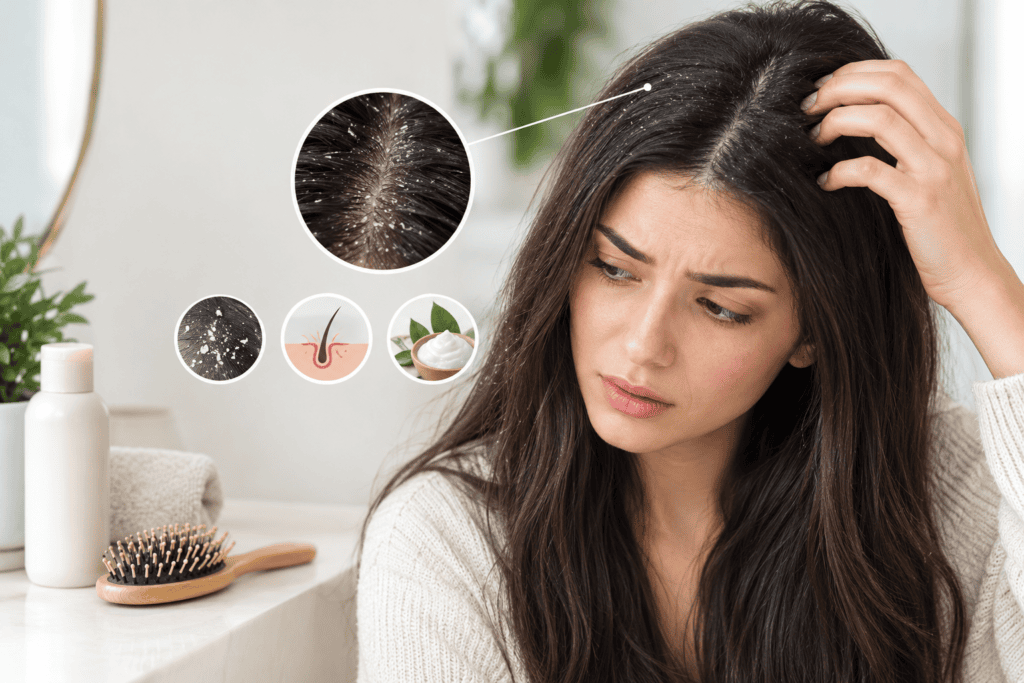
Dandruff is a common scalp condition that causes flakes of skin to show up on your scalp and in your hair. It can also cause itching.
Many people think it means you don’t wash enough. That’s a myth. The American Academy of Dermatology (AAD) says dandruff isn’t caused by poor hygiene. Oily skin, hair care habits, and some medical conditions can all play a part.
Dandruff isn’t dangerous, but it can be stubborn.
What Does Dandruff Look Like? and dandruff causes
Common signs include:
- White or gray flakes in your hair
- Flakes on your shoulders or clothes
- An itchy scalp
- Dry or irritated skin
- Mild redness
- More flaking in certain seasons, often in cold, dry weather
If your scalp is very red, painful, swollen, or covered in thick scales, it may be something other than ordinary dandruff.
What Causes Dandruff?
There’s rarely just one cause.
Oily scalp. Your scalp makes natural oil called sebum. For some people, extra oil makes flaking more noticeable. So dandruff doesn’t always mean a dry scalp. Plenty of people with dandruff have an oily one.
Malassezia. This is a yeast that lives on most people’s skin. In some people, the scalp reacts to it, which can lead to flaking and irritation.
Dry skin. Cold weather, low humidity, very hot showers, and harsh products can dry out your scalp and cause small flakes. Dry scalp and dandruff can look alike, but they aren’t always the same thing, so what helps one may not help the other.
Product buildup. Styling products, dry shampoo, oils, and creams can build up on your scalp and cause flakes or discomfort.
Seborrheic dermatitis. Sometimes what looks like dandruff is actually seborrheic dermatitis. It can cause redness, itching, and greasy-looking scales, and it can also show up on the eyebrows, ears, and sides of the nose. If your symptoms are strong or don’t go away, get it checked.
Is Dandruff Caused by Poor Hygiene?
No. Dandruff happens to people with clean hair too.
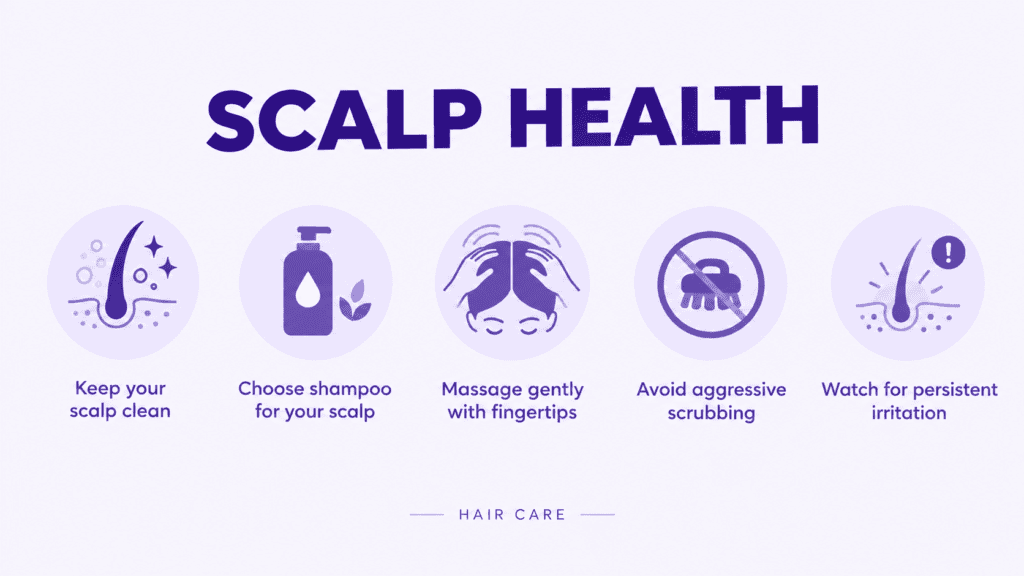
That said, if you wash less often than your scalp needs, oil and dead skin can pile up and make flakes easier to see. On the other hand, washing too hard or using harsh products can irritate your scalp. The goal is a routine that keeps your scalp clean without upsetting it.
How to Get Rid of Dandruff
Many people can handle mild dandruff at home just by washing their hair regularly. If flakes keep coming back, try an anti-dandruff shampoo.
The AAD says to look for one that contains at least one of these active ingredients:
- Zinc pyrithione
- Salicylic acid
- Sulfur
- Selenium sulfide
- Ketoconazole
- Coal tar
A few tips that make a real difference:
- Leave it on. Some dandruff shampoos need to sit on your scalp for about 5 to 10 minutes before rinsing. Check the label of your product.
- Switch if it’s not working. If one shampoo doesn’t help after a fair try, switch to one with a different active ingredient.
- Focus on your scalp. Work the shampoo into your scalp, not the whole length of your hair. These ingredients can dry hair out.
- Cover up in the sun. Protect your scalp from the sun while using dandruff shampoos.
Always follow the directions on the label. Using more product than recommended won’t clear dandruff faster.
How Often Should You Wash Dandruff-Prone Hair?
It depends on your hair type.
If your scalp gets oily quickly, you may need to wash daily or every other day, using your dandruff shampoo about twice a week. If your hair is coarse or curly, wash when needed and use your dandruff shampoo about once a week.
If you’re still choosing a shampoo, our guide to the best shampoos for men and women can help you compare options.
Should You Oil a Dandruff-Prone Scalp?
Scalp oiling is popular, but it isn’t automatically right for dandruff. Some people feel more comfortable after oiling. Others get more buildup and more flakes.
If your scalp is already oily or your dandruff is stubborn, heavy oils may not help. Pay attention to how your scalp reacts instead of assuming more oil is the answer.
Can Dandruff Cause Hair Loss?
Dandruff itself doesn’t usually cause permanent hair loss. But heavy itching leads to scratching, and scratching can irritate your scalp and cause temporary shedding or breakage.
If you’re losing a lot of hair, don’t assume dandruff is the reason. Hair loss has many possible causes, including genetics, hormones, nutrition, medications, stress, and medical conditions. A doctor can help you find the real cause.
Common Dandruff Mistakes
- Scratching or picking at flakes. It can irritate your scalp and make things worse.
- Using too many products at once. If you add oils, scrubs, and shampoos together, you can’t tell what’s helping.
- Very hot water. It can dry out and irritate your scalp. Use comfortably warm water.
- Giving up too fast. Give a shampoo a few weeks before judging it. If it still isn’t helping, switch to one with a different active ingredient instead of guessing.
When Should You See a Dermatologist?
Not every flaky scalp is dandruff. See a dermatologist or doctor if:
- Your dandruff doesn’t improve with treatment
- Your scalp is very itchy or painful
- You have strong redness or swelling
- You see thick, crusty, or silvery scales
- You have sores or bleeding
- You notice bald patches or heavy hair loss
- The problem spreads to your face, ears, or other areas
Conditions like seborrheic dermatitis, psoriasis, eczema, and fungal infections can look like dandruff but need different treatment. A correct diagnosis can save you time and money.
A Simple Dandruff Routine
On wash days
- Use a suitable anti-dandruff shampoo.
- Massage it gently into your scalp.
- Follow the label, including how long to leave it on.
- Rinse well.
- Condition only the lengths of your hair, and keep it off your scalp. Need a pick? See our conditioner reviews.
Between washes
- Don’t scratch.
- Avoid heavy product buildup.
- Keep brushes and combs clean.
Long-term
- Stay consistent with your treatment.
- Change the active ingredient if it isn’t working, not the whole routine every few days.
- See a professional if symptoms get worse or don’t improve.
FAQ
Q: Is dandruff caused by poor hygiene?
A: No. The American Academy of Dermatology says this is a common misconception. Oily skin, hair care habits, and some medical conditions can all play a part.
Q: Which ingredients should an anti-dandruff shampoo have?
A: At least one of these: zinc pyrithione, salicylic acid, sulfur, selenium sulfide, ketoconazole, or coal tar.
Q: How long should I leave dandruff shampoo on my scalp?
A: Some need about 5 to 10 minutes before rinsing. Always check your product’s label.
Q: Can dandruff cause hair loss?
A: Dandruff itself doesn’t usually cause permanent hair loss, but heavy scratching can lead to temporary shedding. See a doctor if you’re losing a lot of hair.
The Bottom Line
Dandruff is common, but you don’t have to live with constant flakes and itching. Start by understanding what’s behind your symptoms. For mild cases, regular washing and an anti-dandruff shampoo with the right active ingredient often help. If your symptoms are severe, keep coming back, or you come with heavy hair loss, talk to a dermatologist.
Want to keep learning? Browse all our hair care guides, read our honest product reviews, and explore more scalp care guides for a healthy scalp.