Quick answer: The best dry hair treatment is a gentler routine: wash less harshly, use conditioner every time you shampoo, reduce heat styling, and handle wet hair gently. If dryness comes with major hair loss, scalp redness, itching, or sudden texture changes, see a dermatologist. medlineplus.
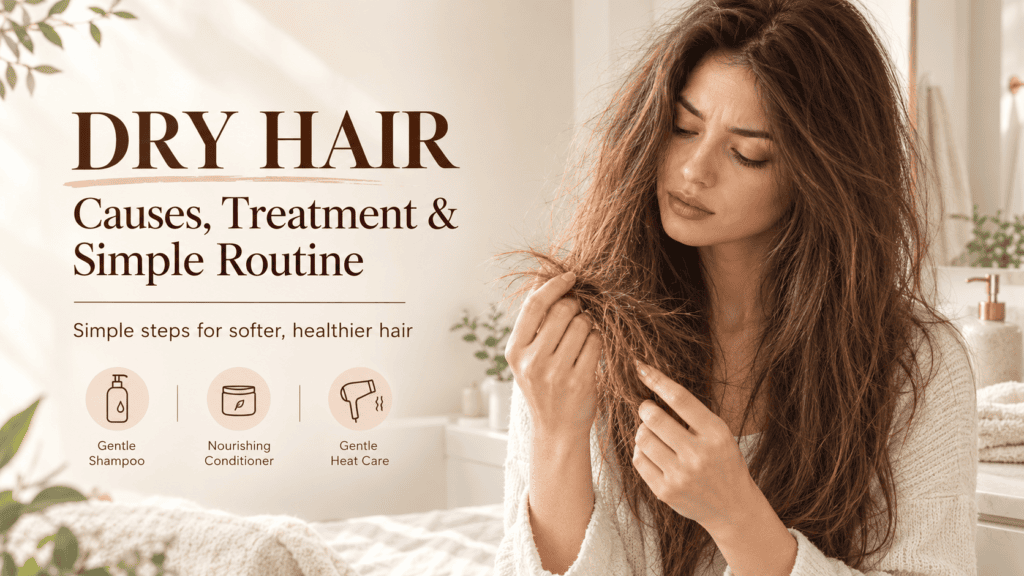
Dry hair feels rough, dull, tangled, or brittle because it is not retaining enough moisture and oils. It is often caused by frequent washing, harsh products, heat styling, chemical treatments, sun exposure, or rough handling—not simply “not enough oil.”
What Is Dry Hair?
Dry hair lacks enough moisture and natural oils to stay smooth and flexible. It may look dull, feel rough, tangle easily, or develop split ends.
Dry hair and damaged hair are related but not identical:
| Dry hair | Damaged hair |
|---|---|
| Often improves with better conditioning and gentler care | May have structural damage from heat, bleach, or chemicals |
| Feels rough, dull, or tangled | May break easily, feel weak, or have severe split ends |
| Can often be managed at home | Severely damaged ends may need trimming. |
Main Causes of Dry Hair
1. Washing too often or using harsh products
Frequent washing, harsh soaps, or products containing drying ingredients can strip moisture from hair. MedlinePlus specifically lists excessive washing, harsh soaps or alcohols, and excessive blow-drying among common causes.
2. Heat styling
Blow dryers, flat irons, and curling irons can damage hair when used too often or at high heat. The American Academy of Dermatology recommends limiting these tools, using low or medium heat, and applying heat protection.
3. Chemical treatments
Bleaching, coloring, relaxing, and perming can weaken the hair shaft and make it more prone to dryness and breakage. Repeated treatments increase this risk.
4. Environment
Dry air, sun, wind, cold weather, chlorine, and salt water can all make hair feel rougher. MedlinePlus includes dry climate among causes of dry hair.
5. Rough handling
Rubbing hair aggressively with a towel, brushing wet hair roughly, or pulling through tangles can cause friction and breakage. AAD advises using a wide-tooth comb and detangling gently from the ends upward.
6. Health or nutritional causes
Sometimes dry hair is linked to an underlying issue, including poor nutrition, thyroid or hormone problems, and other medical conditions.
Dry Hair Treatment: How to Fix Dry Hair
1. Shampoo your scalp, not your ends.
Apply shampoo mainly to the scalp and roots. Let the rinse pass through the lengths instead of scrubbing the ends. AAD recommends this method to clean the scalp without overdrying the hair.
2. Use conditioner after every wash.
Conditioner helps moisturize, detangle, and make hair easier to manage. If your hair is dry or curly, apply conditioner through the length; if it is fine or straight, focus more on the ends.
3. Wash less often if needed.
There is no single correct washing frequency. If your hair is very dry, textured, curly, or thick, AAD says shampooing only when needed — sometimes as little as once every 2–3 weeks — may be appropriate. Oily scalps may still need more frequent washing.
4. Reduce heat damage
- Let hair air-dry when possible.
- Use the lowest effective heat setting.
- Apply a heat protectant before styling.
- Avoid repeatedly passing a flat iron over the same section.
- Limit hot tools to about once a week or less when possible.
5. Dry and detangle gently.
After washing, wrap hair in a towel or T-shirt to absorb water instead of rubbing it. Detangle with a wide-tooth comb, starting at the ends and working upward.
6. Add deep conditioning when needed.
A weekly deep conditioner or mask can help very dry, thick, curly, chemically treated, or heat-styled hair. It improves softness and manageability, but it cannot permanently repair severely damaged hair.
7. Protect hair from the sun and swimming.
Before swimming, wet and condition your hair; use a swim cap if possible. After swimming, rinse immediately and use a deep conditioner to help replace lost moisture.
8. Trim badly damaged ends.
Conditioner and oils can improve how damaged ends look and feel, but they cannot permanently rejoin split hair. If the ends are badly split, trimming them is often the most practical solution.
Simple Dry-Hair Routine
On wash days
- Use a gentle shampoo suited to your scalp.
- Shampoo the scalp and roots.
- Apply conditioner from mid-lengths to ends.
- Detangle gently with a wide-tooth comb.
- Squeeze out water with a soft towel or T-shirt.
- Use leave-in conditioner or a few drops of oil on the ends if needed.
Weekly
- Use a deep-conditioning treatment if your hair feels very dry.
- Check for split ends and excessive breakage.
- Reduce heat styling or take a heat-break week.
Daily
- Avoid unnecessary heat.
- Do not tie hair too tightly.
- Protect hair from sun, chlorine, and friction.
- Be gentle while brushing and styling. aad+1
Does Dry Hair Cause Hair Loss?
Dry hair itself usually does not cause true hair loss from the follicle. However, dry or damaged hair can break more easily, making hair appear thinner or shorter.
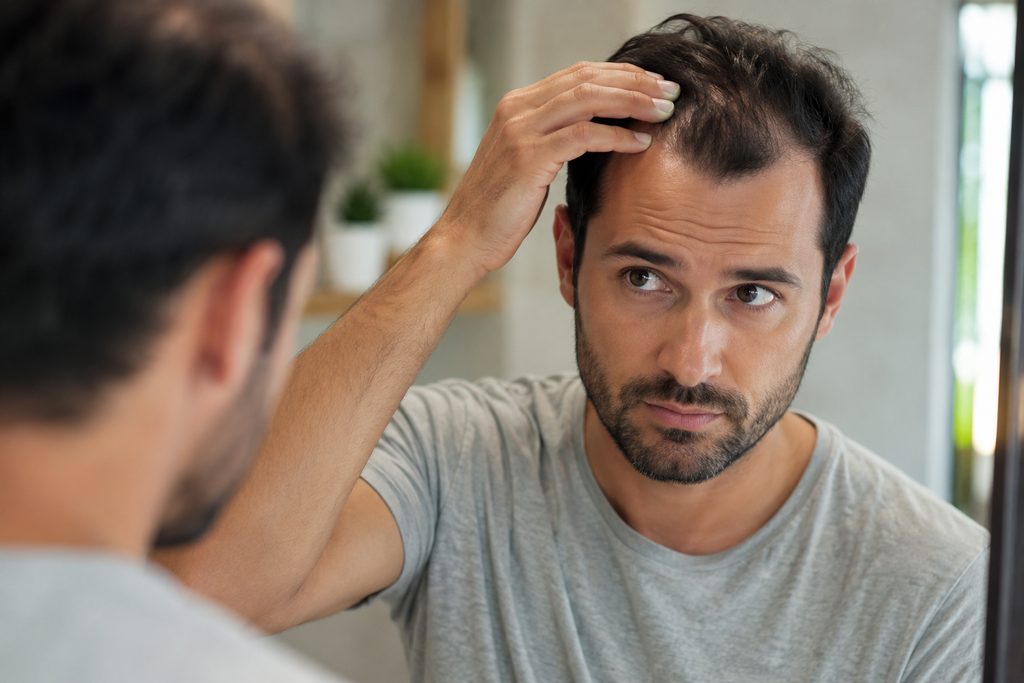
Breakage means the hair shaft snaps along its length. Shedding means the whole hair falls out from the root. If you notice sudden thinning, bald patches, or excessive daily shedding, do not assume dryness is the only cause—speak to a healthcare professional. medlineplus+1
Common Mistakes to Avoid
- Washing with very hot water
- Using too much shampoo on the ends
- Skipping conditioner
- Applying too much oil
- Brushing aggressively, especially when wet
- Using high heat daily
- Repeated bleaching or chemical treatments without protection
AAD notes that excessive brushing can contribute to split ends, while harsh heat and rough handling increase damage.
When to See a Doctor
See a dermatologist or healthcare provider if:
- Dryness does not improve after gentle care.
- You have noticeable hair loss or breaking hairs.
- You have sudden changes in hair texture.
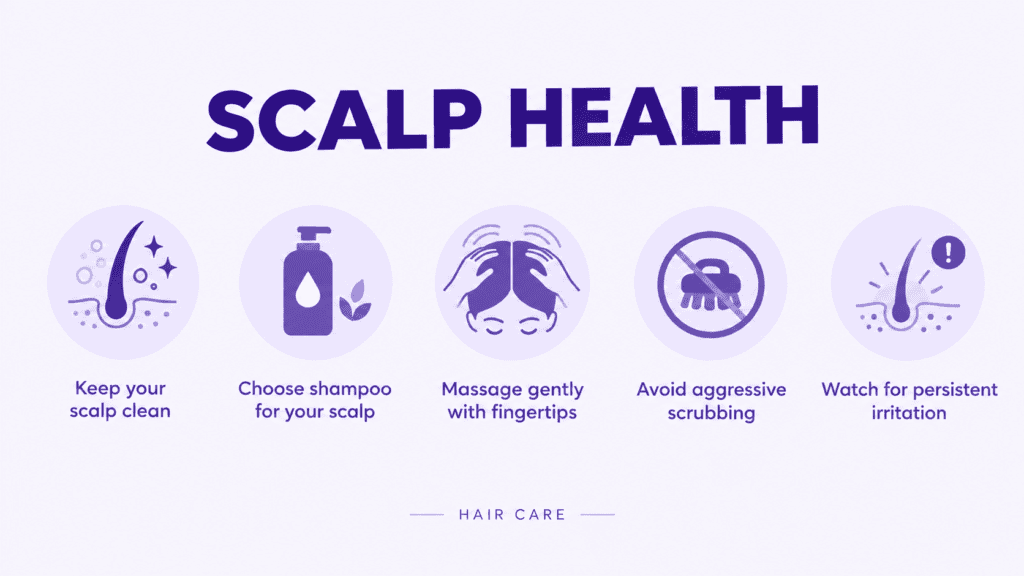
- Your scalp is constantly itchy, red, swollen, warm, or painful.
- You have unexplained symptoms along with hair changes.
Bottom Line
Dry hair usually needs a gentler routine, not more products. Shampoo the scalp, condition the lengths, reduce heat, detangle gently, and protect hair from sun, chlorine, and friction. Give the routine a few weeks, then adjust based on how your hair responds.
Want to keep learning? Browse all our hair care guides, read our honest product reviews, and explore more hair problem guides for healthy hair.