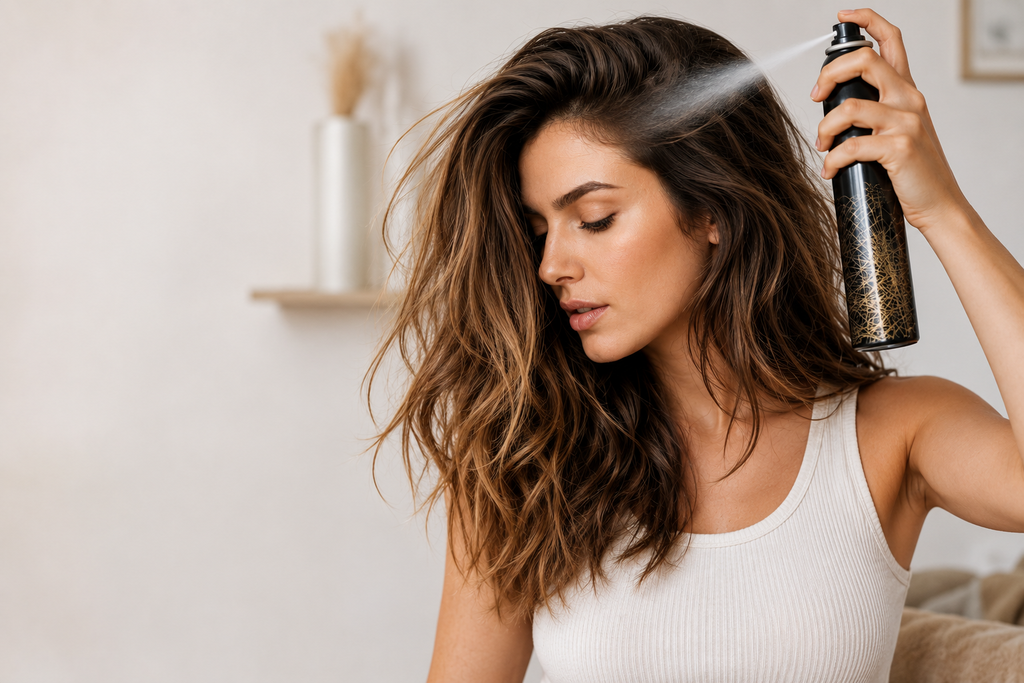
If your hair looks flat, thin, or too smooth after styling, dry texturizing spray can be a simple way to give it more body and texture. Unlike traditional hairspray, it is made to make hair feel fuller and easier to style while giving it a soft, slightly messy look.
The good thing is that you do not need to be a professional hairstylist to use it. With a few simple steps, you can use dry texturizing spray at home to add volume, create waves, or give your hairstyle more shape.
But there is one important thing to remember: more spray does not always mean more volume. Using too much can make your hair feel heavy, rough, or sticky.
In this guide, we will explain how to use dry texturizing spray step by step, when to use it, how much to use, and how to get the best results.
What Is Dry Texturizing Spray?
Dry texturizing spray is a hair styling product that adds texture, volume, and grip to dry hair. It usually comes in an aerosol bottle and feels lighter than many gels, creams, or waxes.
Think of it as a product that gives your hair a little more “grip.” Very soft and silky hair can sometimes be difficult to style because the strands slide past each other. Texturizing spray helps give those strands more separation and hold.
It is especially popular for hairstyles that need a relaxed or slightly messy finish. You can use it for loose waves, ponytails, braids, buns, and hairstyles that need extra volume.
Dry texturizing spray is also different from dry shampoo. Dry shampoo is mainly used to absorb excess oil and make hair feel fresher between washes. Texturizing spray is mainly used for styling, volume, and texture.
What Does Dry Texturizing Spray Do?
The main job of dry texturizing spray is to make hair easier to shape and style.
Here are some of the things it can do:
- Add volume to flat hair
- Give hair more texture
- Make fine hair look fuller
- Add grip for braids and updos
- Help create loose, beachy waves
- Give hairstyles a slightly messy look
- Help curls and waves stay shaped
- Make hair easier to work with
The result depends on your hair type and the product you use. Some sprays give a soft, natural finish, while others provide stronger texture and a more noticeable hold.
If your hair is naturally very fine and slippery, you may notice a bigger difference. If you already have thick, coarse, or naturally textured hair, you may only need a small amount.
How to Use Dry Texturizing Spray Step by Step
Learning how to use dry texturizing spray is easy. The most important part is applying a small amount first and adding more only when you need it.
Step 1: Start With Completely Dry Hair
Dry texturizing spray should normally be used on dry hair.
If your hair is wet, the product may not work the way you expect. Let your hair dry completely before applying the spray.
You can style your hair first with a blow dryer, curling iron, or straightener if that is part of your normal routine.
Step 2: Shake the Bottle
Before spraying, shake the bottle well.
This helps mix the ingredients inside the can so the product comes out evenly.
It is a small step, but skipping it can affect how the product feels on your hair.
Step 3: Divide Your Hair Into Sections
You do not need to make perfect sections.
Simply lift the top layers of your hair and work underneath them. This helps you apply the spray where you actually need texture and volume.
If you want root volume, focus more on the roots and underneath sections.
Step 4: Hold the Bottle Away From Your Hair
Do not press the bottle directly against your hair.
Hold it several inches away and spray lightly. The exact distance depends on the product instructions, so check the bottle before using it.
A light mist is better than soaking one area with product.
Step 5: Spray Small Amounts
Start with a few short sprays.
You can always add more, but removing too much product can be harder.
Move the bottle while spraying instead of holding it in one place.
Step 6: Work the Product Through Your Hair
After spraying, use your fingers to gently move and shape your hair.
You can lift the roots, separate sections, or gently squeeze the hair to create more texture.
For a natural look, your fingers are often enough.
Step 7: Add More Only if Needed
Look at your hair after the first application.
If it still looks flat or too smooth, add a little more spray.
This “start small” method is one of the easiest ways to avoid overusing the product.
When Should You Use Texturizing Spray?
The best time to use dry texturizing spray depends on the hairstyle you want.
For everyday volume, you can use it after drying and styling your hair.
For waves, apply it after creating your waves or curls. It can help separate the hair and make the waves look less perfect and more natural.
For braids, a little spray can give the hair more grip. This can make slippery hair easier to braid.
For ponytails and buns, texturizing spray can help create a fuller look and give the hair more hold.
You can also use it before going out if your hairstyle needs a quick boost.
How Much Spray Should You Use?
This is where many people make a mistake.
There is no single amount that works for everyone because hair types are different. Fine hair may need less product, while thick or very smooth hair may need a little more.
A good rule is to start with a small amount.
Apply a few short sprays, style your hair, and then decide if you need more.
If your hair starts feeling sticky, heavy, very dry, or difficult to move, you may have used too much.
Remember, the goal is to add texture without covering your hair in product.
How to Use Dry Texturizing Spray for More Volume
If your main goal is volume, focus on the roots and the areas that look flat.
Start with dry hair. Lift a section of hair near the crown and lightly spray underneath it.
Put the section down and gently massage or lift the roots with your fingers.
Repeat this on other flat areas.
You can also flip your head forward for a moment and gently shake your hair with your fingers. Then return your hair to its normal position and shape it.
For fine hair, avoid spraying every strand. Concentrating on the roots and a few key sections can create a fuller appearance without making the hair feel overloaded.
Another useful trick is to use a blow dryer before applying the spray. Blow-drying the roots upward can create the initial lift, while texturizing spray can help add grip and texture afterward.
How to Use It for Beachy Texture
Dry texturizing spray is a popular choice for creating a relaxed, beachy hairstyle.
Start with dry hair.
If your hair is naturally wavy, you can simply spray a small amount through the lengths and gently scrunch your hair with your hands.
If your hair is straight, you can create loose waves first with a curling iron or another styling method. Let the hair cool, then lightly spray the texture product over the waves.
Use your fingers to separate the waves instead of brushing them heavily.
The goal is not to make every wave perfect. Beachy hair usually looks better when the waves are loose and slightly uneven.
You can add a little more spray to the ends if they look too smooth.
Common Mistakes to Avoid
Using dry texturizing spray is simple, but there are a few mistakes that can ruin the result.
Using Too Much Product
This is probably the most common mistake.
Too much spray can make hair feel heavy, rough, or sticky. Start with less and build slowly.
Spraying Too Close
Holding the can too close can put too much product in one small area.
Keep the bottle at the distance recommended on the label.
Using It on Wet Hair
Most dry texturizing sprays are designed for dry hair. Applying them to wet hair may reduce the styling effect.
Ignoring the Roots
If you want volume, spraying only the ends will not give you much root lift.
Focus on the areas where your hair looks flat.
Not Shaking the Bottle
Always shake the product before use if the instructions recommend it.
Applying It Everywhere
You do not need to cover your entire head.
Target the areas where you need volume or texture.
Expecting It to Work Like Hairspray
Texturizing spray can provide some hold, but it is not exactly the same as hairspray.
If you need a strong, long-lasting hold, hairspray may be a better choice.
Dry Texturizing Spray vs. Hairspray
Dry texturizing spray and hairspray are both styling products, but they have different jobs.
Dry texturizing spray is mainly used to add texture, volume, grip, and a more natural-looking finish.
Hairspray is mainly used to hold a finished hairstyle in place.
For example, imagine you create loose curls.
You could use texturizing spray to make the curls look fuller and less smooth. Then you could use hairspray if you want extra hold.
You do not always need both products. It depends on the hairstyle and the amount of hold you want.
If your hair is flat and slippery, texturizing spray may be more useful.
If your hairstyle already has the volume and texture you want but keeps falling out, hairspray may be the better choice.
Frequently Asked Questions
Can I use dry texturizing spray every day?
You can use it as part of your styling routine, but using large amounts of any styling product every day can lead to buildup. Keep the amount light and wash your hair regularly.
Can dry texturizing spray make hair look thicker?
It can make hair look and feel fuller by adding texture and separating the strands. It does not actually increase the number of hairs on your scalp.
Is dry texturizing spray good for fine hair?
Yes. It can be useful for fine hair because it adds texture and grip. However, fine hair can become weighed down easily, so start with a small amount.
Can I use texturizing spray on oily hair?
It depends on the product. Texturizing spray is not a replacement for dry shampoo. If your main problem is oily roots, dry shampoo may be more suitable.
Should I use texturizing spray before or after curling my hair?
For many hairstyles, using it after curling can help add texture and separate the curls. Some products can also be used before styling, so always check the product label.
Can I use hairspray after texturizing spray?
Yes. If you want more hold, you can use hairspray after your texturizing spray. Just avoid using too much of both products.
Does dry texturizing spray damage hair?
Using a styling spray correctly does not automatically mean it will damage your hair. However, excessive heat styling and heavy product buildup can cause problems. Follow the product instructions and avoid overusing styling products.
Final Thoughts
Learning how to use dry texturizing spray does not have to be difficult. Start with completely dry hair, shake the bottle, spray a small amount from the recommended distance, and use your fingers to shape your hair.
If you want volume, focus on the roots. If you want beachy texture, work the spray through the lengths and gently scrunch or separate your waves.
The biggest trick is simple: start with less product and add more only when needed.
Dry texturizing spray is not meant to make your hair stiff or completely frozen in place. Its main purpose is to give your hair more body, grip, and texture while keeping the hairstyle looking natural.
Once you learn how much your own hair needs, it can become a very easy product to use for everyday hairstyles, loose waves, braids, ponytails, and extra volume.