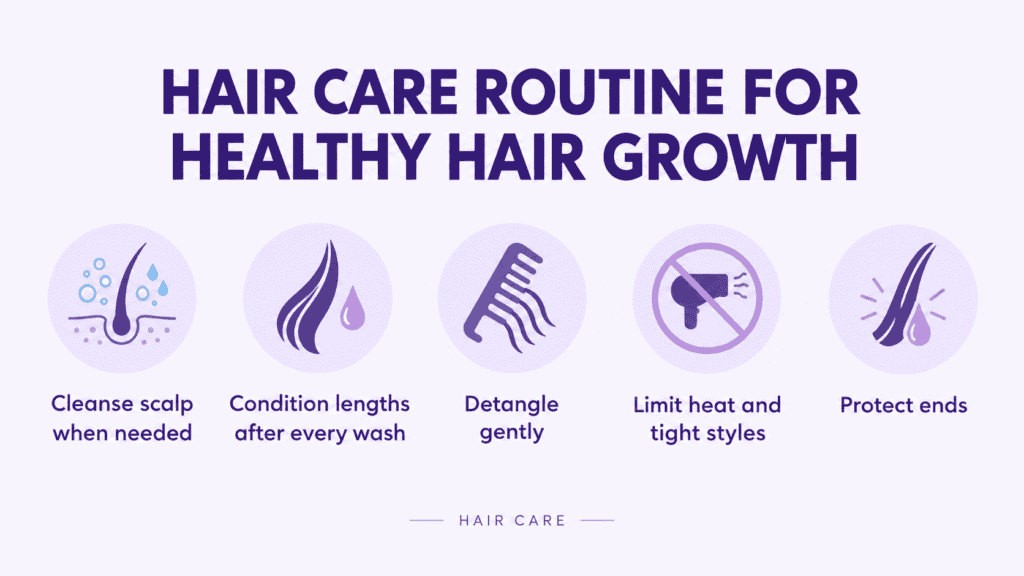
Short answer: A consistent, gentle hair care routine supports healthy hair growth mainly by protecting the hair you already have and creating a healthy environment for new growth. Practical steps — cleanse the scalp as needed, condition the lengths, detangle gently, and limit heat and tension — minimize breakage and support length retention. Limits: a routine cannot change your genetic growth rate or reverse medical hair loss on its own; it cannot treat medical hair loss by itself.
A consistent, gentle hair care routine supports healthy hair growth mainly by protecting the hair you already have and creating a healthy environment for new growth. It cannot change your genetic growth rate (typically about half an inch per month) or reverse medical hair loss on its own. This guide focuses on practical steps that help minimize breakage, support length retention, and keep your scalp comfortable—targeted at women ages 25–45 in the USA.
Your Hair Care Routine at a Glance
| When | Key Actions |
|---|---|
| Wash Day | Cleanse scalp with shampoo, condition mid-lengths to ends, detangle gently, air-dry or use low heat |
| Between Washes | Refresh roots if needed (dry shampoo sparingly), moisturize ends, avoid tight styles |
| Styling | Use heat protectant, keep tools on low/medium, choose loose styles |
Understand Hair Growth, Breakage, and Hair Loss
Hair Growth vs. Length Retention
Hair growth happens inside the follicle under the scalp. Length retention is how much of that new growth you keep by preventing the shaft from breaking. Many women think their hair “isn’t growing” when breakage is simply matching the growth rate, leaving length looking stalled.
Hair Breakage vs. Hair Shedding
- Shedding is normal: 50–100 hairs a day leave the follicle at the end of their cycle. These hairs usually have a small pale bulb at the root.
- Breakage happens along the shaft from damage, dryness, heat, or tension. Broken pieces lack a bulb and are often shorter than your overall length. Reducing breakage is the most controllable way to see more length over time.
Build a Hair Care Routine for Healthy Hair Growth
Step 1: Identify Your Scalp and Hair Needs
Note whether your scalp feels oily, dry, itchy, or flaky, and whether your lengths are fine, coarse, dry, or color-treated. This guides product choice and wash frequency more than hair type alone.
Step 2: Choose a Wash Schedule That Fits Your Scalp
Wash when your scalp feels dirty or oily rather than on a rigid schedule. General starting points:
- Fine or oily scalp: every 1–2 days
- Wavy or normal: every 2–4 days
- Curly, coily, or dry: every 4–7+ days (adjust if buildup or itch appears)
Frequent gentle washing does not cause hair loss; it can help if product or oil buildup is present.
Step 3: Apply Shampoo Mainly to Your Scalp
Focus shampoo on the scalp and roots. Massage gently with fingertips (not nails). Let the lather run down the lengths as you rinse—this is usually enough cleansing for the ends.
Step 4: Condition After Every Shampoo
Apply conditioner from mid-lengths to ends. Leave on for the time recommended on the bottle, then rinse. Conditioner smooths the cuticle, reduces friction, and helps prevent breakage. It does not make hair grow faster from the root.
Step 5: Detangle and Dry Your Hair Gently
Detangle with a wide-tooth comb or fingers while hair is damp and coated with conditioner or a leave-in. Start at the ends and work upward. Blot with a microfiber towel or soft T-shirt instead of rubbing with a regular towel. Air-dry when possible.
Step 6: Limit Heat and Avoid Tight Hairstyles
Use heat tools sparingly and always with a heat protectant on the lowest effective setting. Avoid tight ponytails, buns, or braids that pull on the hairline or cause traction. Loose styles reduce mechanical stress.
Step 7: Add Extra Conditioning When Needed
Use a weekly deep conditioner or hair mask if lengths feel dry, brittle, or damaged. Focus on the ends. Protein treatments can help if hair feels overly soft or stretchy, but balance them with moisture.
Adjust the Routine for Your Hair Type
Fine or Straight Hair
Lighter products prevent weighing hair down. Wash more frequently if roots get oily quickly. Apply conditioner mainly to ends.
Wavy Hair
Balance cleansing and moisture. A leave-in or light cream can define waves and reduce frizz without heavy buildup.
Curly or Coily Hair
Prioritize moisture and gentle handling. Co-washing (conditioner-only cleansing) between shampoo days works for some. Protective styles should not be too tight.
Color-Treated or Bleached Hair
Use sulfate-free or color-safe formulas. Limit heat and chemical processing. Extra conditioning and bond-building products can help reduce breakage from porosity and damage.
Do You Need Hair Oils, Scalp Massage, or Supplements?
Hair Oils: Optional Care, Not a Guaranteed Growth Treatment
Oils primarily condition the hair shaft and can reduce protein loss and breakage (coconut oil has the strongest evidence for this). Rosemary oil showed similar hair-count improvements to 2% minoxidil in one six-month study on men with pattern hair loss, but evidence is limited and results vary. Most oils do not meaningfully accelerate growth rate. Use sparingly on ends or as a pre-wash treatment if your hair likes them; avoid heavy application on fine or oily scalps.
Scalp Massage: What Does the Evidence Say?
One small 24-week study in nine healthy men found a modest increase in hair thickness with daily four-minute massage, but no significant change in hair count or growth rate. It is safe, low-cost, and may improve comfort or product distribution. Treat it as a pleasant extra, not a proven growth treatment.
Hair-Growth Supplements: When to Seek Professional Advice
Supplements may help only if you have a confirmed deficiency (for example, iron, zinc, or certain vitamins). Routine use without deficiency has limited supporting evidence and can occasionally cause harm. Discuss bloodwork and any supplement with a healthcare professional before starting.
Support Hair Health With a Balanced Diet
A diet with adequate protein, iron, zinc, vitamin D, vitamin C, and omega-3s supports the building blocks of hair. Focus on whole foods: lean proteins, leafy greens, nuts, seeds, eggs, and fatty fish. If you suspect a deficiency (especially with heavy periods, restrictive eating, or fatigue), talk with a healthcare professional about testing. For more detail, see our hair-growth nutrition guide.
How to Track Your Progress
Take consistent photos in the same lighting and parting every 4–6 weeks. Notice improvements in manageability, less breakage in the brush or shower, and scalp comfort. Expect gradual change—visible length gains from better retention often take several months. Growth rate itself is largely genetic and age-related.
When to See a Dermatologist
See a board-certified dermatologist if you notice:
- Sudden or excessive shedding
- Widening part, thinning crown, or receding hairline
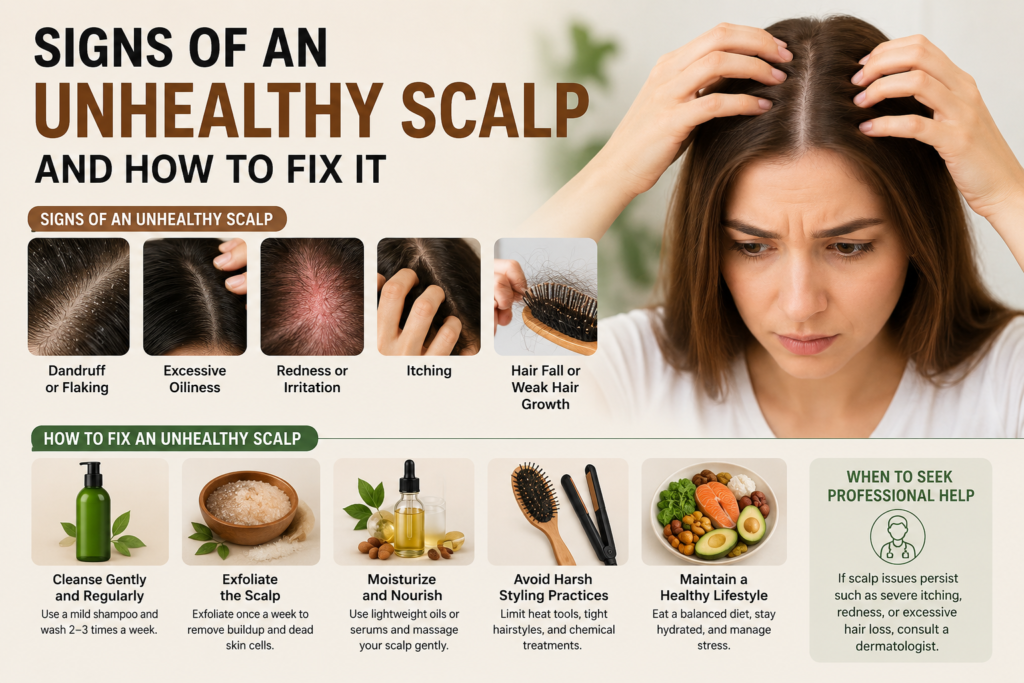
- Persistent scalp itching, burning, redness, or scaling
- Hair changes after pregnancy, major illness, medication, or hormonal shifts
Early evaluation can identify treatable causes (nutrient issues, thyroid, pattern hair loss, etc.) and guide medical options when needed.
Frequently Asked Questions
What Is a Good Hair Care Routine for Healthy Hair Growth?
Cleanse the scalp as needed, condition the lengths, handle hair gently, limit heat and tension, and support overall health with diet and sleep. Consistency matters more than expensive products.
How Often Should I Wash My Hair?
As often as your scalp needs it. Fine or oily scalps often prefer more frequent washing; dry or curly hair may prefer less. Adjust based on how your scalp and hair feel.
Can Conditioner Help My Hair Grow?
Conditioner does not increase growth speed from the follicle. It reduces breakage and friction, helping you retain more of the length you grow.
Should I Detangle My Hair Wet or Dry?
Most hair detangles more safely when damp and conditioned. Fine or straight hair can sometimes be gently detangled dry; curly and coily hair usually benefits from wet or damp detangling with slip.
Do I Need to Oil My Scalp?
No. Oiling is optional. Some people enjoy it for comfort or as a pre-wash treatment; others find it causes buildup. Listen to your scalp.
Do I Need Hair-Growth Supplements?
Only if testing shows a deficiency. Otherwise, a balanced diet is usually sufficient. Consult a professional before supplementing.
Can a Hair Care Routine Treat Hair Loss?
A good routine supports healthy hair and minimizes breakage, but it cannot treat medical hair loss by itself. See a dermatologist for thinning, excessive shedding, or patterned loss.
Your Simple Hair Care Checklist
Essential steps
- Cleanse scalp when needed
- Condition lengths after every wash
- Detangle gently
- Limit heat and tight styles
- Protect ends
Optional extras
- Weekly mask
- Light oil on ends
- Scalp massage for relaxation
When to seek professional help
- Noticeable thinning, rapid shedding, or scalp symptoms
Medical Disclaimer
This article is for informational purposes only and is not a substitute for professional medical advice, diagnosis, or treatment. Always consult a qualified healthcare provider or board-certified dermatologist with questions about your hair or scalp health, especially before starting new treatments or supplements.