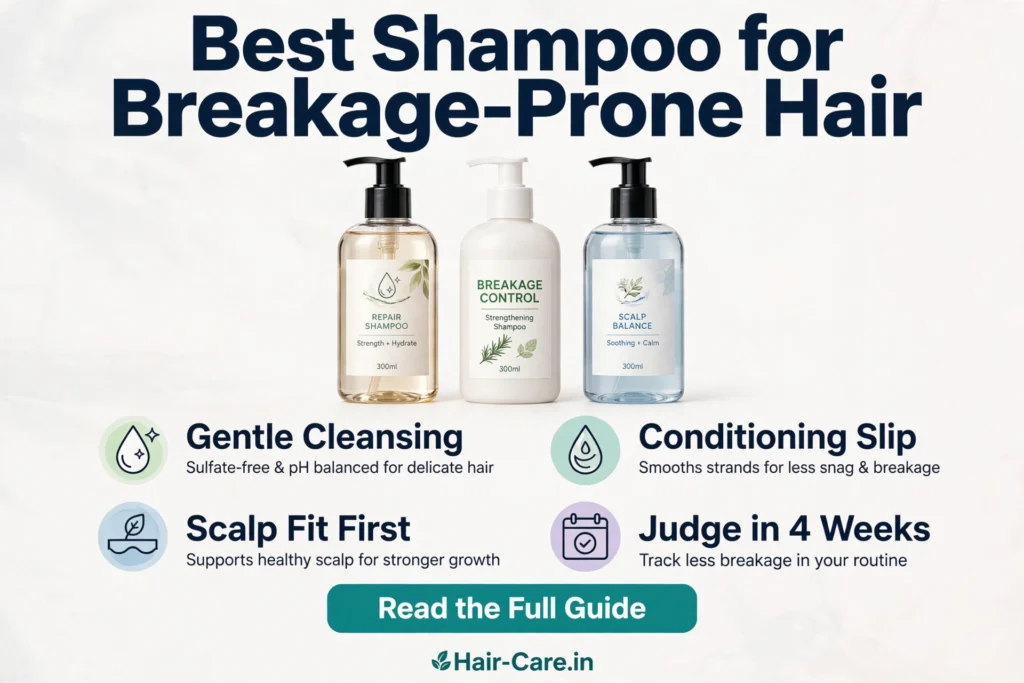
Short answer: The best shampoo for breakage-prone hair is not one brand — it is a gentle, conditioning shampoo that cleans the scalp without stripping the lengths, gives slip for detangling, and does not leave hair squeaky-dry. Look for mild surfactants, conditioning agents, and a formula that suits your scalp (oily, dry, or dandruff-prone). No shampoo regrows hair or repairs split ends; the win is fewer snaps, not a miracle.
Research-based summary, not a doctor’s advice. This is a choosing guide, not a hands-on test of every brand. If breakage is sudden or severe, see a clinician.
What Breakage-Prone Hair Needs
Slip first: hair that tangles less snaps less. Gentle cleansing second: harsh stripping makes dry ends drier and more brittle. Scalp fit third: a shampoo that irritates your scalp will make you scratch and break more hair, whatever it promises for the lengths.
Ingredients to Look For, and to Avoid
Look for: mild surfactants (e.g. coco-betaine, decyl glucoside types), conditioning agents (panthenol, ceramides, argan/shea in small amounts), and a pH-balanced, non-stripping feel. Avoid as a rule: very harsh stripping formulas if your ends are dry, heavy waxes that build up on fine hair, and any product claiming regrowth or split-end repair — those claims are not supported.
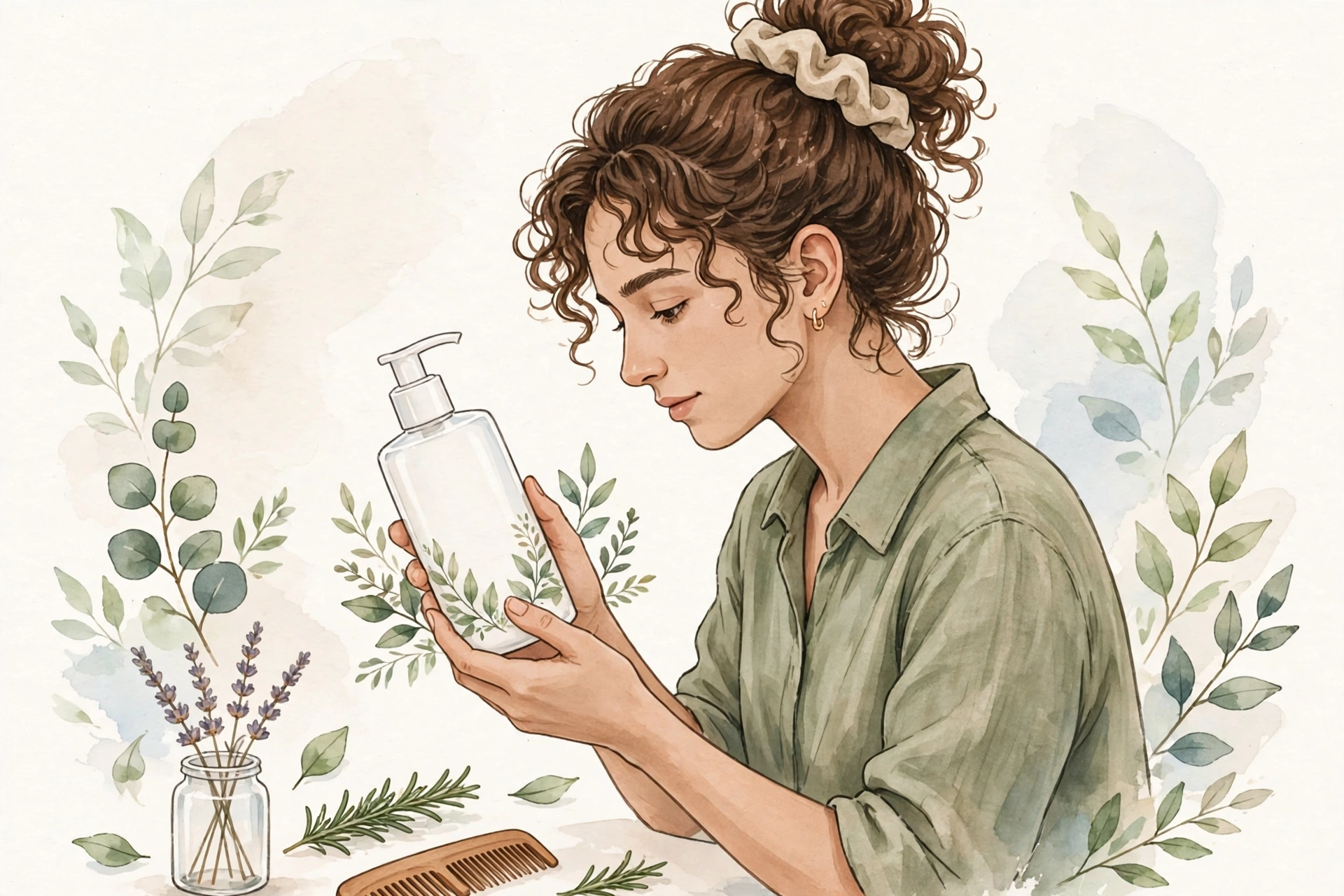
Choose by Hair Type
| Hair type | Choose | Avoid |
|---|---|---|
| Fine, breakage-prone | Lightweight, volumising gentle shampoo, conditioner on ends only | Heavy oils, heavy masks every wash |
| Dry, coarse, curly | Creamy, moisturising shampoo, richer conditioner | Harsh clarifying every wash |
| Oily scalp, dry ends | Gentle scalp shampoo, conditioner mid-ends only | One heavy shampoo for both zones |
| Dandruff-prone | Antifungal shampoo 2-3x/week, gentle shampoo other days | Scented harsh shampoo that irritates scalp |
For persistent dandruff, the NHS dandruff guidance explains when an anti-dandruff shampoo is enough and when to see a GP.
How to Test a New Shampoo in 4 Weeks
Week 1: note detangling ease and scalp feel. Week 2: note dryness and frizz. Week 3-4: count short pieces in your brush vs before. Keep everything else the same — if you change shampoo, conditioner, and styling at once, you will not know what helped. These basics echo the American Academy of Dermatology’s healthy hair tips.
Verdict
Do not buy a shampoo for its breakage promise alone. Buy it for gentle cleansing + slip + scalp fit, then judge it by fewer snaps in 4 weeks. A good routine beats a good label. For a worked example, read our OGX Anti-Hair Fall + Coconut Caffeine shampoo review.
Watch: Healthy Hair Care Tips
▶ Watch on YouTube: Healthy hair care tips from dermatologists — board-certified dermatologists explain how washing and conditioning habits protect hair. Video credit: American Academy of Dermatology.
Frequently Asked Questions
What is the single best shampoo for breakage? There is no single best — it depends on hair type and scalp, as above.
Does sulfate-free help breakage? It can help if sulfates dry your hair, but gentleness matters more than the sulfate-free label alone.
Should I use shampoo + conditioner both? Yes — shampoo cleans, conditioner gives slip; skipping conditioner hurts breakage-prone hair.
How often should I wash? As often as your scalp needs, gently — frequency alone is not the enemy, rough washing is.
When should I see a doctor? Sudden, heavy, or patchy loss, or scalp pain/sores.