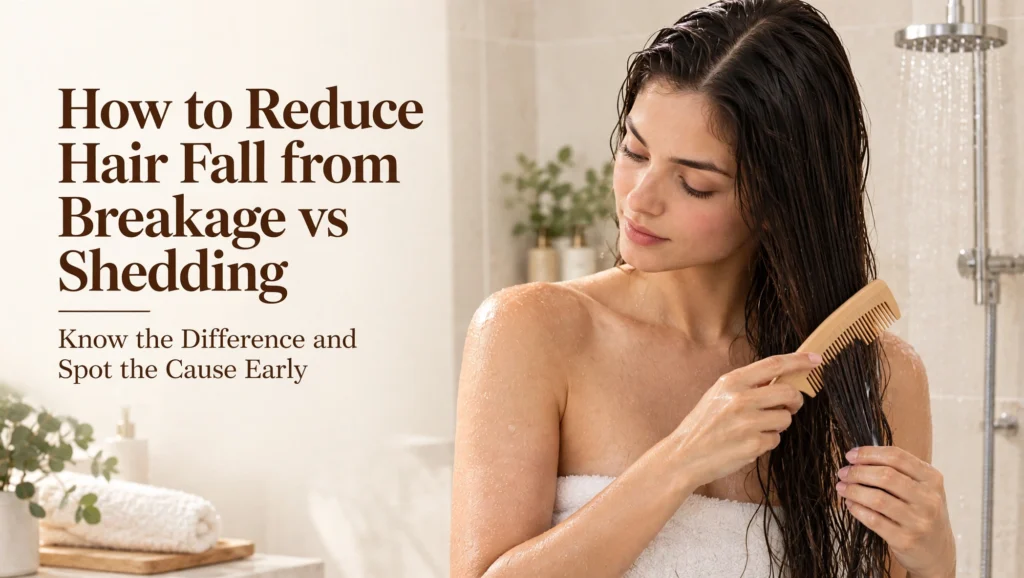
Short answer: To reduce hair fall from breakage, first check what you are losing: short pieces with no bulb are breakage, full-length hairs with a small white bulb are shedding. Breakage falls when you reduce friction and improve conditioning slip — gentle washing, detangling from the ends, less heat, loose ties, silk or satin sleep. Shedding does not fall from a shampoo alone; if shedding is sudden, heavy, or patchy, see a clinician.
Research-based summary, not a doctor’s advice. This article is about breakage, the part you can control with routine. It does not diagnose hair loss or replace a clinician.
Breakage or Shedding? The 30-Second Check
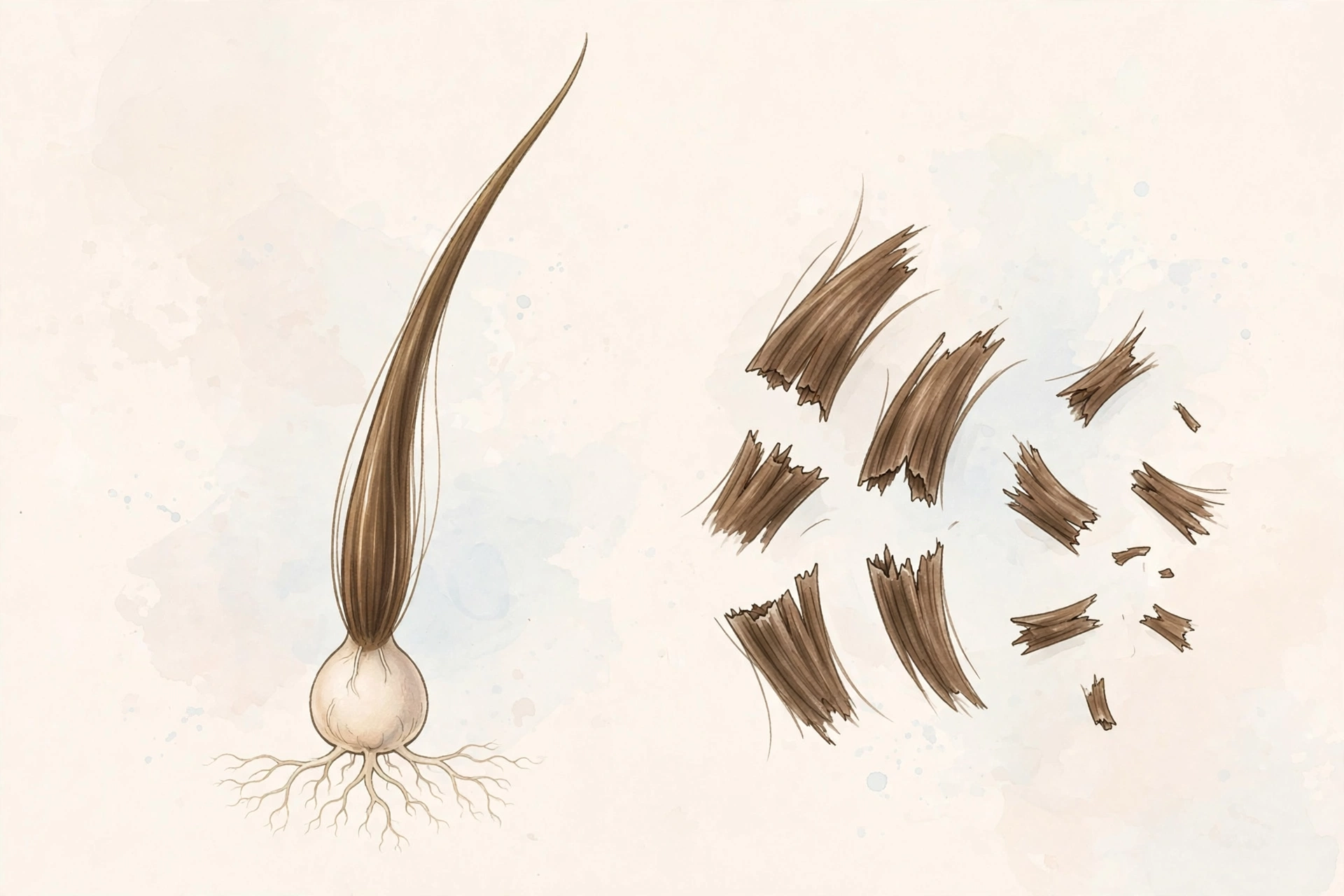
Breakage: short pieces, different lengths, no bulb at the end, often near the ends or mid-lengths, more after bleaching, heat, or tight styling. Shedding: full-length hairs, similar length, small bulb at the root end, more in the shower or on the pillow, often seasonal or stress-related. Counting only one type matters — treating shedding with a breakage shampoo will disappoint you. For the full length-protection routine, see our guide on how to stop hair breakage.
Why Breakage Happens
Hair is weakest when wet, when tangled, and when dry. Wet combing from the roots, rough towel drying, high heat without protectant, tight elastics, and dry ends all snap the shaft. A snapped strand cannot be rejoined; the goal is to snap fewer strands, not to repair snapped ones.
The Routine That Reduces Breakage
- Wash gently: shampoo the scalp, let suds run down the lengths, do not scrub the ends.
- Condition mid-lengths to ends every wash — this is where slip comes from. Our guide to coconut oil for hair breakage explains one well-studied way to add it.
- Detangle from the ends upward, with a wide-tooth comb, on damp hair with conditioner or leave-in slip.
- Blot, do not rub, with a soft towel or T-shirt.
- Heat low, protectant always, air-dry when you can.
- Loose, metal-free ties; silk or satin pillowcase at night.
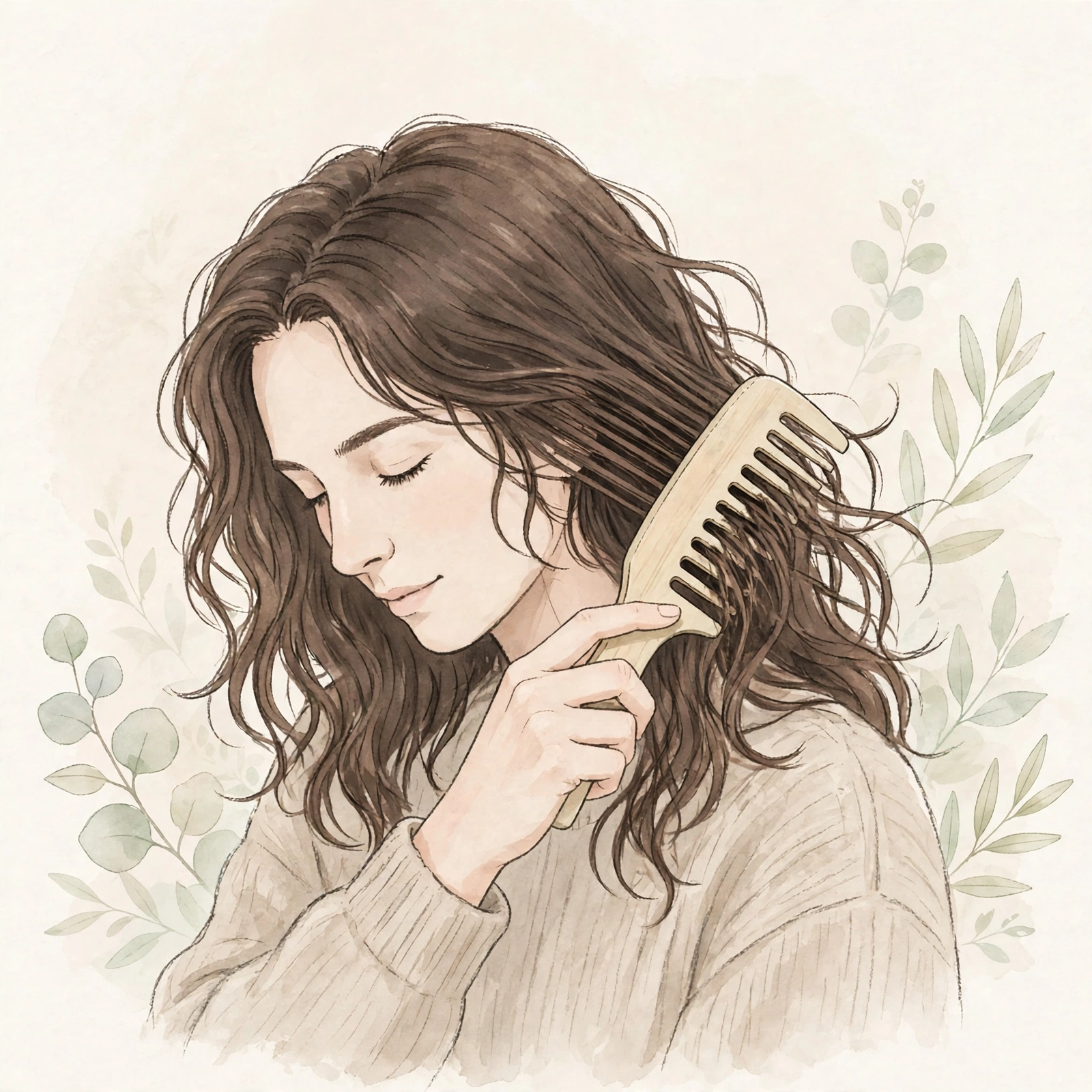
These are the same basics the American Academy of Dermatology’s healthy hair tips recommend — condition, handle wet hair gently, and protect it from heat.
What Shampoo Can and Cannot Do
A sulfate-free shampoo for thinning hair can make fragile hair easier to keep — but it is worth knowing exactly what shampoo can and cannot do:
| Claim | Reality |
|---|---|
| Reduces breakage feel | Plausible — conditioning shampoo improves slip |
| Stops shedding | No — shedding is a root/follicle issue, not a wash issue |
| Regrows hair | No — no shampoo regrows pattern loss |
| Strengthens new growth | New growth is healthy anyway; shampoo protects existing length |
How to Judge It in 4–6 Weeks
Take a photo of your brush/shower drain weekly (same light), count short pieces vs full hairs, and note tangles. Fewer short pieces and easier detangling mean breakage is falling. If full-length shedding rises, do not keep buying breakage products — get a clinician’s view.
Verdict
Breakage is the most fixable kind of hair fall, and the fix is mostly routine, not a miracle product. A gentle, conditioning shampoo helps — like the OGX Anti-Hair Fall Coconut Caffeine shampoo we reviewed — but the detangling, drying, and sleeping habits do most of the work. For a deeper, cause-by-cause breakdown, Hair Folli’s hair breakage remedies guide is worth a second read.
Watch: Hair Fall vs Hair Breakage, Explained
Video credit: Dr. Rasya Dixit — “Hair Fall vs Hair Breakage Difference | Real Cause of Hair Loss & Best Treatment.”
Frequently Asked Questions
How do I know if it is breakage or shedding?
Short pieces, no bulb = breakage; full hairs with bulb = shedding.
Can shampoo stop hair fall?
Only the breakage part, by improving slip and conditioning.
Does trimming stop breakage?
Trimming removes split ends, it does not stop new breakage higher up.
Is daily washing bad for breakage?
Not if it is gentle and conditioned; rough washing is the problem, not frequency alone.
When should I see a doctor?
Sudden, heavy, patchy, or painful shedding, or loss with scalp symptoms.