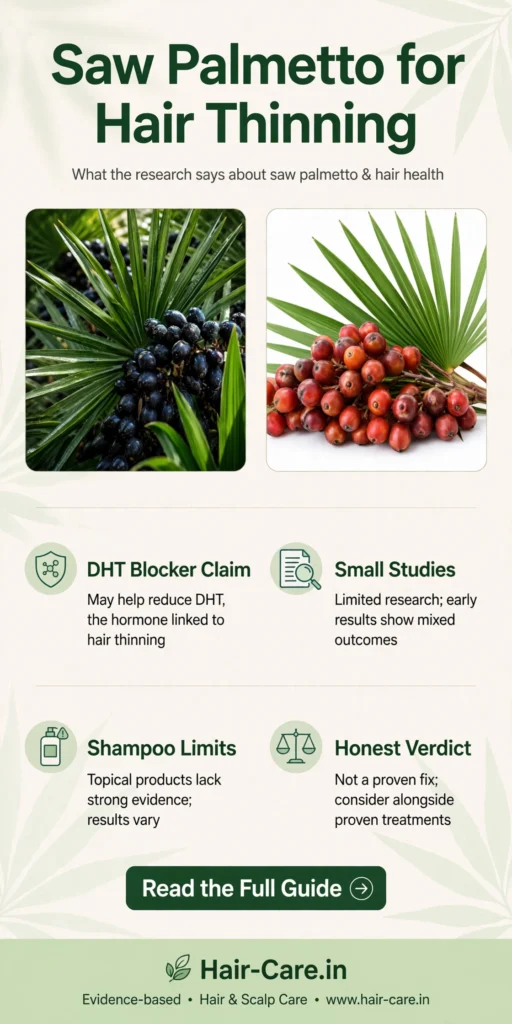
Short answer: Saw palmetto is a plant extract marketed as a natural DHT blocker, because it may partly inhibit 5-alpha reductase, the enzyme that converts testosterone to DHT. The human evidence is limited: the most-cited study was a tiny 2002 oral pilot (6 of 10 men improved), not a shampoo trial, and topical/shampoo evidence remains thin. It is a fair add-on ingredient, not a proven hair-loss treatment, and it cannot replace minoxidil, finasteride, or a clinician’s advice for pattern hair loss.
Research-based summary, not a doctor’s advice. Saw palmetto has hormonal activity — avoid in pregnancy, and talk to a clinician if you take hormone-related medicines or have a hormone-sensitive condition.
What Saw Palmetto Is and How It Is Supposed to Work
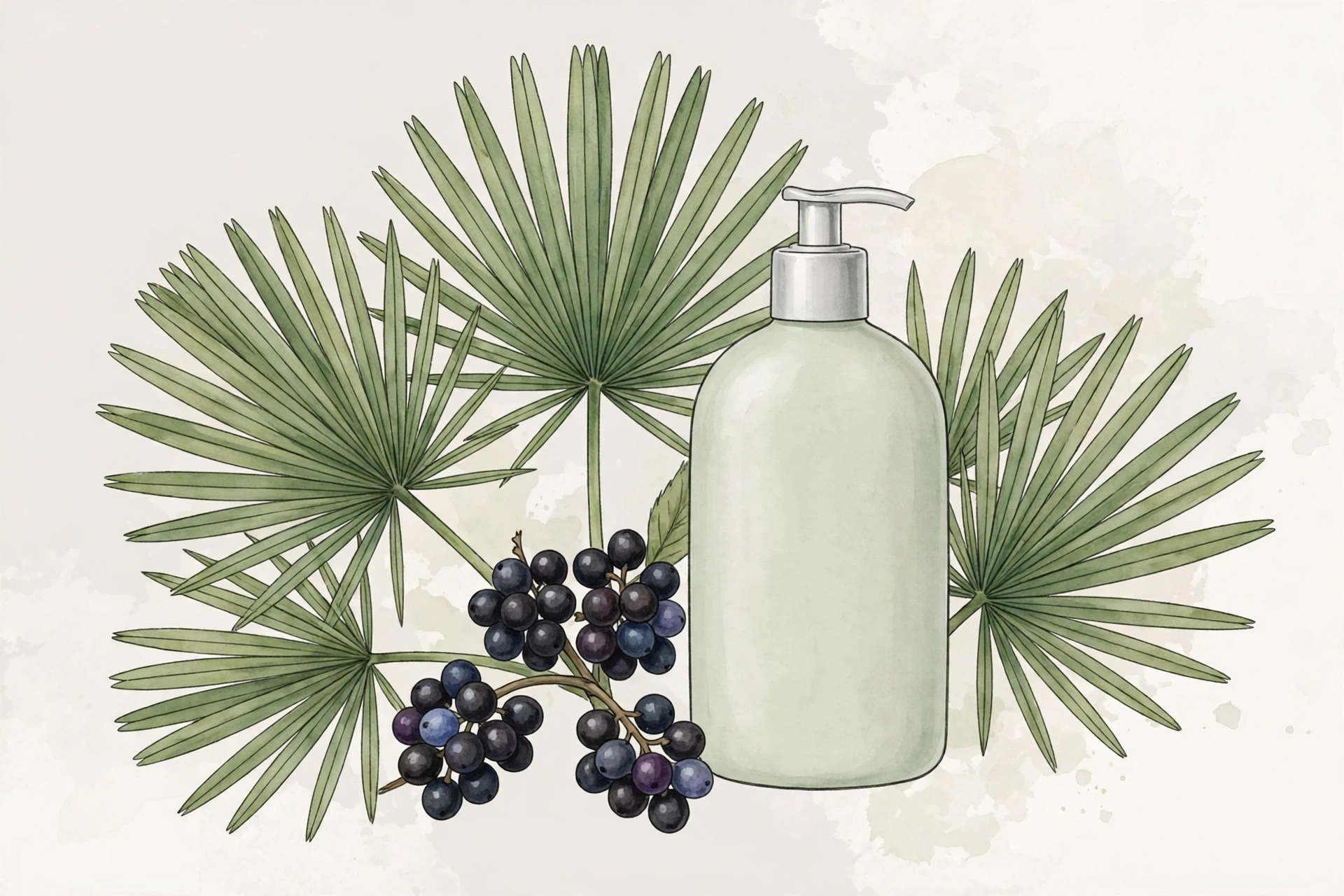
Saw palmetto (Serenoa repens) comes from palmetto berries. Its fatty acids are thought to partly block 5-alpha reductase and compete with DHT at androgen receptors, which in theory slows follicle miniaturisation in androgenetic alopecia. Some lab work also suggests it may support the anagen (growth) phase and calm inflammation around follicles.
What the Human Studies Actually Show
- Prager et al. 2002: small oral pilot of saw palmetto + beta-sitosterol, 6 of 10 treated men rated improved by blinded investigators — encouraging proof of concept, tiny sample, oral not shampoo.
- Morganti et al. 1998: earliest topical trial used a saw palmetto lotion plus an oral supplement over 50 weeks — combined intervention, not shampoo alone. XYON’s saw palmetto shampoo evidence review (medically reviewed by Dr. Christina Han) covers this trial and the topical data.
- Later topical work: one study of 62 men and women using saw palmetto shampoo/lotion for 3 months reported a 35% increase in hair density — small, and product details matter.
- Comparisons: in one comparison, finasteride stopped loss for 68% vs saw palmetto boosting growth in 38% — finasteride was more effective, especially in less advanced loss. Keeps’ saw palmetto hair health overview (reviewed by Dr. Raman Madan) discusses the same comparison.
- Bottom line: evidence is mostly small, oral, or combined — not a large shampoo-only trial.
Saw Palmetto Shampoo vs Other Forms
It helps to separate the delivery form from the ingredient: Happy Head’s thinning-shampoo ingredient ranking (reviewed by board-certified dermatologist Dr. Ben Behnam) rates saw palmetto’s evidence as limited, behind ketoconazole.
| Form | Evidence | Limit |
|---|---|---|
| Shampoo (rinse-off) | Thinnest — short contact, low dose | Cannot rely on it alone |
| Topical lotion/serum (leave-on) | Small trials, more contact time | Still small samples |
| Oral supplement | Most cited pilots | Systemic effects, interactions, lab-test interference possible |
| Proven treatments (minoxidil/finasteride) | Large trials | Prescription/side-effect considerations, clinician needed |
Who Might Try It, Who Should Avoid It
Might try as an add-on: mild pattern thinning, people already on a proven treatment who want a botanical shampoo, with realistic expectations. For a product-level example, read our PURA D’OR Original Gold Label Anti-Thinning Shampoo review — its botanical list includes saw palmetto.
Avoid or ask a clinician first: pregnancy, hormone-sensitive conditions, people on hormone medicines, and anyone expecting regrowth from shampoo alone.

How to Use It Sensibly
- Use a shampoo that lists saw palmetto clearly, not just “botanical blend” with no detail.
- Massage into scalp, leave 2-3 minutes if tolerated.
- Judge over 3-6 months with photos, not weeks.
- Track shedding and density, not just feel.
- Stop and seek advice if irritation, or any unexpected hormonal symptoms, occur.
Technique matters as much as the ingredient: our guides on how to stop hair breakage and whether caffeine shampoo works cover the routine side and a botanical with a similar evidence profile.
Watch: Saw Palmetto and Hair Growth — Dermatologist Explains
▶ Watch on YouTube: Dermatologist Breaks Down Saw Palmetto for Hair Growth — a dermatologist explains what this botanical may and may not do for hair.
Video credit: Tea with MD — “Dermatologist Breaks Down Saw Palmetto for Hair Growth”.
Verdict
Saw palmetto is one of the more interesting botanicals for thinning hair, but “interesting” is not “proven”. As a shampoo ingredient it is a reasonable supporting choice — as a sole treatment for pattern loss, it is not enough.
Frequently Asked Questions
Does saw palmetto block DHT?
It may partly inhibit 5-alpha reductase, but shampoo evidence for meaningful scalp DHT reduction is weak.
Does saw palmetto shampoo regrow hair?
Not proven in large trials; some small studies show improvement, not regrowth for most people.
How long does it take?
Studies that showed anything used months (3-6+), not days.
Is it safe?
Generally well tolerated topically; oral forms can cause stomach upset and affect lab tests; avoid in pregnancy.
Is it better than finasteride?
No — comparisons favour finasteride for stopping loss.