Short answer
Short answer: A sensitive scalp care routine works best when it is simple and gentle: wash only when your scalp needs it, use lukewarm water and your fingertips — not your nails — put shampoo on the scalp only and conditioner on the lengths only, patch-test any new product behind one ear first, and keep between-wash care light so residue does not build up and irritate you again.
This is the follow-up to choosing a shampoo. Choosing the right shampoo helps, but a routine is what protects your scalp day after day. Most top articles give a few tips and then sell a product. They do not give a complete daily and weekly plan. This post does: wash rhythm, wash-day steps, between-wash care, hard water, heat and friction, a flare plan, and clear signs for when to see a clinician.
1. Why a sensitive scalp reacts so easily
A sensitive scalp is not one single condition. It is a scalp that reacts more quickly than most to friction, heat, fragrance, leftover product, hard water, or washing too often — or too rarely.
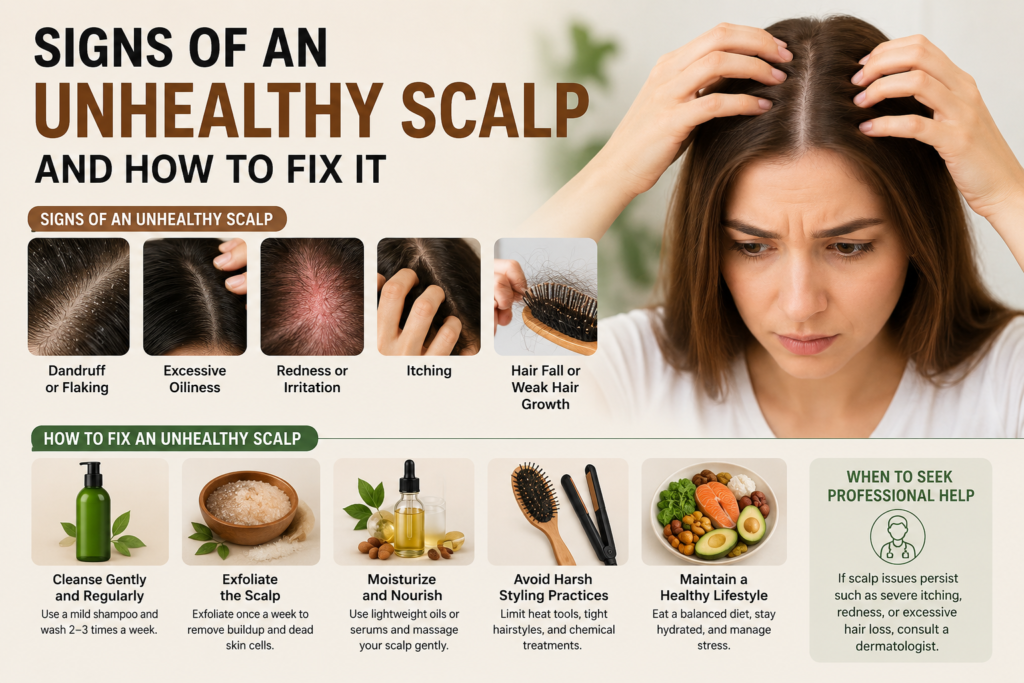
Common triggers, from research and dermatology guidance, include:
- Washing with very hot water, which strips natural oils and leaves the scalp tight and itchy.
- Scrubbing hard with nails, which creates tiny scratches that sting when product touches them.
- Leaving shampoo, conditioner, or styling product sitting on the scalp, where residue builds up.
- Fragrance and strong cleansers, which some scalps tolerate badly even when the hair itself looks fine.
- Washing every day with a strong shampoo, or going too long without washing so oil, sweat, and dead skin build up.
The goal of a routine is therefore not to add more products. It is to remove friction, heat, and residue, and to give the scalp a steady rhythm it can predict. Less stuff, used gently and consistently, usually beats a long list of new products.
A note on hair loss, because this routine is often searched alongside it: a sensitive scalp does not automatically mean you are losing hair permanently. Breakage from friction, scratching, and harsh washing can make hair look thinner, and shedding can increase when the scalp is inflamed. This post makes no regrowth claim. If you notice sudden shedding, bald patches, pain, or scaling that does not improve, that is a clinician question, not a routine question — see section 9.
2. The daily routine: what to do on a non-wash day
A sensitive scalp does not need daily washing, and it does not need daily treatment. On days you do not wash, keep it simple:
Morning:
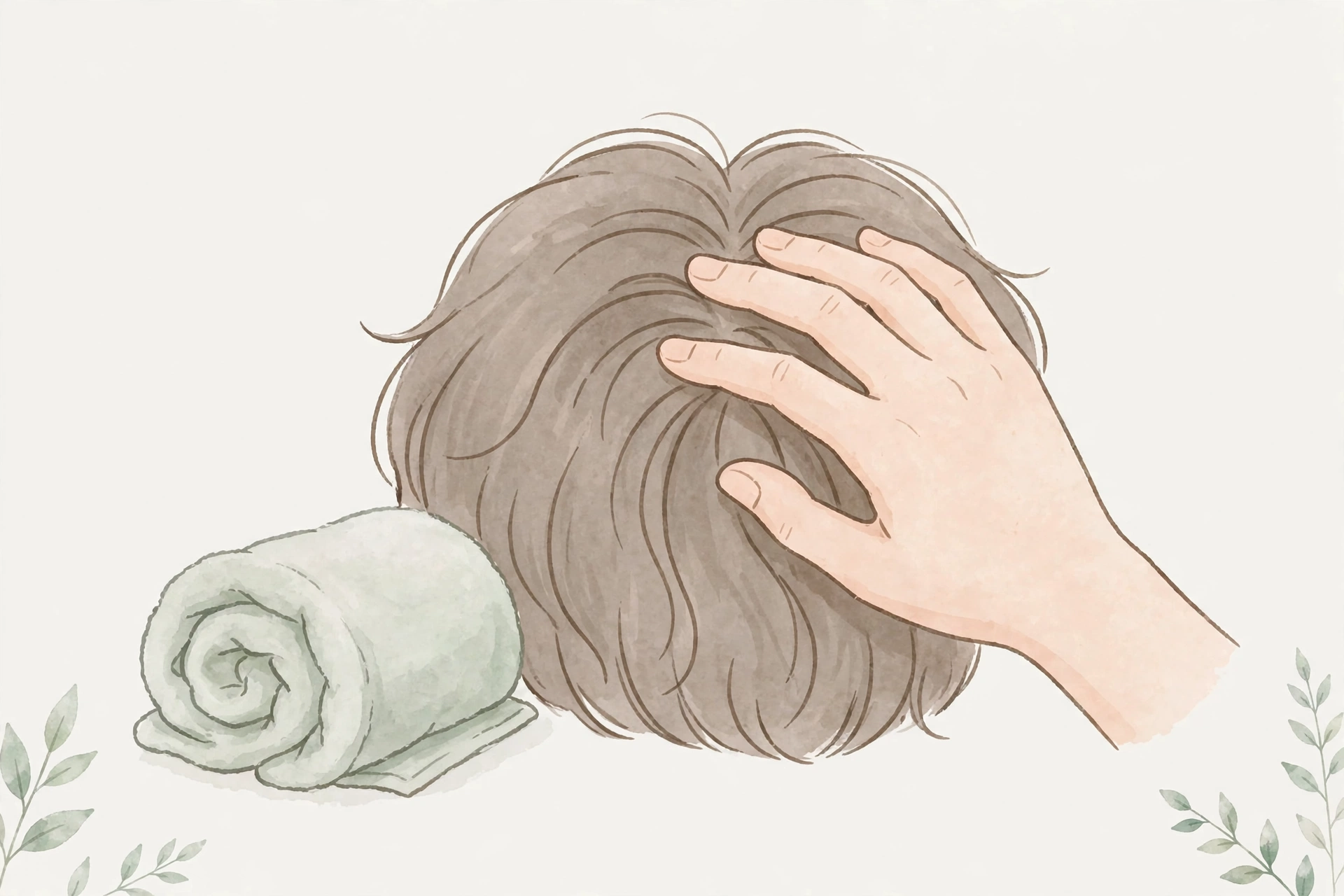
- Do not scratch or rub the scalp when you wake up. If it itches, press gently with clean fingertips for a few seconds instead of scratching.
- Brush gently from the lengths upward, not hard from the roots down. A wide-tooth comb or a soft brush causes less friction than a fine, hard brush.
- Keep hairstyles loose. Tight ponytails, braids, and buns pull on the scalp all day and can make soreness worse.
During the day:
- Avoid touching and re-touching your scalp. Hands carry oil, dirt, and product.
- If you use dry shampoo, use it sparingly and only on the hair, not sprayed directly onto an already irritated scalp. On a sensitive scalp, dry shampoo is a between-wash helper, not a daily habit — residue from it is a common irritant.
- Protect the scalp from strong sun when you are outdoors for a long time. A loose hat or scarf helps; a tight cap that traps sweat does not.
Evening:
- Loosen your hair before bed. A loose braid or loose bun is gentler than a tight tie.
- Use a clean pillowcase. Oil and product build up on fabric, and your scalp rests on it all night.
- Do not apply a new oil, serum, or treatment at night “just to try it.” New products belong in a patch test first (section 6), not in a full overnight application.
This daily part takes minutes. That is the point. A routine you can actually keep is better than a perfect routine you abandon in a week.
3. Wash day, step by step
Wash day is where most irritation happens, so this is the most important part of the routine.
Step 1: Water first, and lukewarm only.
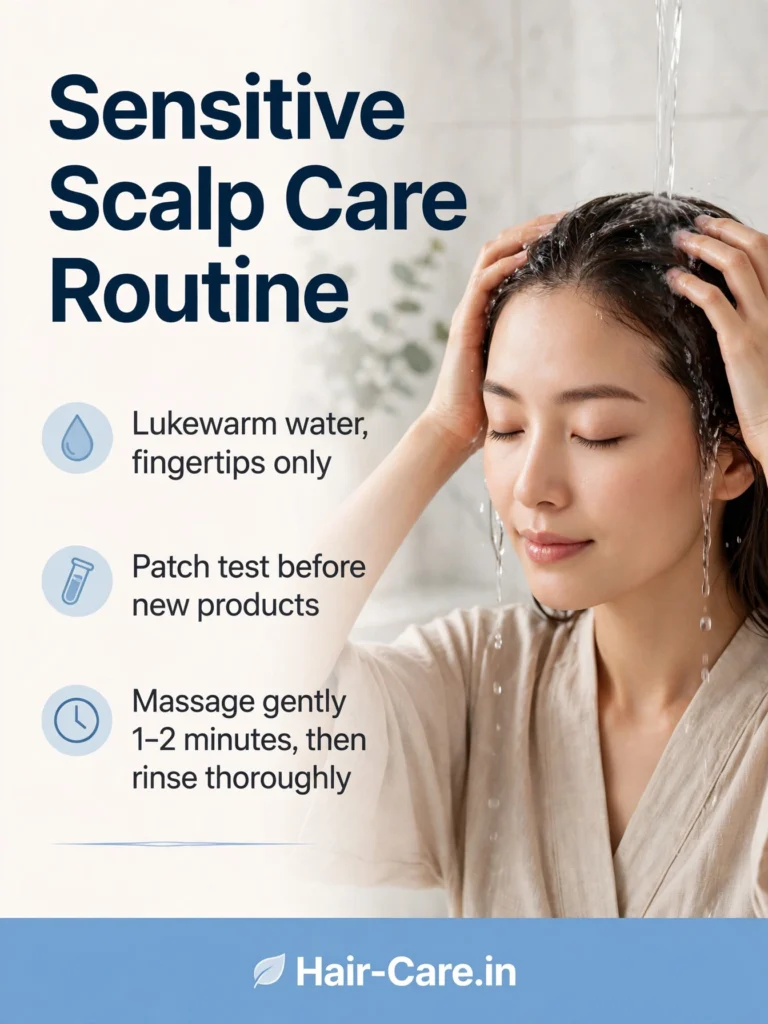
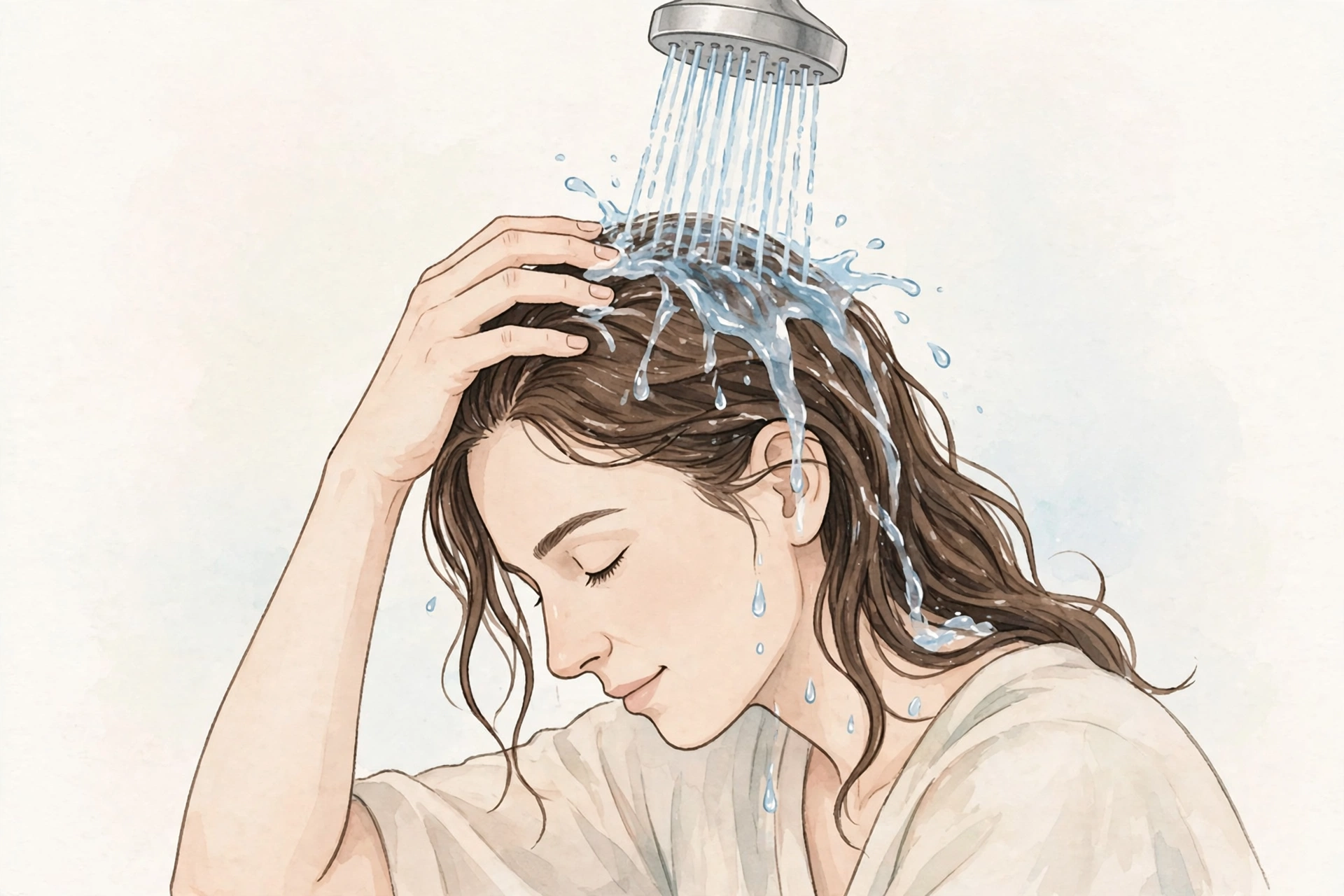
Wet the hair fully with lukewarm water — comfortable on your wrist, not hot. Hot water feels good for a moment and then leaves the scalp drier and tighter. Finish with lukewarm water too, not a cold shock and not a hot rinse.
Step 2: Shampoo on the scalp only.
Put a small amount of gentle, fragrance-free shampoo on your fingertips, not directly in a big blob on the crown. Work it into the scalp only, in small circles with the pads of your fingers. Do not use your nails. Do not scrub the lengths — the lengths get clean when the shampoo runs down during rinsing.
Step 3: Leave it briefly, then rinse really well.
Let the shampoo sit for the short time your product label suggests, usually one to two minutes for a gentle shampoo. Then rinse thoroughly. Leftover shampoo is one of the most common irritants real users mention: “rinse really well — leftover product is what irritates.” Rinse until the water runs clear and the scalp no longer feels slippery.
Step 4: Conditioner on the lengths only.
Apply conditioner from the mid-lengths to the ends. Keep it off the scalp unless your product is specifically made for scalp use. Conditioner on the scalp can leave a film that traps oil and makes a sensitive scalp itch. Leave it for the label time, then rinse well.
Step 5: Dry gently.
Press the hair with a soft towel. Do not rub hard, do not twist it tightly, and do not brush wet hair aggressively. Let it air-dry when you can. If you use a dryer, use a low-heat setting, keep it moving, and do not hold it close to one spot on the scalp.
Step 6: Nothing extra on wash day.
Do not add a scalp serum, oil, and styling product all on the same wash day when your scalp is already reactive. One change at a time lets you know what helped — and what caused a flare.
4. How often should you wash? A weekly rhythm
There is no single number that works for everyone, and anyone who gives one without asking about your hair type is guessing. Use this table as a starting point, then adjust by how your scalp feels after two weeks.
| Scalp and hair type | Starting wash rhythm | Watch for |
|---|---|---|
| Sensitive scalp, oily roots | 2–3 times a week | If roots feel greasy by day 2, try a gentle wash on day 2 rather than a stronger shampoo |
| Sensitive scalp, dry or normal roots | 1–2 times a week | If the scalp feels tight or flaky, you may be washing too often or with water that is too hot |
| Sensitive scalp with dandruff or a medicated shampoo | Follow the medicated schedule first (for example, a ketoconazole schedule), and use a gentle shampoo on other wash days | Do not layer a medicated shampoo and a strong regular shampoo on the same day without a reason |
| Sensitive scalp, curly or coarse hair | 1–2 times a week, with conditioner on the lengths each wash | Curly hair dries out faster, so protect the lengths while keeping product off the scalp |
Two honest notes on wash frequency. First, some people must wash daily because their scalp gets very greasy overnight — if that is you, use the gentlest shampoo you tolerate and the fingertips-only technique, rather than fighting your scalp with a harsh product once a week. Second, washing less does not automatically make hair healthier. It helps only if the scalp stays clean, calm, and free of buildup. The test is always the same: after two weeks, is the scalp calmer, less itchy, and less sore? If yes, keep the rhythm. If no, change one thing — frequency, water temperature, or product — not all three at once.
5. Between-wash care: the part most routines skip
Between washes, the scalp still needs care, but light care:
- Refresh, do not re-wash. If roots look oily, a light dry shampoo on the hair (not the scalp) or a gentle water rinse can help. Do not do a full shampoo wash “just in case” every day.
- Clear buildup. If the scalp feels sticky or coated, the cause is often product buildup, not dirt. On your next wash, focus on a thorough rinse and skip styling products for one wash cycle to see if the coating clears.
- Keep tools clean. Brushes and combs collect oil and product. Rinse them regularly. A dirty brush puts yesterday’s residue back on a clean scalp.
- Do not layer products. One leave-in product is usually enough. Two or three leave-ins, plus oil, plus a serum, is how buildup starts on a sensitive scalp.
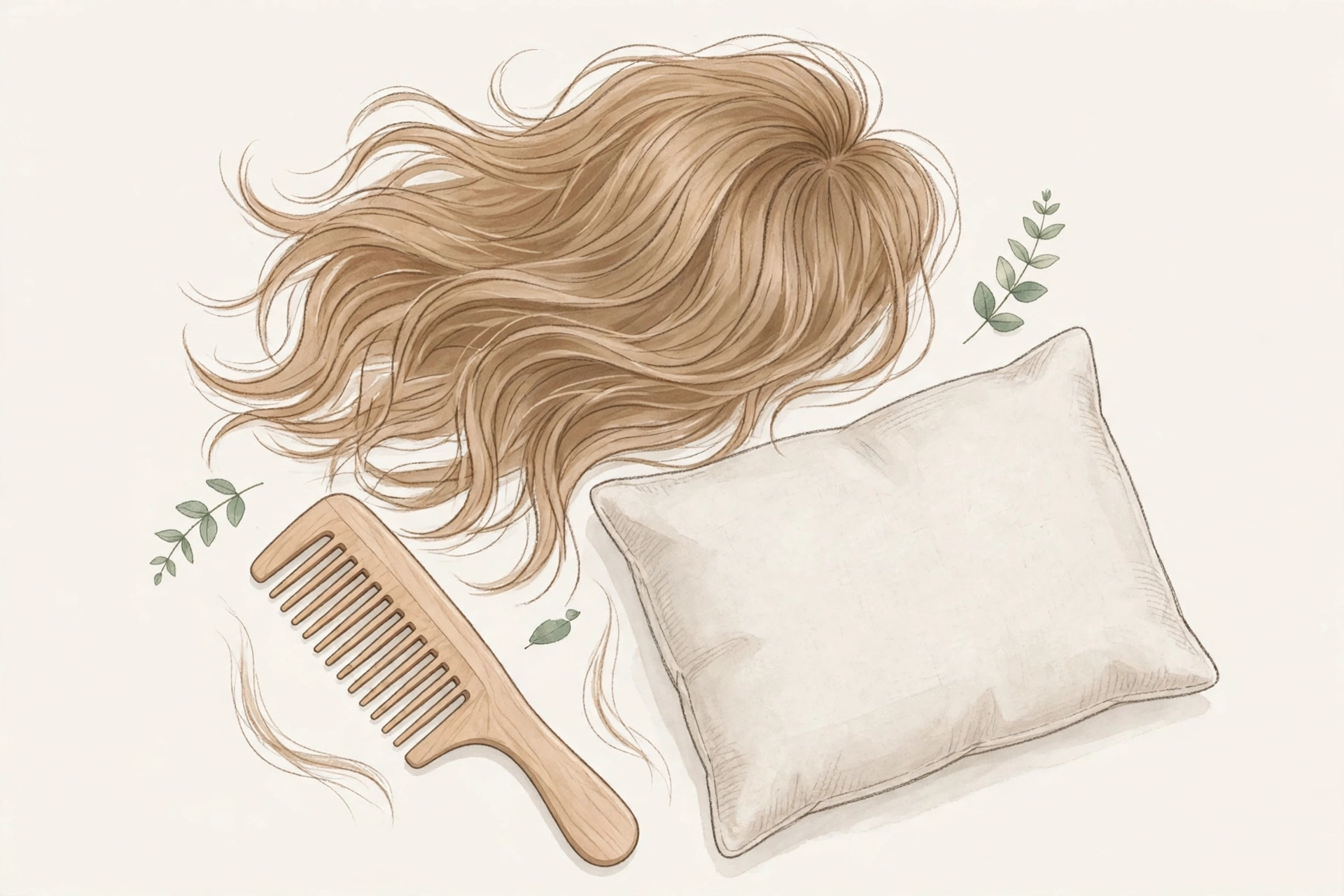
This between-wash section is the gap most competitor articles miss. They tell you what to buy, not what to do on the days you do not wash — and those days are most of the week.
6. The patch-test rule: before any new product
This rule comes from the parent shampoo post, and it belongs in the routine too, because a routine fails when a new product causes a flare.
- Put a small amount of the new product behind one ear, or on a small area near the hairline.
- Wait 24–48 hours.
- If there is no redness, itching, burning, or soreness, use it on the scalp — still gently, still one product at a time.
- If there is a reaction, stop. Do not “push through” it hoping your scalp will get used to it.
Keep a simple note of what you tried and when. When a flare happens, that note is what lets you — or a clinician — find the cause. Without it, you are guessing among five products.
7. Hard water, heat, and friction: three hidden irritants
Hard water. In areas with hard water, mineral buildup can leave hair feeling coated and the scalp feeling tight. If your hair feels coated even after a good rinse, hard water may be part of it. A shower filter can help some people, and a thorough rinse matters even more in hard-water areas. Do not add a clarifying shampoo every wash to “fix” hard water — strong clarifying shampoos can irritate a sensitive scalp further. Use one only occasionally, and only if your scalp tolerates it.
Heat. Heat styling dries the scalp as well as the hair. If you use heat, use the lowest setting that works, keep the tool moving, and give the scalp heat-free days. A hot dryer held close to one spot is a common cause of a sore, dry patch that people blame on shampoo.
Friction. Tight hairstyles, rough towel-drying, hard brushing, and scratching all create friction. Friction is invisible in a product list, but it is one of the biggest routine factors. Gentle fingertips, a soft towel, a wide-tooth comb, and loose styles are not small details — for a sensitive scalp, they are the routine.
8. Flare plan: what to do when your scalp flares up
A flare is a day — or a few days — when itching, soreness, redness, or flaking suddenly gets worse. Do not panic, and do not add five new treatments at once. Use this simple plan:
- Stop the newest product. Go back to the last gentle shampoo and routine that worked.
- Simplify for one week. Gentle shampoo, lukewarm water, fingertips only, conditioner on lengths only, no new products, no heat styling if you can avoid it.
- Rinse well and keep it clean. Do not skip washing entirely during a flare unless a clinician tells you to — buildup can make irritation worse.
- Watch for 3–5 days. If it calms, reintroduce products one at a time, with a patch test each time.
- Get help if it does not calm. See section 9.
Write down what changed just before the flare: a new product, a new wash rhythm, hard water after travel, heat styling, illness, or stress. Patterns are easier to see on paper than in memory.
9. When to see a clinician
A routine helps a sensitive scalp, but it does not replace medical care. See a qualified clinician promptly if you notice any of these:
- Sudden hair loss, bald patches, or shedding that increases sharply.
- Pain, swelling, sores, pus, or crusts on the scalp.
- Scaling or redness that spreads, does not improve after two weeks of gentle care, or keeps coming back.
- Scalp pain with fever, or pain that is severe or one-sided.
- A reaction after a product that includes swelling of the face or difficulty breathing — seek urgent care for that.
Do not try to diagnose yourself from a list. Vitamin deficiency, hormone changes, autoimmune conditions, and infections can all affect the scalp, and they need different care. A routine supports the scalp; it does not diagnose the cause.
Watch: dermatologist tips for a dry, sensitive scalp
Frequently asked questions
What is a good daily scalp care routine?
Keep it gentle and short: loose styles, no scratching, clean tools, and nothing new without a patch test. Wash days follow the steps in section 3, and non-wash days stay light. Consistency matters more than the number of products.
What calms an irritated scalp?
Usually, simplification calms it: lukewarm water, a gentle fragrance-free shampoo, thorough rinsing, no new products, and no heat or tight styles for a few days. If irritation does not calm in a few days, or it spreads, see a clinician rather than adding more treatments.
What can I put on my sensitive scalp?
As little as possible, and only products you have patch-tested. A gentle shampoo on wash days is the baseline. Oils, serums, and treatments are optional extras, not routine requirements, and each one needs its own patch test.
Is hair healthier if you wash it less?
Not automatically. Washing less helps if it reduces dryness and friction, but it hurts if oil and buildup accumulate and irritate the scalp. Judge by your scalp after two weeks: calmer and less itchy means the rhythm works; coated, itchy, or sore means it does not.
What are the signs of an unhealthy scalp?
Persistent itching, soreness, redness, flaking, scaling, sores, or a coated/sticky feeling that does not clear with gentle washing. One bad day is usually irritation. A pattern over two weeks is worth a clinician’s look.
Why does my scalp hurt at the roots?
Common routine causes include tight hairstyles pulling on the roots, scratching, heat held too close, and product buildup. If root pain is severe, one-sided, or comes with sores or shedding, see a clinician promptly.
Sources and limits
This routine is a research-based summary, not a substitute for dermatology guidance. It draws on general dermatology advice for gentle hair care and on the sources below, and it states its limits honestly: wash frequency, hard-water effects, and flare triggers vary by person, hair type, climate, and any underlying condition. No product is named as a cure, and no result is promised.
- American Academy of Dermatology — healthy hair care tips for washing, conditioning, and gentle handling.
- NHS — dandruff guidance, including gentle washing and when to seek care.
- The parent post on this site — Shampoo for Sensitive Scalp and Hair Loss — for shampoo choice, fragrance-free guidance, surfactant basics, and the patch-test protocol.
- Related posts on this site — Scalp Problems, Dandruff vs Dry Scalp, and How to Use Ketoconazole Shampoo for Dandruff — for diagnosis, dandruff differences, and medicated-shampoo schedules.