Short answer:
Short answer: For dandruff, ketoconazole shampoo is usually used twice a week for 2 to 4 weeks, then less often for maintenance, left on the scalp for 3 to 5 minutes before rinsing, and paired carefully with a gentle conditioner on the lengths, not scrubbed into the scalp. It treats the flaking linked to a yeast called Malassezia, it does not cure dandruff permanently, and if flaking, redness, or itching does not improve in about 4 weeks, or gets worse, stop and talk to a clinician. This guide is research-based general information, not medical advice, and the author is a researcher, not a doctor.
What ketoconazole shampoo actually does
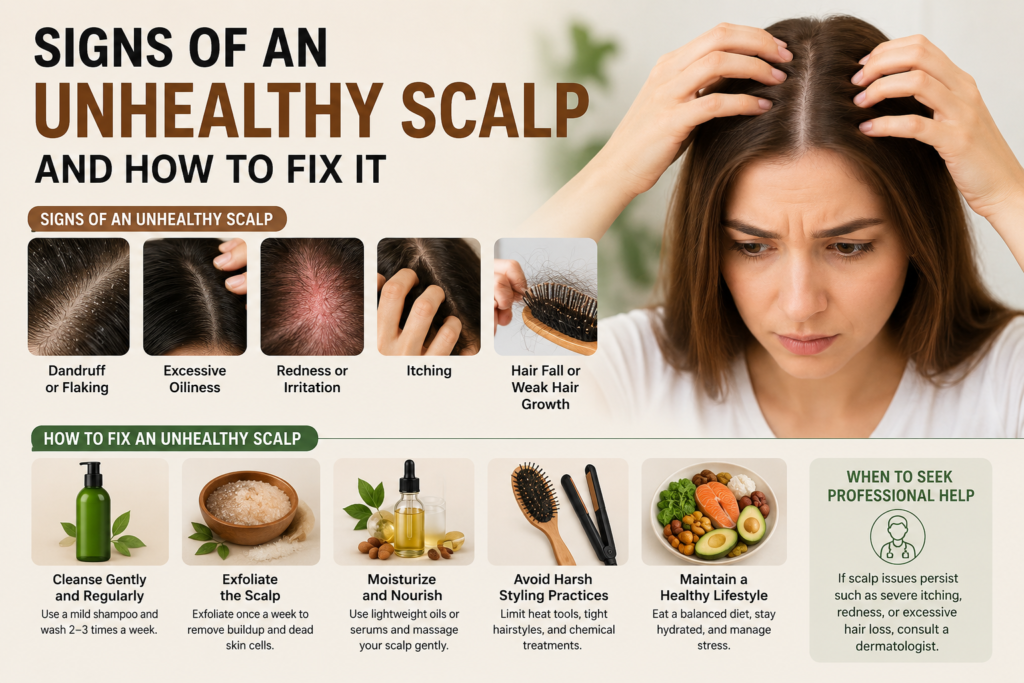
Dandruff is not simply dry skin. In many people, flakes, itching, and redness on the scalp are linked to Malassezia, a yeast that normally lives on skin and can overgrow, and to how the scalp reacts to it. Ketoconazole is an antifungal ingredient. In shampoo form, it reduces that yeast on the scalp, which is why flakes often lessen even though the underlying tendency to dandruff does not disappear.
That distinction matters. A shampoo that reduces flakes for a few weeks is not a cure, and it is not a hair-growth treatment. If a product page or a video promises permanent dandruff removal or regrowth from ketoconazole shampoo alone, that claim goes beyond the evidence. The honest expectation is control: fewer visible flakes, less itching, and a calmer scalp while you use it correctly, with maintenance use to keep flakes from returning quickly.
Ketoconazole shampoo is sold in two strengths in many countries. The 1% version is widely available over the counter, and the 2% version is usually prescription-only. The steps below apply mainly to the over-the-counter 1% shampoo for dandruff. If a clinician has prescribed 2%, follow that prescription, not this general guide, and ask that clinician about anything that conflicts with it.
The step-by-step routine
Use this routine on a wash day, and keep it the same for the first few weeks so you can judge whether it is working.
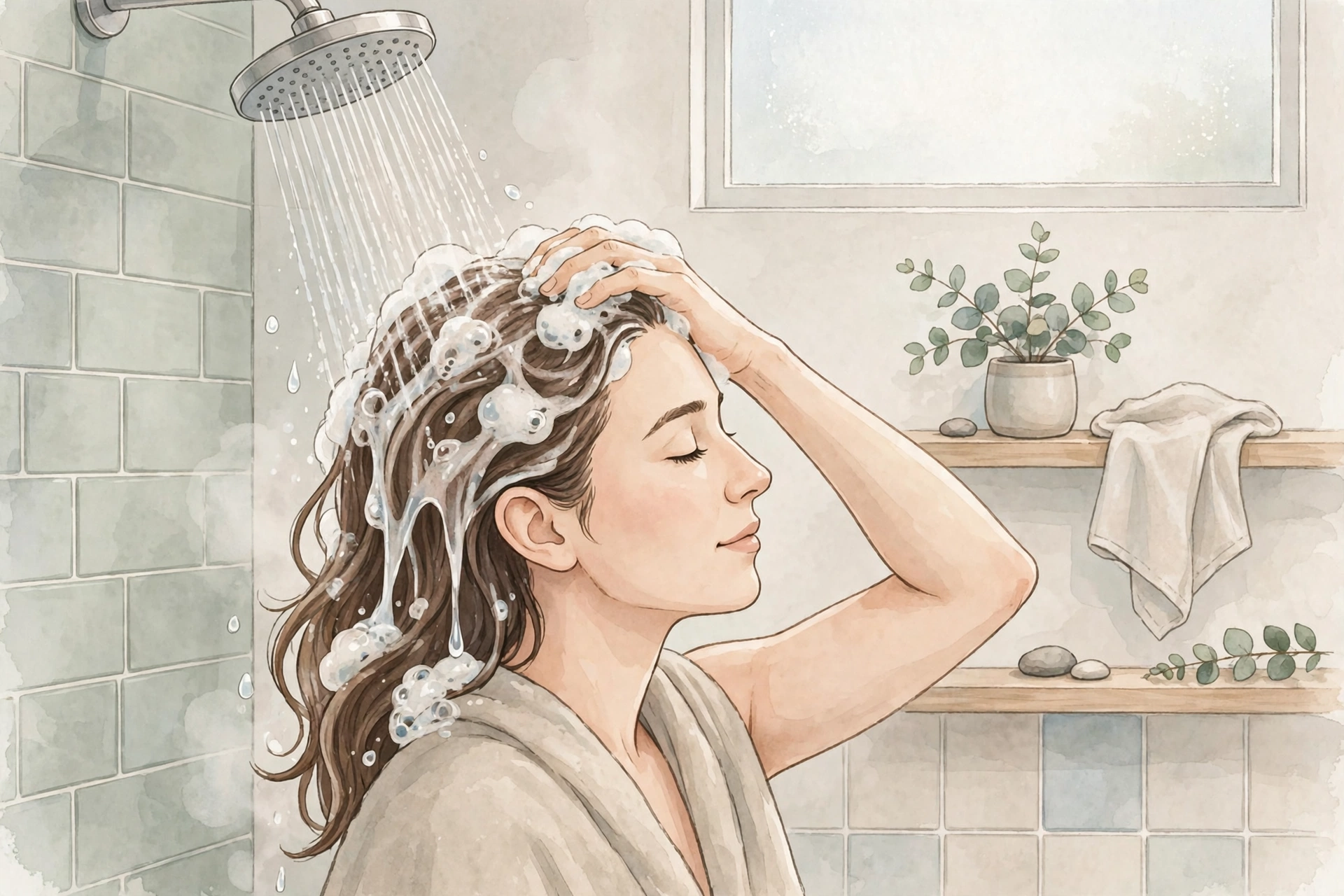
- Wet your hair and scalp fully with lukewarm water. Hot water can dry the scalp further and make itching worse, so lukewarm is the safer default.
- Shake the bottle first, as many ketoconazole shampoos instruct, then pour a small amount into your palm. You need enough to cover the scalp, not a large pool of product.
- Massage it into the scalp with your fingertips, not your nails. Cover the whole scalp, including the hairline, behind the ears, and the back of the head, where flakes often hide.
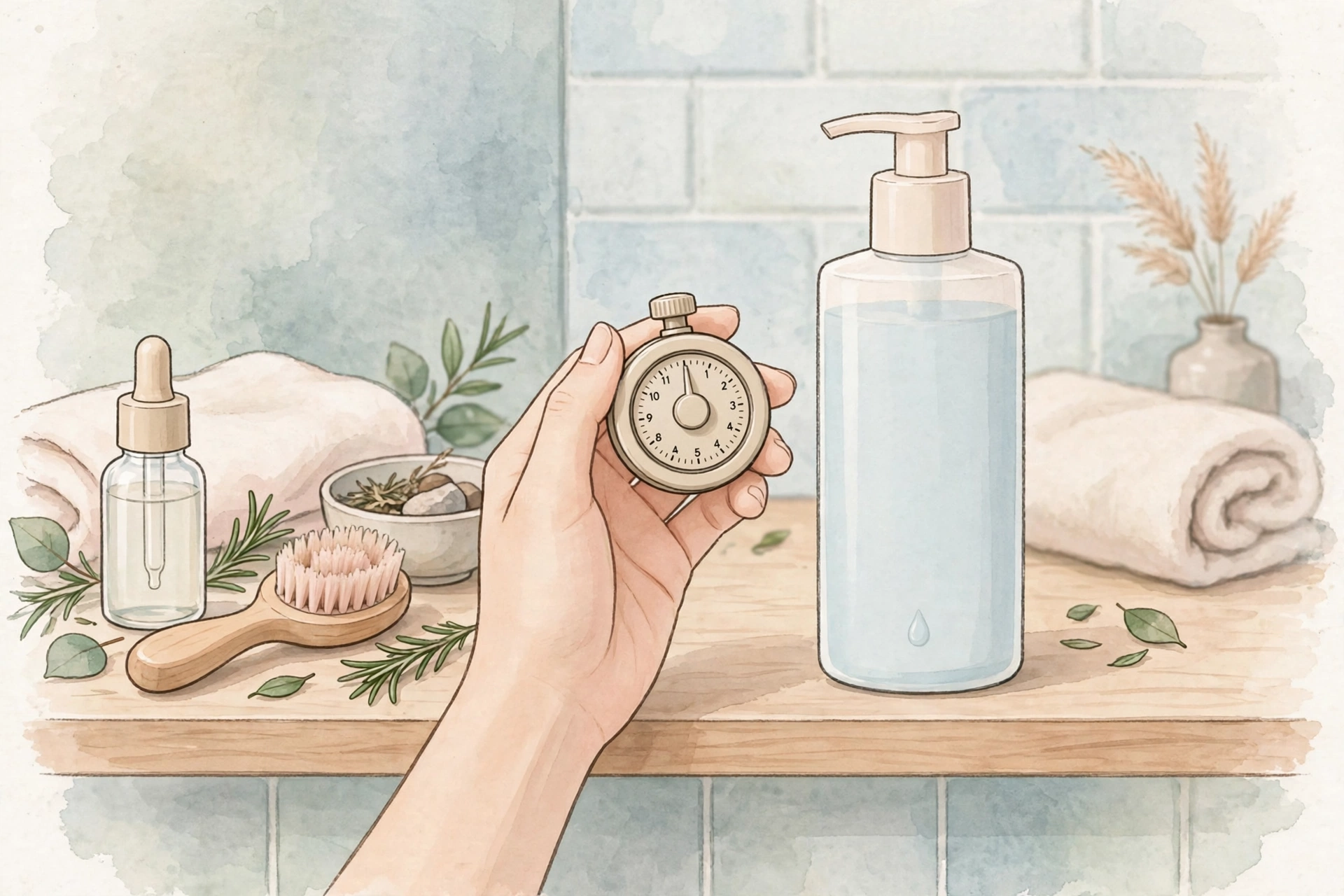
- Leave it on the scalp for 3 to 5 minutes. Set a timer if it helps. This contact time is the step most people skip, and it is the step that gives the antifungal ingredient time to work on the scalp surface.
- Rinse well with lukewarm water.
- If your lengths feel dry, apply a gentle conditioner to the mid-lengths and ends only, not to the scalp. Rinse it out. This keeps the lengths soft without coating the scalp you have just treated.
- Pat dry with a towel. Do not rub hard, and do not use high heat on the scalp straight after washing.
Do not use a second, regular shampoo straight after ketoconazole shampoo on the same wash unless a clinician has told you to. Washing it off immediately with another shampoo can reduce contact time and defeat the purpose of the medicated wash.
Contact time: why sources say 3 to 5 minutes, and why some say 5
One of the most confusing parts of ketoconazole instructions is contact time. The NHS guidance for ketoconazole says to leave it on for 3 to 5 minutes. Other guides, including some product and tutorial pages, say 5 minutes flat. This is not a contradiction in the science so much as a difference in how instructions are rounded.
The practical rule is: aim for at least 3 minutes, and 5 minutes is a safe upper target for most over-the-counter use, unless your product label says something different. Your own product label wins over any general guide, including this one. If the label says 3 minutes, use 3. If it says 5, use 5. Do not leave it on for 15 or 30 minutes thinking more is better. Longer contact does not mean stronger effect, and it can increase dryness and irritation.
Treatment phase vs maintenance phase
Ketoconazole shampoo works in two phases, and confusing them is a common reason people think it has stopped working.
| Phase | How often | How long | What to expect |
|---|---|---|---|
| Treatment | Twice a week | 2 to 4 weeks | Flakes and itching should start to lessen, often within the first 2 weeks |
| Maintenance | Once every 1 to 2 weeks | Ongoing, as needed | Flakes stay controlled; stopping completely often lets them return |
The NHS dandruff schedule follows this pattern: twice a week for 2 to 4 weeks, then once every 1 to 2 weeks. Other conditions, such as seborrhoeic dermatitis or tinea versicolor, have different schedules, so do not borrow a dandruff schedule for a different diagnosis.
If you stop after the treatment phase and flakes return within a few weeks, that does not necessarily mean the shampoo failed. Dandruff tends to return because the scalp tendency remains. Maintenance use, spaced out, is how most people keep it under control. If maintenance use still does not control flakes, that is a reason to see a clinician, not a reason to use the shampoo every day.
Wash-day pairing: regular shampoo, conditioner, and oil
This is the question competitors answer worst, and it is the question real users ask most: what goes before, after, and on off days?
Before or after regular shampoo? For a standard ketoconazole wash, you do not need a regular shampoo before or after it. The ketoconazole shampoo is the wash for that day. If your hair is very oily or has heavy styling product in it, some prescription guidance suggests a clarifying wash first, but for ordinary over-the-counter dandruff use, one medicated wash is the routine. If you do use a regular shampoo on the same day, use it on a different wash, not immediately after, so contact time is not cut short.
Conditioner: yes, but only on the lengths. The most common follow-up question is whether conditioner cancels the treatment. A gentle conditioner applied to the mid-lengths and ends, rinsed out, does not undo a scalp treatment that has already had its contact time and been rinsed. What you should avoid is massaging conditioner into the scalp right after, or using a heavy, fragranced conditioner on the scalp on the same wash.
Hair oil: timing matters. In India and in many South Asian routines, oiling before washing is common. If you oil your hair, do it on an off day, or several hours before the ketoconazole wash, and wash the oil out fully on the wash day. Do not apply oil straight after a ketoconazole wash and leave it on the scalp, because it can trap residue and make it harder to judge whether flakes are improving. If a clinician has advised oiling for another reason, follow that advice and mention the ketoconazole use at the same visit.
Off-day routine: On days you do not use ketoconazole shampoo, wash only if you need to, with a gentle, sulfate-free shampoo if your scalp is sensitive, and keep conditioner to the lengths. Do not use another medicated or strong anti-dandruff shampoo on off days unless a clinician has told you to, because combining actives can irritate the scalp and make it harder to know which product is helping or harming.
Sensitive scalp: patch test and adaptation
No major competitor guide gives a clear sensitive-scalp protocol for ketoconazole shampoo, so here is a cautious one based on general dermatology advice for new scalp products.
Start with a patch test if your scalp is sensitive, reactive, or easily irritated. Apply a small amount to a small area behind one ear or at the nape, leave it for the label contact time, rinse, and wait 24 to 48 hours. If there is no new redness, burning, or itching beyond your usual level, proceed to a full scalp wash.
For the first two washes, use the shorter end of the contact range, 3 minutes, and use lukewarm water. If the scalp feels tight or dry afterwards, use a gentle conditioner on the lengths and avoid heat styling that day. If irritation appears, stop and let the scalp settle before trying again, and consider whether fragrance, a second product, or a different active is the cause. Sensitive does not mean you can never use it, but it does mean you should change one thing at a time, so you can tell what caused a reaction.
People with coloured or chemically treated hair should also be cautious. Ketoconazole shampoo can dry hair, and some users report texture changes. Using conditioner on the lengths, spacing washes, and avoiding additional chemical treatments in the same week reduces that risk.

How to tell if it is working, and when to stop
Do not judge it after one wash. Judge it over 2 to 4 weeks.
Signs it may be working:
- Fewer visible flakes on the shoulders and in the hair parting
- Less itching, especially in the first day or two after a wash
- Less redness along the hairline and behind the ears
- Flakes that are smaller and less sticky than before
Signs to stop and see a clinician:
- No improvement after about 4 weeks of correct use
- Flakes getting worse, spreading beyond the scalp, or forming thick, crusty patches
- New redness, swelling, burning, blistering, or hair loss
- Signs of infection, such as pus, severe pain, or fever
- A scalp condition that was never diagnosed, especially if it looks different from ordinary dandruff
Ketoconazole shampoo is for the scalp conditions it is labelled for. It is not a treatment for hair loss by itself, and it should not be used on broken skin, on the face or body, or in children under 12 unless a clinician has specifically advised it. Pregnant or breastfeeding readers should ask a clinician before starting it, because product guidance includes cautions for pregnancy and breastfeeding.
Mistakes that make it look like it failed
- Rinsing it out immediately, with no contact time.
- Using it every day, thinking daily use will work faster, then getting dryness and stopping.
- Scrubbing with nails, which irritates the scalp and creates more flakes.
- Using a heavy conditioner or oil on the scalp straight after, then blaming the shampoo for greasiness.
- Mixing it with another medicated shampoo on off days, so no one can tell what helped.
- Judging it after one wash, or stopping after one week because flakes are not gone.
- Using it for hair growth or for a condition it was not prescribed for, then calling it useless when that goal is not met.
Frequently asked questions
Should I wash my hair after using ketoconazole shampoo? No, not straight after. Rinse it out well, and that wash is complete. Use regular shampoo on a different wash day if you need it.
How long do I leave ketoconazole shampoo in my hair? Aim for 3 to 5 minutes on the scalp, following your product label if it differs. Do not leave it on far longer hoping for a stronger effect.
Do I need conditioner after ketoconazole shampoo? Often yes, but only on the mid-lengths and ends, not massaged into the scalp. This helps dryness without coating the treated scalp.
Do I use ketoconazole shampoo before or after regular shampoo? On a ketoconazole wash day, use it as the wash. Do not use regular shampoo immediately before or after it in the same wash.
How long does it take to start working? Many people notice less itching and fewer flakes within 2 weeks, with clearer improvement by 2 to 4 weeks. If there is no improvement by about 4 weeks, see a clinician.
How often should I use it for dandruff? Twice a week for 2 to 4 weeks, then once every 1 to 2 weeks for maintenance, following the NHS dandruff schedule and your product label.
What are the signs ketoconazole is working? Smaller, fewer flakes, less itching, and less redness, judged over weeks, not after one wash.
Can I oil my hair and then use ketoconazole shampoo? Oil on an off day or well before the wash, and wash it out fully on wash day. Do not oil the scalp straight after a medicated wash.
Watch: how to use ketoconazole shampoo
Video by Dr. Rasya Dixit (Doctors’ Circle): “Antidandruff Shampoo Daily Use | How to use Ketoconazole shampoo?” — watch on YouTube.
Sources and limits
External sources for this guide: NHS guidance on how and when to use ketoconazole, Cleveland Clinic drug information on ketoconazole shampoo, and the American Academy of Dermatology healthy hair tips. Internal related posts: Dandruff vs Dry Scalp, Caffeine vs Ketoconazole Shampoo, Nizoral A-D Anti-Dandruff Shampoo Review, Scalp Problems, and How to Get Rid of Dandruff.
Limits to keep in mind: this guide summarises general over-the-counter guidance for dandruff. It does not replace a diagnosis, it does not cover prescription 2% use in detail, and it does not cover seborrhoeic dermatitis, psoriasis, or tinea versicolor schedules beyond noting that they differ. If your scalp condition is undiagnosed, severe, spreading, or not improving, talk to a qualified clinician. The author is a researcher, not a doctor, and this is general information, not medical advice.