Short answer: You cannot reliably force follicles to grow much faster than biology allows — about half an inch a month — but you can stop losing the length you already grow through better retention. Most advice that works targets breakage, not follicle speed. We are researchers, not doctors, and this is general information, not medical advice.
We are not doctors. We are researchers. Google gives the same hair-growth question on dozens of sites, with different promises on each one, and that is exactly why users get confused. This article does the research job for you: it compares the common claims, keeps what is supported, drops what is hype, and gives you one clear, honest plan.
The short answer is: you cannot reliably force your follicles to grow much faster than biology allows, but you can stop losing the length you already grow. That difference — growth rate versus length retention — explains almost every confusing claim online.
How Fast Does Hair Actually Grow?
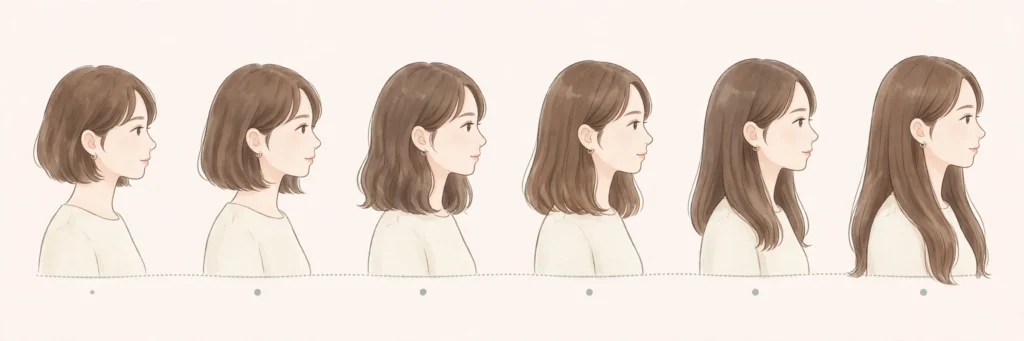
Scalp hair grows on average about half an inch, roughly 1 to 1.25 cm, per month, or about 4 to 6 inches per year. That rate varies with genetics, age, hormones and health, and a little more or less than average is normal.
Hair grows from the follicle in the scalp, in a cycle: anagen (growth, usually years), catagen (transition, weeks), and telogen (resting and shedding, months). At any time most scalp hairs are in anagen. No shampoo, oil or trim changes the follicle’s basic rate in a dramatic, reliable way. Products that claim 2 inches in a month, or visible growth in days, are selling a result the biology does not support.
So judge progress over months, not days. Photograph your length in the same light, same parting and same posture, once a month, rather than judging by memory.
Growth vs Retention: The Confusion, Explained
| Idea | What it really means |
|---|---|
| Growth rate | How fast the follicle makes new hair, about half an inch a month on average |
| Length retention | How much of that new hair survives without breaking off |
| Faster-looking growth | Usually better retention, not a faster follicle |
| Breakage ceiling | When ends break as fast as roots grow, length seems stuck even though growth is normal |
Most “grow faster” advice that actually works is retention advice: less breakage, fewer splits, gentler handling, and a healthier scalp. That is not a trick. It is the honest mechanism behind most real length gains.
What Helps Length Stay: A Simple Routine
Wash and Handle Gently
Wash often enough to keep the scalp clean without stripping it; for many people that is every 2 to 3 days, adjusted for oil, texture and lifestyle. Detangle from the ends upward, with fingers or a wide-tooth comb on damp hair, not by ripping through knots from the roots. Use soft, covered hair ties and avoid very tight ponytails, braids and extensions worn constantly, because tension can damage follicles over time.

Limit Heat and Chemical Damage
Heat and chemical processing are the biggest breakage drivers for most people trying to grow length. If you use heat, use heat protection, lower heat where you can, and do not use hot tools on hair that is already coated in heavy product. Bleach and repeated colouring weaken the shaft; if you colour, space out treatments and condition the lengths well. One damaging session can break hair at a point that takes months to grow back.
Trim Smart, Not Often
Trimming does not make hair grow faster. Hair grows from the follicle, and cutting the ends cannot send a signal back to the follicle. What trims do is remove split, thin or weathered ends before splits travel up the shaft and break hair shorter. For growing length, a small dusting or quarter-inch trim every 8 to 12 weeks, adjusted for heat and chemical history, usually balances retention against loss. Ask for the minimum off, and ask the stylist to show how much will be taken before cutting.
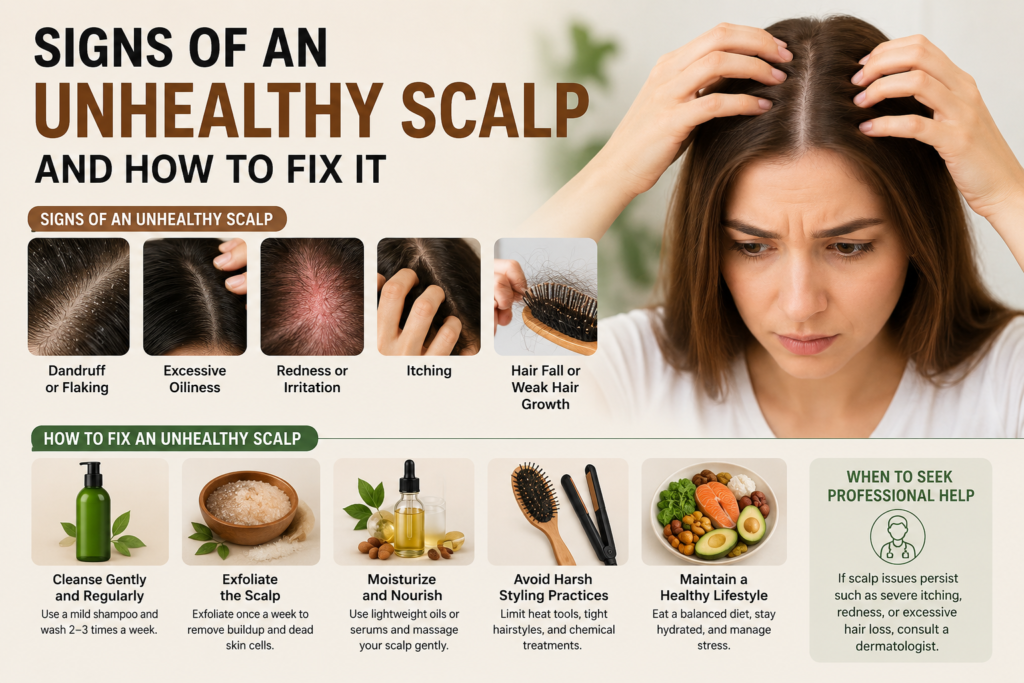
Scalp Care That Supports Growth
Keep the scalp clean and balanced, and massage gently for a few minutes when washing. Massage feels good and supports a healthy scalp environment, but it is not proof of faster follicle growth on its own. Treat flaking, itching or soreness rather than covering it with more product, and do not start five new scalp products at once, because then you cannot tell what helps or irritates.
Food, Deficiencies and Supplements: Honest Limits
Hair is mostly keratin, a protein, so eating enough protein matters. A balanced diet with protein, iron-containing foods, zinc, vitamin D and omega-3 sources supports follicles, and severe under-eating or a real deficiency can increase shedding.
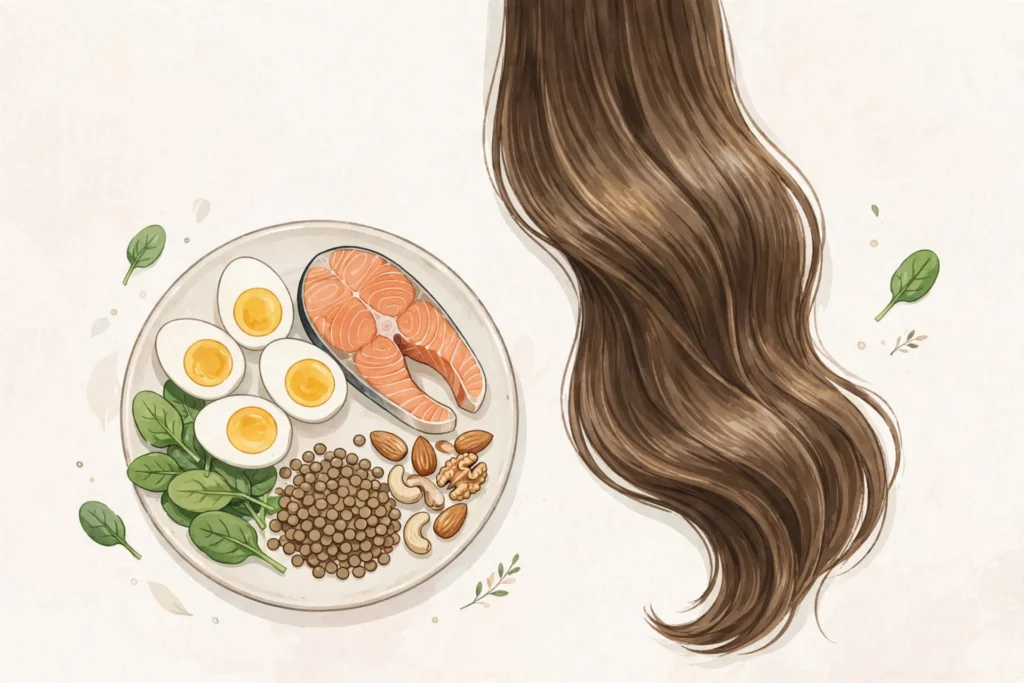
Supplements help mainly when you are actually deficient, which needs a blood test, not a guess. Biotin helps mainly if you are biotin-deficient, which is uncommon on a balanced diet, and high doses can interfere with some lab tests. Iron should only be taken if bloodwork shows you need it, because too much iron can be harmful. Excess vitamin A and selenium can also cause hair problems. Do not stack multiple “hair, skin and nail” products at once.
If shedding started after illness, surgery, childbirth, major weight change, a new medicine, or major stress, it may be telogen effluvium, where shedding appears 2 to 3 months after the trigger and often improves with time once the cause is addressed. That still deserves a clinician’s check if it is heavy, patchy or long-lasting.
What About Minoxidil, Oils and Other Treatments?
Minoxidil is different from a normal shampoo or oil: it is a drug treatment with a larger body of research for pattern hair loss, it needs consistent use, and it has its own side effects and shedding phase. It is not a general “grow faster” product for everyone, and it should be considered with medical guidance, especially if you have a scalp condition or take other medicines. Our minoxidil guide explains how it works, results and side effects in detail.
Rosemary oil has one small 2015 human trial behind it for pattern hair loss, as our rosemary article explains, with limits. It is a reasonable low-cost experiment for mild pattern thinning if diluted and tolerated, not proof of faster growth for everyone. Other oils mainly condition, protect and reduce breakage; they do not reliably speed the follicle.
Red light and other device claims have early research in some studies, but they are not a simple, proven shortcut, and cost and consistency matter. Be sceptical of any product that promises a specific inch gain in a specific number of days.
A Realistic 6-Month Plan
| Time | What to do | What to judge |
|---|---|---|
| Month 0 | Take a length photo, note shedding, diet, stress and medicines, get a trim if ends are split | Baseline only |
| Months 1-2 | Gentle wash routine, less heat, soft ties, balanced protein-rich diet | Breakage and scalp comfort, not length yet |
| Month 3 | Small trim if needed, check whether shedding has settled | First length photo comparison |
| Month 6 | Compare photos in same light and parting | Real length retained; decide if a clinician check is needed |
If length has not improved at all after 6 months of gentle care, or if shedding is worsening, patchy, or comes with a widening part, fatigue, weight change or irregular periods, stop guessing and see a dermatologist. Bring a note of when shedding started and any health, diet or medicine changes in the prior few months.
Common Myths That Waste Your Time
- Trimming makes hair grow faster. No, it protects length from breakage.
- Shaving a baby’s head, or cutting hair very short, makes it grow back thicker. No, thickness is set at the follicle.
- A special shampoo can double your growth rate. No, shampoo cleans and conditions; it does not reprogram follicles.
- Biotin gummies work for everyone. No, they help mainly if you are deficient.
- More products, used at once, must work faster. No, stacking products makes irritation and build-up more likely and hides what actually helps.
- Hats or helmets slow growth. No, unless they are so tight they cause constant traction, the issue is tension, not covering hair.
Frequently Asked Questions About Growing Hair Faster
Can I grow my hair 2 inches in a month?
No, not reliably. Average growth is about half an inch a month. A claim of 2 inches in a month is not supported by normal follicle biology.
How long does it take to see longer hair?
Judge at 3 months for a first comparison and at 6 months for a fair result. Hair grows slowly, and breakage can hide early growth.
Does trimming help or hurt when growing hair out?
It helps retention if you take only damaged ends off every 8 to 12 weeks. It hurts length if you take healthy length off on a very frequent schedule.
Is biotin worth taking for hair growth?
Only if a test shows you are deficient, or a clinician advises it. On a balanced diet, extra biotin has no good evidence for faster growth in healthy people.
Does stress really cause hair loss?
Significant physical or emotional stress can trigger telogen effluvium, with extra shedding usually appearing 2 to 3 months after the trigger. It often improves once the cause is addressed, but heavy or persistent shedding still needs a clinician check.
When should I see a dermatologist about slow growth or shedding?
See a dermatologist promptly for sudden, patchy or severe shedding, a widening part, bald patches, scalp pain, redness or scaling, or shedding that lasts more than a few months or comes with other symptoms.
Final Verdict, As Researchers
Do not chase a faster follicle. Chase retention: gentle handling, less heat and chemical damage, smart small trims, a clean scalp, enough protein and nutrients, and patience for 6 months. That is the plan that survives comparison across sources, because it matches how hair actually grows.
We are not doctors, and this is general information, not medical advice. If your shedding is sudden, patchy, severe or worsening, talk to a clinician, because that needs a cause checked, not another product.
Related reading on Hair Care: our hair growth nutrition guide covers food in detail, our rosemary oil article explains the one-trial evidence honestly, our hair care routine guide puts washing and styling in order, and our minoxidil guide covers the drug treatment with the strongest research for pattern hair loss.
Sources and further reading: Kosmerika guide to how fast hair grows and what helps retention; The Hair Society guide to trimming and growth; The Glossy Locks guide to growing hair faster. This post is general information, not medical advice.
Watch: Hair and Scalp Tips for Growing Longer, Healthier Hair
Video: “How To Grow Longer, Healthier Hair Fast | Hair and Scalp Tips” by Dr. Sam Ellis, a board-certified dermatologist. It covers hair-growth basics, scalp care and realistic expectations, with no miracle-growth claims.