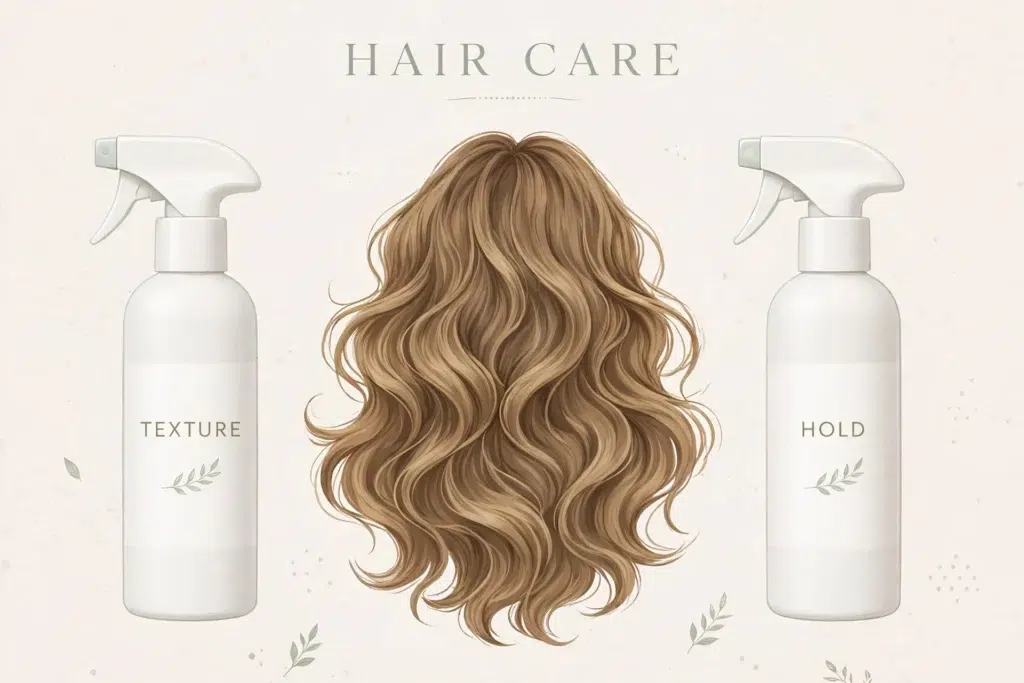
The difference between hairspray and texturizing spray is simple once you see their jobs: texturizing spray builds texture, volume and grip before or during styling, while hairspray locks a finished style in place afterwards. They are not the same product, and swapping one for the other is why many styles fall flat or turn stiff.
In plain words: if your hair is clean, slippery or fine and will not hold a wave, braid or updo, you usually need texturizing spray first. If your style is already done and you want it to stay put through the day, you need hairspray last. You can use both, in that order, but they do different work.
We are not doctors or salon professionals giving medical advice. We researched this question across multiple sites, because different sites explain these two sprays differently and that confuses readers, and we compared their purpose, hold, finish and use to give one clear summary below. Check the label of the product you buy, because formulas vary.
Texturizing Spray vs Hairspray at a Glance
| Texturizing Spray | Hairspray | |
|---|---|---|
| Main job | Add volume, texture, grip and movement | Hold a finished style in place |
| When to use | Before or during styling, on dry hair | After styling is finished |
| Hold | Light to flexible, touchable, restylable | Light to strong, less restylable |
| Finish | Usually matte or semi-matte, lived-in | Often glossier or polished, can look stiff if overused |
| Best for | Fine or slippery hair, waves, braids, updos, second-day refresh | Updos, sleek styles, flyaways, all-day hold |
What Does Texturizing Spray Actually Do?
Texturizing spray coats the hair shaft with light polymers, minerals or salts. That creates friction so each strand grips the next: volume stays up, waves keep their shape, and braids and updos slip less. It also absorbs a little oil, so it can refresh second-day hair — but it is not dry shampoo, which mainly absorbs scalp oil.
Some formulas contain sea salt or magnesium sulfate; others add hydrating argan oil or aloe to balance drying alcohols. Formulas vary, so check the label. The result should feel touchable, not crunchy — stiffness usually means you used too much, or that hairspray was what you needed for hold.
What Does Hairspray Actually Do?
Hairspray’s polymers and copolymers form a light film that holds styled hair as the spray dries. That gives staying power against wind, humidity and movement, especially in strong-hold formulas. It is a finishing product, best used on an already-shaped style.
It can add a little root volume, but that is not its main job — heavy hairspray on fine hair can weigh the roots down and look stringy. Flexible or light-hold hairspray can be brushed through; strong-hold lasts longer but feels stiff and is best removed by washing.
How to Use Texturizing Spray Step by Step
Apply on dry hair, unless the label says otherwise.
- Shake well.
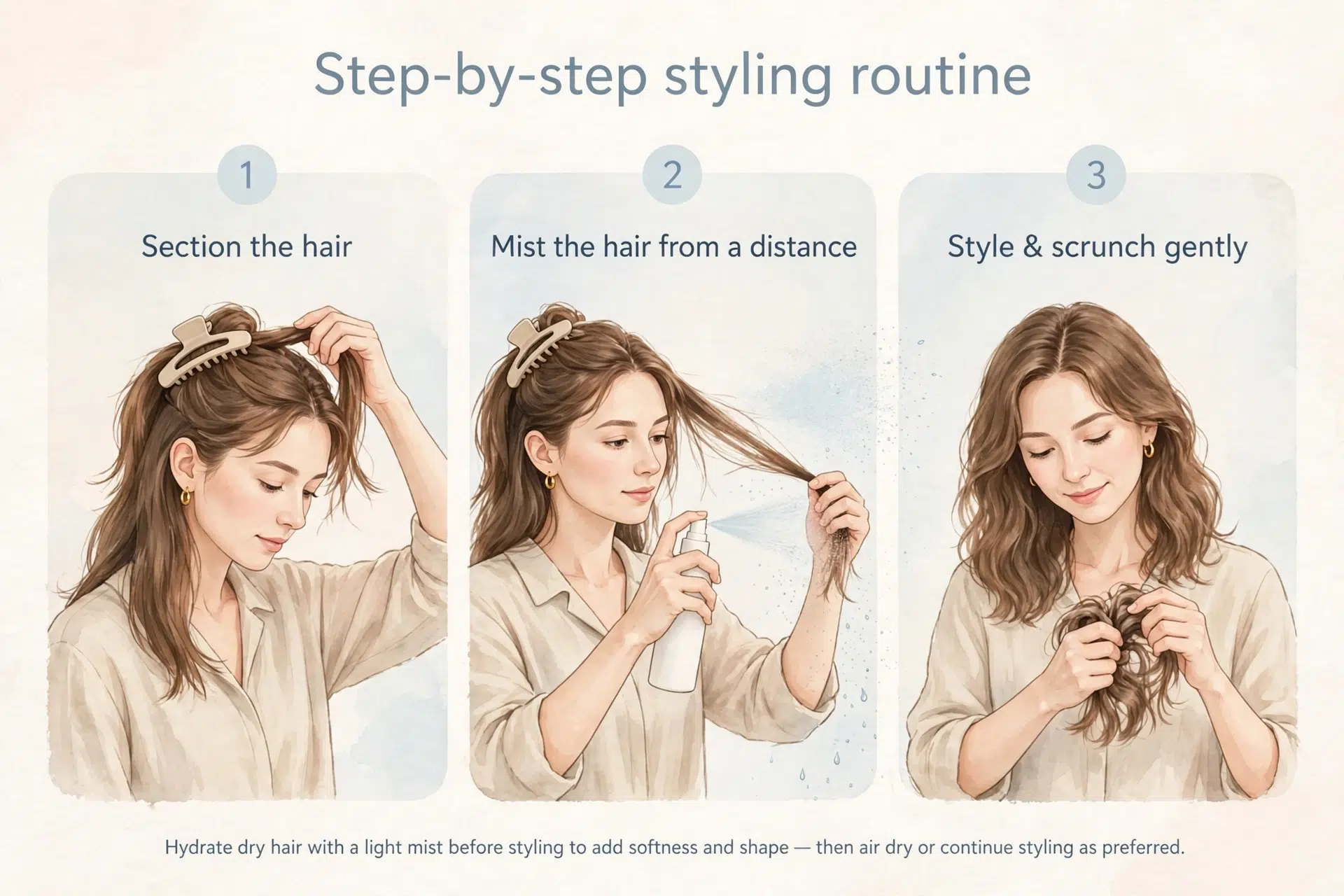
- Section your hair, starting at the crown.
- Hold the can 6-10 inches away and use short bursts.
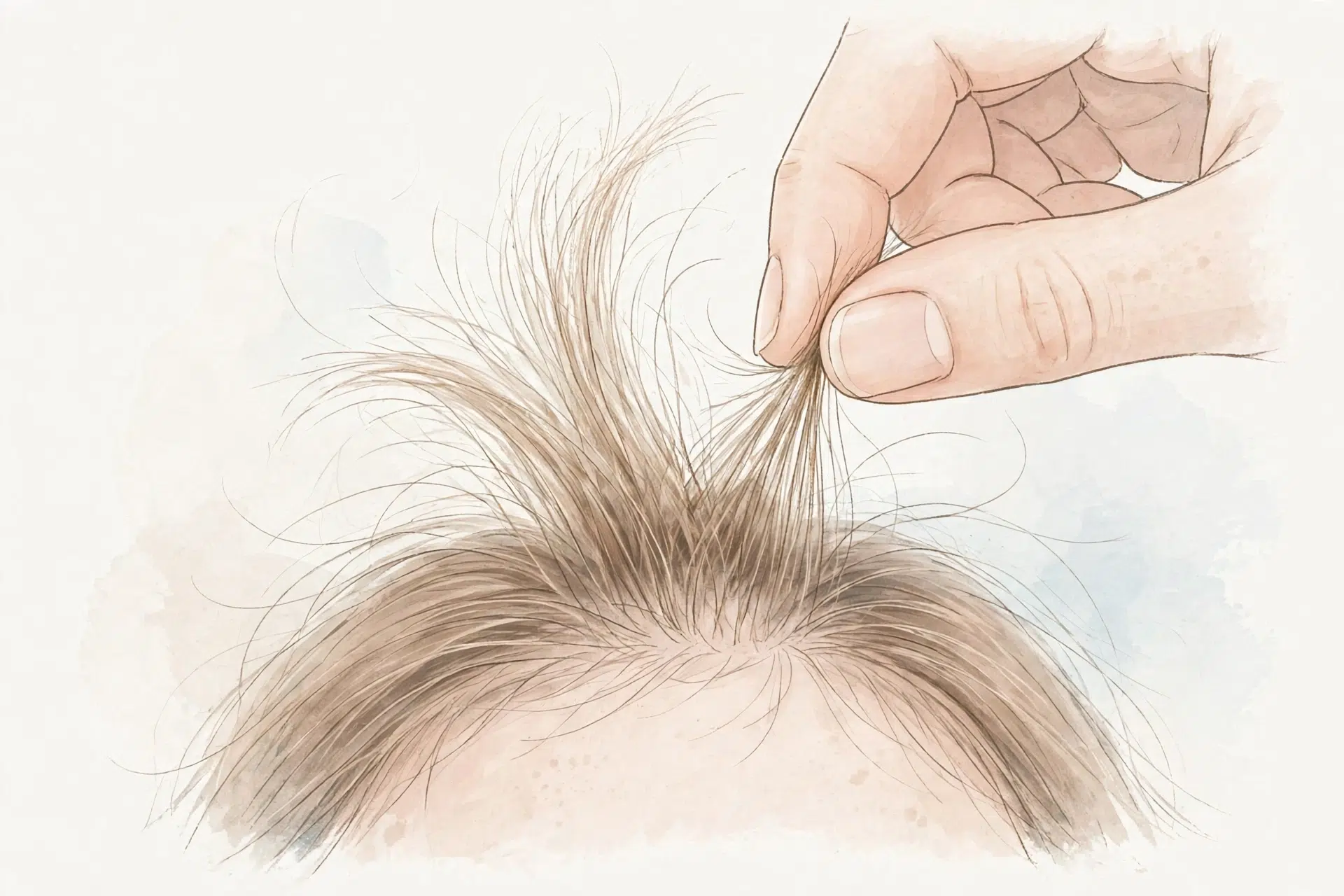
- For volume, spray at the roots — flip your head upside down if helpful — then massage the roots with your fingertips.
- For waves, spray mid-lengths to ends, then scrunch or twist.
- For grip before an updo or braid, spray lightly all over, especially on freshly washed, slippery hair.
- Start with a little and build up; a small amount worked in properly beats a heavy coat.
Finish with a light hairspray only if you need extra hold.
How to Use Hairspray Step by Step
- Finish your style first.
- Hold the can 8-12 inches away and mist lightly and evenly.
- For flyaways, spray onto your hands or a brush first, then smooth.
- For root hold, lift a section, spray underneath at the root, and let it dry before dropping the section.
- Let the spray dry fully before touching your hair.
- Brush out only flexible-hold formulas; strong-hold is best removed by washing.
Which One Is Better for Fine Hair?
Texturizing spray is usually the better first step for fine hair: it adds body and grip without collapsing volume, and it helps freshly washed fine hair behave more like second-day hair. Hairspray is still useful as a light, flexible finisher — not as the main volumiser. Heavy, strong-hold hairspray all over fine hair can look flat, stringy or crunchy.
Medium to thick hair may need both: texturizing spray for separation and movement, hairspray to lock the heavier style in place. For curly or wavy hair, mist lightly and scrunch — do not saturate.
Can You Use Texturizing Spray and Hairspray Together?
Yes — but the order matters:
- Texturizing spray first.
- Style your hair.
- Hairspray last, applied lightly.
Do not reverse the order: hairspray first makes hair stiff and harder to shape.
Common Mistakes That Ruin the Result
- Using hairspray when you wanted volume — it freezes a flat style flat.
- Using texturizing spray when you wanted all-day hold in wind or humidity — its hold is lighter.
- Spraying too close or using too much.
- Using texturizing spray on soaking wet hair and expecting dry, airy volume.
- Skipping a clarifying wash when you use sprays often — build-up weighs hair down. A weekly clarifying shampoo helps; follow with conditioner on the lengths.
- Buying by the word “spray” alone — check the label for “texturizing”, “volumising”, “flexible” or “strong hold”.
Frequently Asked Questions About Texturizing Spray vs Hairspray
Is texturizing spray the same as hairspray?
No. Texturizing spray adds texture, volume and grip with a matte, touchable finish; hairspray holds a finished style in place with a firmer, more polished finish.
Can texturizing spray replace hairspray?
Only for soft, lived-in styles. It cannot replace hairspray for updos, sleek styles or long, humid days.
Can I use texturizing spray every day?
Yes, in a light amount. Watch for build-up, dryness or a gritty feel, and use a clarifying wash if hair starts to feel heavy or dull.
Does texturizing spray damage hair?
Light use alone does not damage hair, but drying alcohols and salt with heavy, frequent use can dry it out. Choose a hydrating or lightweight formula if your hair is dry, and use heat protection when styling with heat.
Should I use texturizing spray on wet or dry hair?
Most formulas work best on dry hair; some can be used on damp hair before blow-drying. Check the label, and use a smaller amount on damp hair.
What is the difference between texturizing spray and dry shampoo?
Dry shampoo mainly absorbs scalp oil to refresh unwashed hair. Texturizing spray mainly adds volume, grip and separation — it can absorb a little oil, but that is not its main job.
Final Verdict
Choose texturizing spray when you want volume, movement and grip; choose hairspray when you want a finished style to stay put. If your hair is fine or slippery, start with texturizing spray; add hairspray for a polished, long-lasting finish. Used in that order, they complement each other.
Related reading: our best dry texturizing sprays guide for fine hair, the hair care routine guide for getting the wash and styling order right, and the frizzy hair guide for when texture turns to frizz.
Watch: Dry Texture Spray vs Hairspray Explained
Video by Hair.com by L’Oreal.
Sources and Further Reading
General styling information only — not professional salon advice for a specific hair condition. For scalp irritation, breakage or sudden hair loss, seek professional advice rather than changing styling products alone.