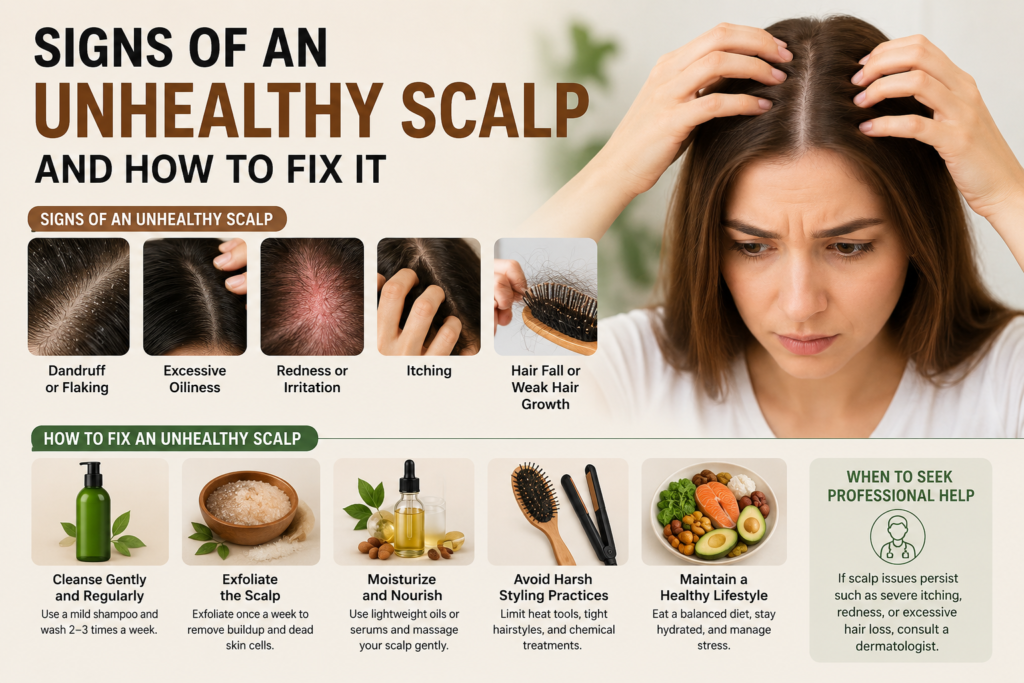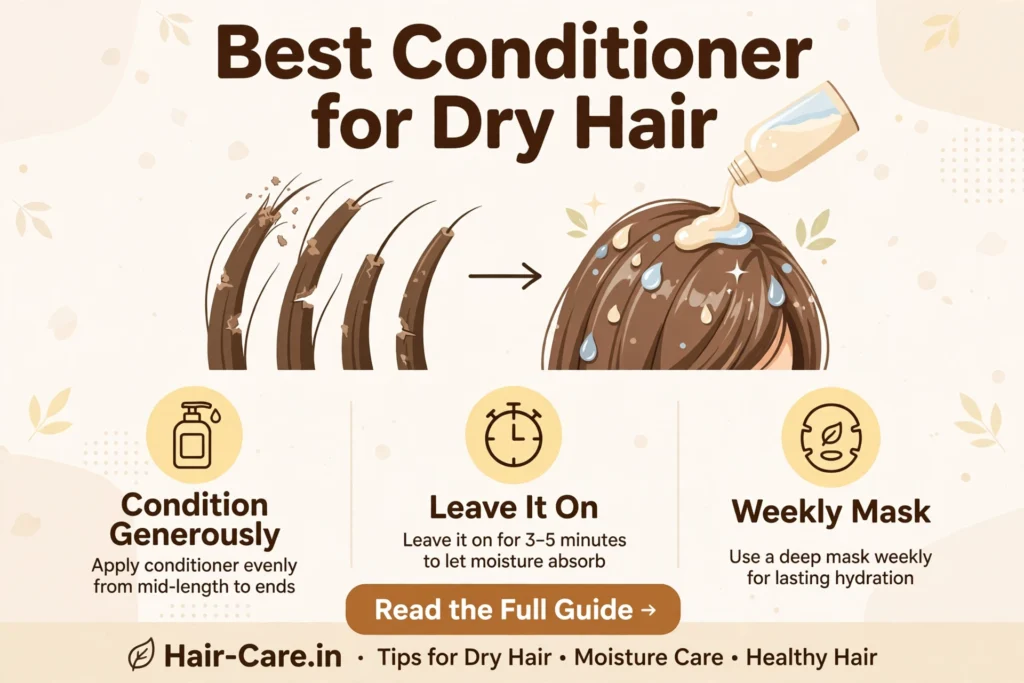
Best conditioner for dry hair comes down to the right moisturizing formula plus the right technique. If you want the short answer: pick a conditioner made for dry or damaged hair that lists shea butter, argan oil, glycerin, or panthenol among its main ingredients. Apply a generous amount from the mid-lengths to the ends — never on the scalp — leave it on for 3 to 5 minutes, and rinse with cool water. Add a weekly deep mask for extra moisture. Avoid sulfates, drying alcohols, and heavy waxes that build up. One honest note: no conditioner can permanently repair split ends. Trimming is the only real fix for splits.
Why dry hair needs a different conditioner
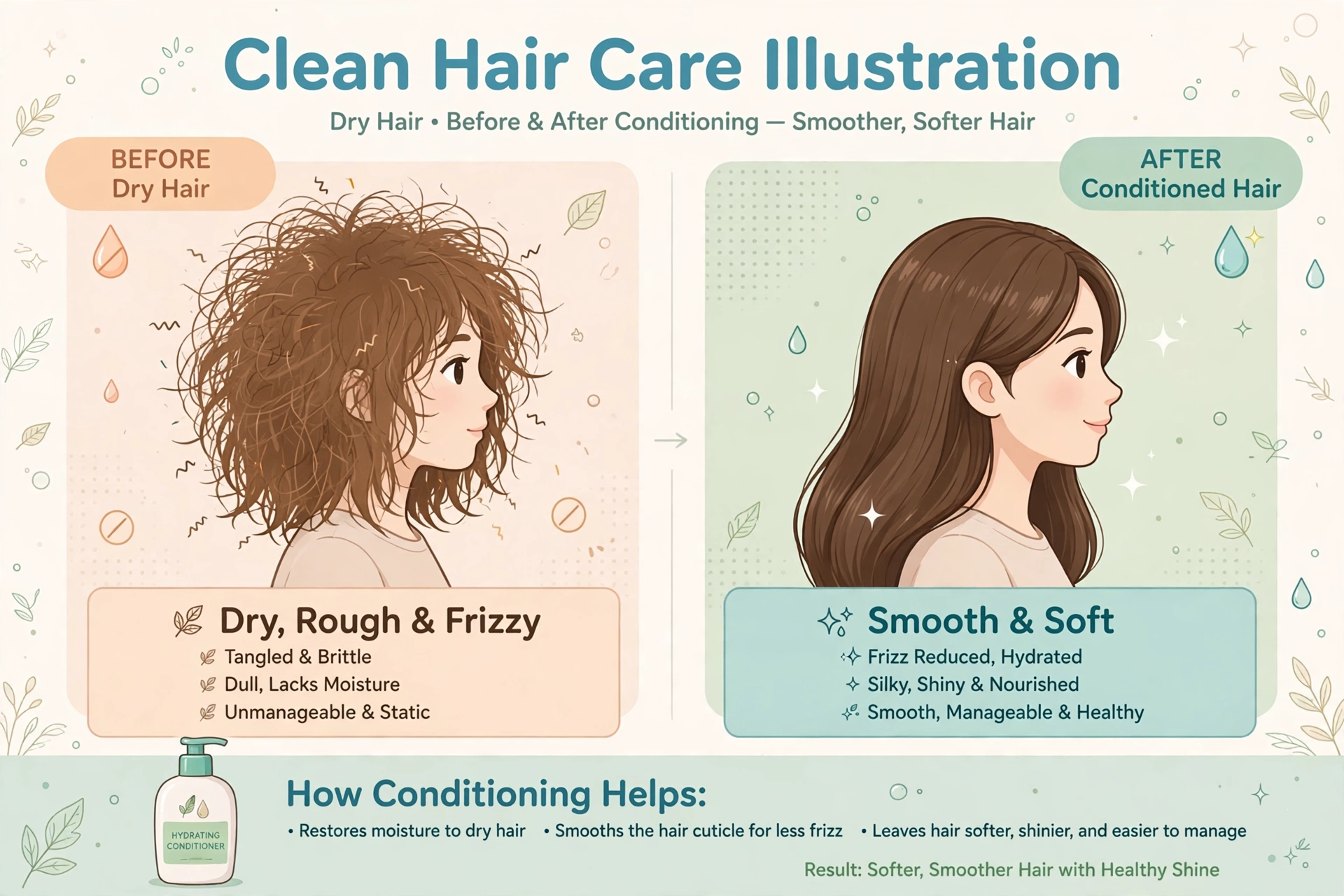
Healthy hair is covered by overlapping cuticle scales that lie flat and hold moisture in. In dry hair, those scales are raised or damaged — by heat styling, coloring, sun exposure, harsh shampoos, or simply genetics — so moisture escapes and the hair feels rough, dull, and tangled. A conditioner works by coating the hair shaft with ingredients that smooth the cuticle back down, which is why dry hair feels softer and looks shinier right after conditioning.
A light, everyday conditioner made for normal or oily hair simply does not carry enough moisturizing and smoothing ingredients to do this job. Dry hair needs a richer formula: more emollients (ingredients that soften), more humectants (ingredients that draw in water), and a slightly heavier conditioning film to keep the cuticle sealed between washes. If your hair still feels rough after conditioning, the problem is often not the brand but the mismatch — a conditioner that was never built for dry hair. For more background on what causes dryness, see our guide on dry hair.
Ingredients to look for
The best conditioner for dry hair usually lists several of these near the top of the ingredient list. Ingredients are listed by amount, so the first five to ten lines matter most.
- Shea butter. A plant butter rich in fatty acids. It coats the hair shaft, seals in moisture, and makes dry, coarse hair feel softer. Most published research on shea concerns skin, but its emollient effect is well accepted in cosmetic science: it is a heavy-duty moisturizer, which is exactly what dry lengths need.
- Argan oil. A light plant oil high in oleic and linoleic acids plus vitamin E. It smooths frizz and adds shine without the greasy weight of heavier oils. A small amount absorbs into the hair shaft; the rest sits on the surface and reduces friction between strands.
- Coconut oil. One of the few oils shown in published studies to penetrate the hair shaft and reduce protein loss during washing. A small amount in a conditioner can strengthen dry hair from the inside. The limit: too much can make fine hair feel stiff or weighed down.
- Glycerin. A humectant — it pulls water from the air into the hair. In normal or humid conditions this is excellent for dry hair. In very dry climates it can pull moisture out of the hair instead, so if you live somewhere arid, look for glycerin paired with oils or butters that seal the moisture in.
- Aloe vera. Mostly water plus soothing plant compounds. It hydrates lightly and helps the conditioner spread evenly through the hair. Think of it as a gentle supporting ingredient rather than the main moisturizer.
- Panthenol (pro-vitamin B5). Attracts moisture and is one of the few conditioning ingredients with published evidence for improving hair’s moisture retention and elasticity. It also adds slight thickness to each strand, which helps fine dry hair look fuller.
- Ceramides. Lipid molecules that are a natural part of the hair’s structure. Damaged hair loses them; conditioners that add them back help fill gaps in the cuticle, which reduces breakage and improves smoothness.
You do not need all seven in one bottle. A strong formula usually combines one or two emollients (shea butter, oils), one humectant (glycerin, panthenol), and smoothing agents. That combination covers the three jobs: add moisture, seal it in, and smooth the surface.
Ingredients to avoid
Just as important as what a conditioner contains is what it leaves out. These are the ingredients most likely to make dry hair worse:
- Sulfates (sodium lauryl sulfate / SLS, sodium laureth sulfate / SLES). Strong detergents that sometimes appear in 2-in-1 products and cheap conditioners. They strip natural oils and leave dry hair drier and frizzier. A conditioner for dry hair should be sulfate-free.
- Drying alcohols. Isopropyl alcohol, SD alcohol, and denatured alcohol evaporate quickly and take moisture with them. One important distinction: not all alcohols are bad. Fatty alcohols such as cetyl alcohol, cetearyl alcohol, and stearyl alcohol are creamy moisturizers — seeing those on a label is a good sign.
- Heavy silicones and waxes. Non-water-soluble silicones such as dimethicone, plus mineral-oil-heavy formulas and waxes, can build up on the hair. A little silicone gives slip and shine, but heavy buildup coats the strand, blocks moisture from getting in, and eventually leaves dry hair feeling coated yet still dry underneath. If you use these products, a clarifying wash now and then removes the buildup.
How to use conditioner right, step by step
Technique matters as much as the formula. Most people use too little product and rinse too fast. Follow these steps:
- Shampoo the scalp only. Massage shampoo into the scalp with your fingertips, not your nails. The lengths get clean enough from the rinse running down. If your shampoo leaves hair feeling stripped, consider switching — our best shampoos guide explains what to look for.
- Squeeze the water out. Soaking-wet hair dilutes conditioner. Gently squeeze the lengths — do not wring them — before applying.
- Use a generous amount. For medium-length hair, roughly a quarter-sized squeeze of product; long or thick hair needs more. Dry hair is thirsty, and skimping is the most common mistake.
- Apply from the mid-lengths to the ends only. Start a couple of inches away from the scalp and work downward. Conditioner on the scalp causes buildup, flat roots, and sometimes itching. The scalp’s own oils take care of the roots.
- Comb it through. A wide-tooth comb distributes the product evenly and detangles gently. This single step improves results more than most people expect.
- Leave it on for 3 to 5 minutes. That is enough time for the conditioning agents to coat the hair. Leaving it on for 20 minutes does not multiply the benefit — the hair can only take up so much.
- Rinse with cool or lukewarm water. Hot water lifts the cuticle you just smoothed down. Rinse thoroughly but do not over-rinse: hair should feel smooth and slightly slippery, not squeaky. Squeaky means you washed the conditioning film right off.
For the full routine around washing and conditioning, see our hair care routine guide. The American Academy of Dermatology’s healthy hair tips also recommend concentrating conditioner on the tips and being gentle with wet hair — simple advice, and it matches what the available evidence supports.

Seeing the technique helps. This short video from the American Academy of Dermatology walks through healthy hair care habits recommended by dermatologists:
Video: “Healthy hair care tips from dermatologists,” by the American Academy of Dermatology.
Leave-in vs rinse-out vs mask
These three products do different jobs, and dry hair often benefits from more than one:
- Rinse-out conditioner is the daily workhorse. Use it after every wash. For mildly dry hair, a good rinse-out is enough on its own.
- Leave-in conditioner stays in the hair instead of being rinsed out. It suits very dry, frizzy, curly, or long hair that dries out between washes. Apply a small amount to the damp ends after washing. If your hair frizzes within hours of styling, a leave-in is often the missing step — see also our frizzy hair guide.
- Hair mask is a concentrated weekly treatment, not a daily product. It delivers a heavier dose of the same kinds of moisturizing ingredients and is left on much longer (see the routine below).
Who actually needs a leave-in? Anyone whose hair feels dry again by midday, whose ends tangle easily, or who heat-styles regularly. If your hair is fine and gets weighed down easily, use a light leave-in spray on the ends only — or skip it. A rinse-out alone is the right call for many people.
Weekly deep mask routine
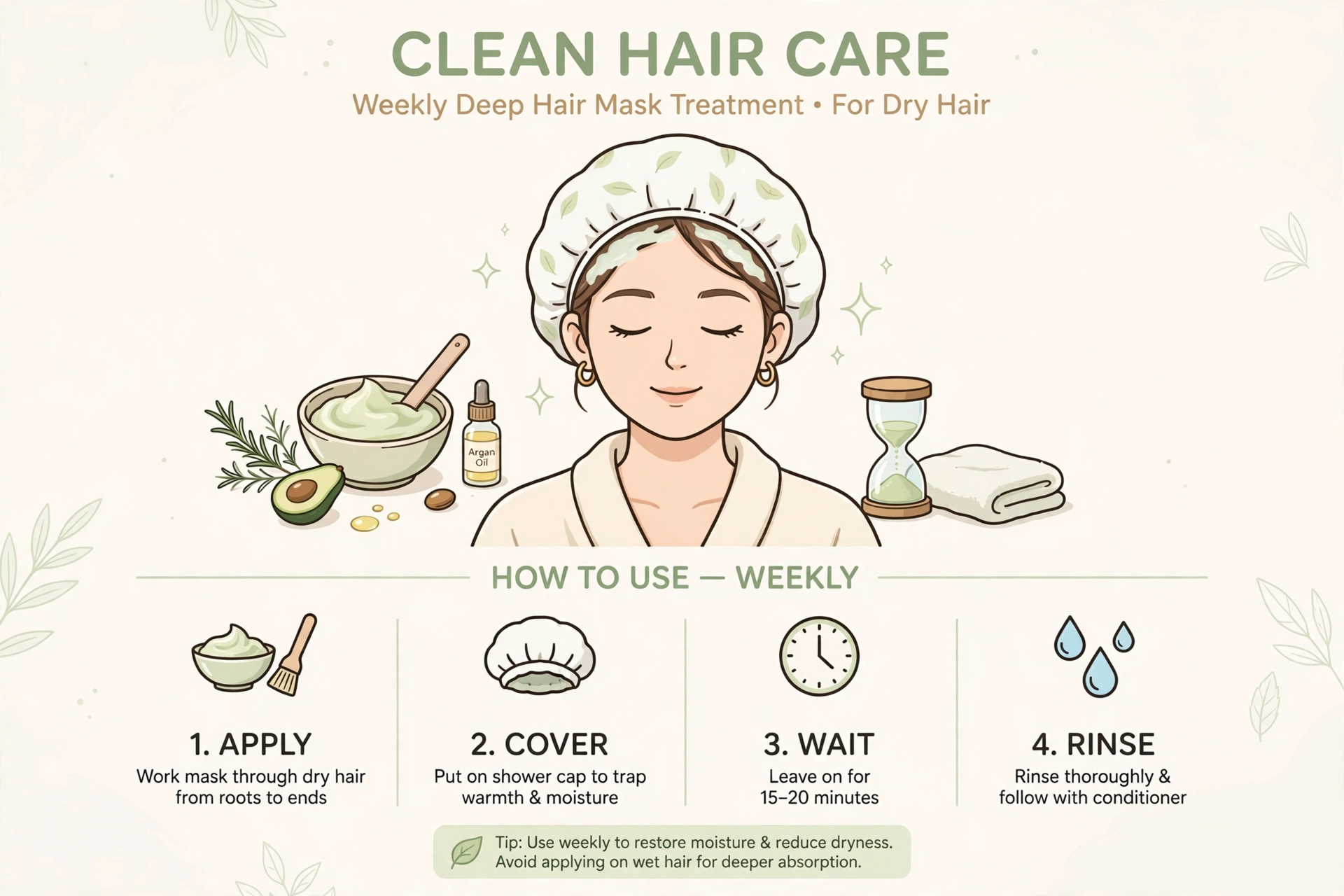
Once a week, give dry hair a deeper treatment. A mask is simply a richer conditioner used with more time and a little warmth:
- Start with clean, damp hair. Shampoo lightly first, so the mask reaches the hair shaft instead of sitting on product buildup.
- Apply generously from the mid-lengths to the ends. Comb through with a wide-tooth comb so every strand is coated.
- Cover with a shower cap, then wrap a warm towel over it. Gentle heat opens the cuticle slightly and helps the mask absorb. Twenty to thirty minutes is the sweet spot — longer adds little.
- Rinse with cool water. Follow with a small amount of your regular rinse-out conditioner only if the ends still feel rough; most people do not need both.
A note on expectations: a mask makes hair feel dramatically better for a few days because it deposits a heavier conditioning film. That is a cosmetic effect, not structural repair. Real damage — especially split ends — cannot be glued back together by any mask.
Common mistakes to avoid
- Putting conditioner on the scalp. This causes buildup, limp roots, and sometimes itching or flakes. Keep conditioner on the lengths, where the dryness actually is.
- Using too little product. Dry hair needs a generous amount. A pea-sized drop will not cover the lengths, and under-conditioned hair tangles and breaks.
- Rinsing after 30 seconds. Conditioning agents need a few minutes on the hair to coat it properly. Give them the full 3 to 5 minutes.
- Skipping the weekly mask. Daily conditioner maintains moisture; the mask restores it. Without that weekly boost, dryness creeps back between washes.
- Brushing dry, fragile hair aggressively. Detangle while the conditioner is in, with a wide-tooth comb, starting from the ends and working up. Brushing dry hair — especially curly or damaged hair — causes breakage that no conditioner can fix.
Frequently asked questions
How often should I condition dry hair?
Every time you wash. Dry hair should be conditioned after every shampoo, without exception. Add the deep mask once a week. If you wash daily, a lighter rinse-out conditioner is fine for most washes, with the richer formula or mask on one of those days.
Can conditioner repair split ends?
No. This is the claim to be most skeptical of. Split ends are physically split fibers, and no cosmetic product can fuse them back together permanently. Some products can temporarily smooth their appearance, but the only real fix is trimming them off. Regular small trims also stop splits from traveling further up the hair shaft.
Is a leave-in conditioner better than a rinse-out?
Neither is better in general — they do different jobs. A rinse-out conditioner is the everyday essential. A leave-in is an add-on for very dry, frizzy, curly, or long hair that needs moisture between washes. If your hair feels fine with just a rinse-out, you do not need a leave-in.
Should I condition before shampooing (reverse washing)?
Reverse washing — conditioner first, then shampoo — can help if your hair is very fine and gets weighed down by conditioner easily. For most dry hair, though, the standard order (shampoo, then conditioner) works better, because shampooing afterward can strip away the moisture you just added. Try it only if flat, limp hair is your main complaint.
When should I see a clinician about my hair?
See a doctor or dermatologist if you notice sudden or patchy hair loss, a visibly widening part or bald spots, or persistent scalp pain, redness, sores, or flaking that does not improve after a few weeks of gentle care. MedlinePlus notes that unusually dry hair can sometimes accompany other conditions — sudden changes deserve professional attention rather than a new product.
A researcher’s note
I am a researcher, not a doctor or dermatologist, and this article reflects that: it summarizes what ingredients are generally known to do and what dermatology sources recommend — not medical advice. The honest limits: cosmetic products improve how hair feels and looks. They do not cure hair loss, regrow hair, or permanently repair damage. I found no strong published evidence that any conditioner repairs split ends or regrows hair, so treat such claims as marketing. If your hair problem is sudden, severe, or does not respond to weeks of consistent gentle care, a clinician — not a new bottle — is the right next step.