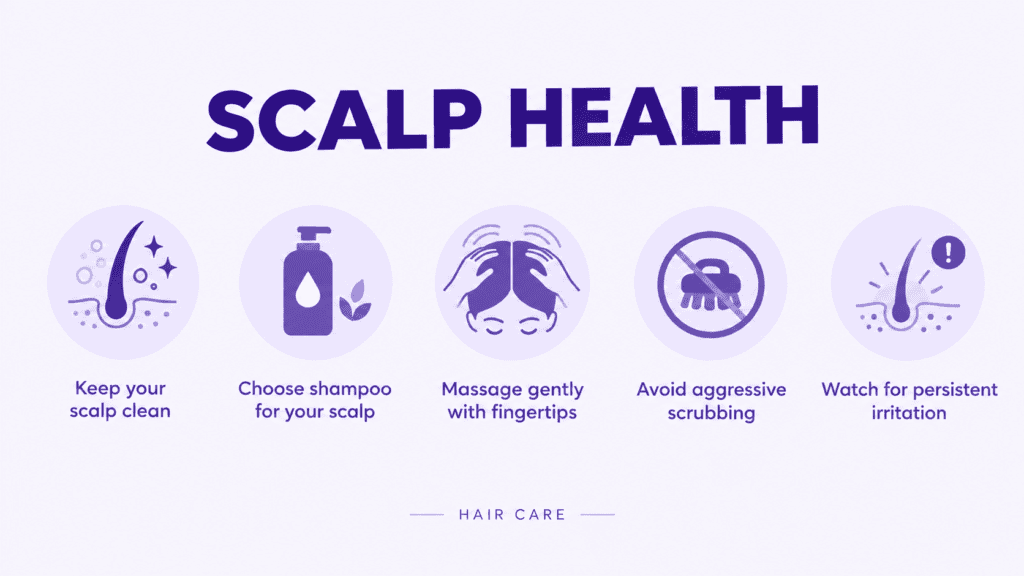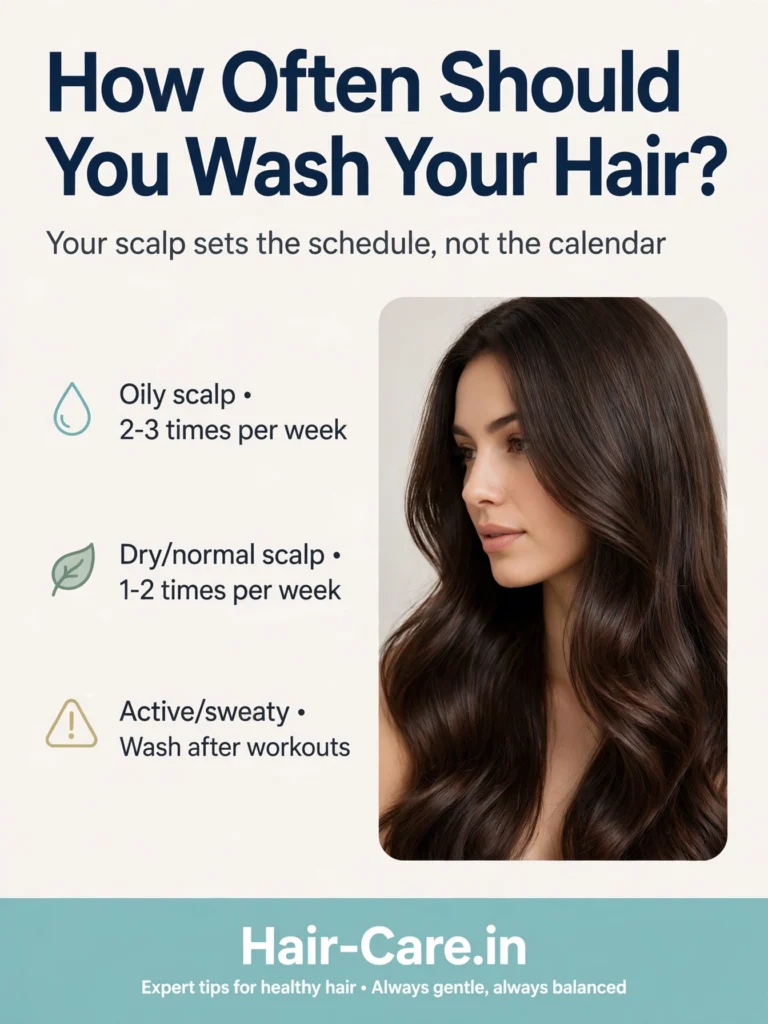
Short answer: Wash your hair based on how quickly your scalp gets dirty or oily, not on a fixed calendar. For most people, every 2 to 3 days is a sensible starting point. Fine, straight hair with an oily scalp may need washing daily or every other day, while dry, thick, curly, or coily hair often does well washing once a week or less. Your scalp — not your hair lengths — sets the schedule.
This is a research summary, not medical advice. If you have persistent flaking, redness, itching, sores, or sudden hair loss, see a dermatologist. No wash schedule in this article is claimed to cure a scalp condition or regrow hair.
Why there is no single right number
Ask ten sources how often to wash your hair and you will get ten different numbers, because the answer depends on three things that differ from person to person: how much oil your scalp produces, how your hair texture carries that oil, and how you live — exercise, heat, styling products, and colour or chemical treatments.
The American Academy of Dermatology (AAD) states the foundation plainly: wash based on how often your hair gets dirty or oily. If you have straight hair and an oily scalp, you may want to shampoo every day. If you have dry, textured, curly, or thick hair, shampoo when needed, at least once every 2 to 3 weeks. That range sounds wide, and it is — because it has to cover very different scalps.
Other dermatology sources give the same message with different numbers. Cleveland Clinic dermatologist Dr. Shilpi Khetarpal suggests finer hair every 1 to 2 days, semi-coarse hair every 2 to 4 days, and coarse, thick hair once a week or when it needs washing. Mayo Clinic guidance is similar: shampoo every second or third day at a minimum for most people, daily for some, and once or twice a week for people with textured hair that dries easily. The numbers differ because the sources are written for different people — the AAD’s general tips, its curly-hair advice, and its Black hair advice are separate pages for separate needs. This article shows those ranges side by side instead of pretending they are one rule.
How often, by hair type and scalp
Use this table as a starting point, then adjust by what your scalp tells you over two weeks. No table can replace that test.
| Hair and scalp type | Reasonable starting point |
|---|---|
| Fine, straight, oily scalp | Daily to every other day |
| Medium, straight or wavy, normal scalp | Every 2 to 3 days |
| Thick or wavy, not oily | 1 to 2 times a week |
| Curly (3A–3C) | Every 5 to 10 days |
| Coily (4A–4C) | Every 7 to 14 days |
| Colour-treated hair | As rarely as is comfortable, every 2 to 4 days |
| Dandruff-prone scalp | 3 or more times a week, with a medicated shampoo as directed |
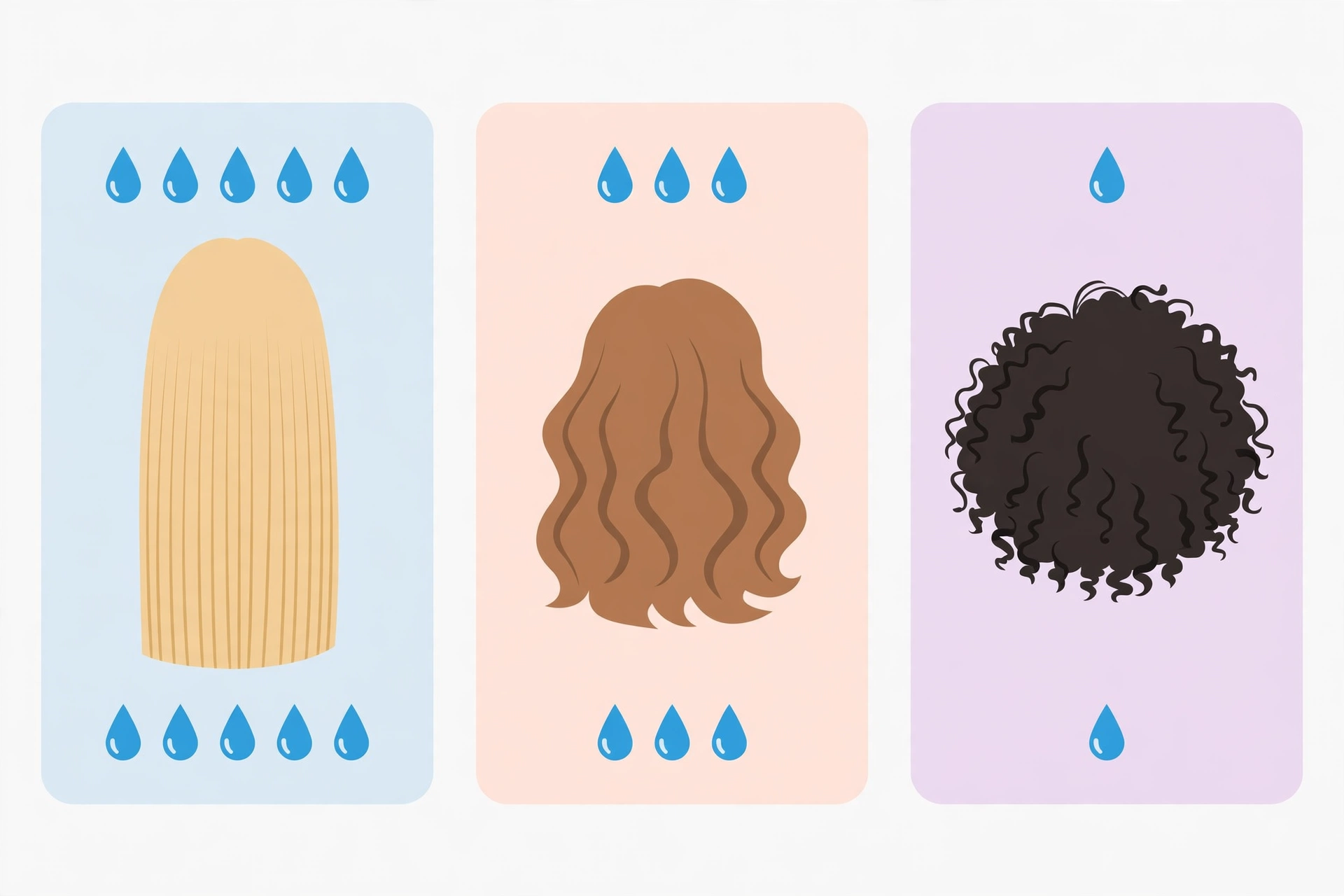
Why the range is so wide: sebum, your scalp’s natural oil, travels quickly down a straight, fine strand, so that hair looks greasy sooner. It moves slowly along curls and coils, which is partly why curly hair gets dry — the ends do not receive the oil, while the scalp still needs cleaning. Thick hair can hide oil longer, but that does not mean the scalp does not need washing; build-up can still collect at the roots.
Signs you are washing too often
- Dry, brittle ends and a tight or itchy scalp after washing
- Static, frizz, or dullness within an hour of drying
- Colour fading faster than expected
- Hair that feels rough even after conditioning
If you see these signs, try spacing washes out by one day at a time, and make each wash gentler — lukewarm water, shampoo on the scalp only, fingertips not nails, conditioner on the lengths. Changing the wash itself often matters more than changing the schedule alone. For a full gentle-wash method, see our guide on washing hair without drying the scalp.
Signs you are washing too little
- Greasy roots by lunchtime, flat hair, or a heavy feeling at the roots
- Flakes, scalp odour, or small breakouts along the hairline
- Itching that improves right after a wash, then returns quickly
- Styling products that stop working because of build-up
Flakes alone do not prove dryness. The AAD flags this specifically: flakes can mean you are not shampooing frequently enough, or you are using the wrong conditioner or scalp moisturiser for your type. If flakes, redness, or itching do not improve with a gentler, more regular wash over a few weeks, see a dermatologist rather than washing harder or less often at random.
What changes the schedule
Exercise and sweat. Sweat can build up and trap dirt in hair, so a workout day may need a wash or at least a rinse that a rest day does not. Wash after heavy sweating regardless of your usual schedule, and rinse thoroughly.
Styling products and dry shampoo. Dry shampoo absorbs oil but does not clean your scalp, so do not rely on it for days on end. Dermatology guidance recommends washing with regular shampoo and water after one or two dry-shampoo applications rather than continuing to layer it on. Heavy styling products, gels, and sprays also shorten the time between washes.
Colour and chemical treatments. Colour-treated hair fades faster with frequent washing, especially with hot water and harsh cleansers. If your hair is colour-treated, wash as rarely as is comfortable, use a gentle sulfate-free formula, and keep water lukewarm.
Age and hormones. Oil production changes with age and hormones, so a schedule that worked at 20 may not work at 40. Judge by your scalp now, not by a rule you learned years ago.
Climate and hard water. Heat, humidity, and hard water — water high in calcium and magnesium — can change how quickly hair feels dirty and how well shampoo lathers. Rinse thoroughly, and use a little less product rather than more when water is hard.
Hair length. Long or thick hair takes longer to wash and dry, which tempts people to wash less often. The AAD’s curly-hair advice notes a practical fix: wash long or thick hair in sections to reduce tangling, and wear a shower cap between washes to preserve the style.
Can you train your scalp to need less washing?
This is a common claim, and the evidence for it is weak. There is little reliable evidence that washing less often teaches your scalp to produce less oil. What usually happens is that your scalp adjusts to a routine, and you learn to tolerate a little more oil between washes — that is not the same as your scalp producing less. If your scalp is oily, washing more often with a gentle shampoo is reasonable, and skipping washes to “train” it can let build-up sit and make itching or flakes worse. Do not force a schedule your scalp clearly rejects.
Daily washing: is it bad?
Not for everyone. Daily washing with a gentle shampoo, lukewarm water, and fingertips is fine for an oily scalp and for fine, straight hair. Daily washing with hot water, a strong shampoo, and hard scrubbing is much more likely to dry a scalp out and damage the lengths. The question is not “daily or not” — it is “gentle or harsh, and does my scalp need it today?”
A 2021 peer-reviewed study on shampoo wash frequency, cited by several wash-frequency guides, found that daily washing was not harmful in healthy adults without scalp disease. That does not prove daily washing suits everyone — it only shows that frequency alone, without a scalp condition, is not the whole story.
Watch: How often should you wash your hair?
Video: “Mayo Clinic Minute: How often should you wash your hair?” by Mayo Clinic, featuring dermatologist Dr. Dawn Davis, via YouTube. Read the matching Mayo Clinic guidance on newsnetwork.mayoclinic.org.
A simple way to find your schedule
- Start with the table above for your hair type.
- Keep the same gentle wash method for two weeks — do not change products every few days.
- Track two things: how your scalp feels on day two after a wash, and whether your lengths feel drier across the fortnight.
- If your scalp feels oily, itchy, or coated before your usual wash day, wash sooner. If your ends feel dry or brittle, wash less often and protect the lengths more.
- If you are unsure, start at every other day. That is the middle of the range for most people, and it is easier to adjust from there than from either extreme.
How often should you wash curly or coily hair?
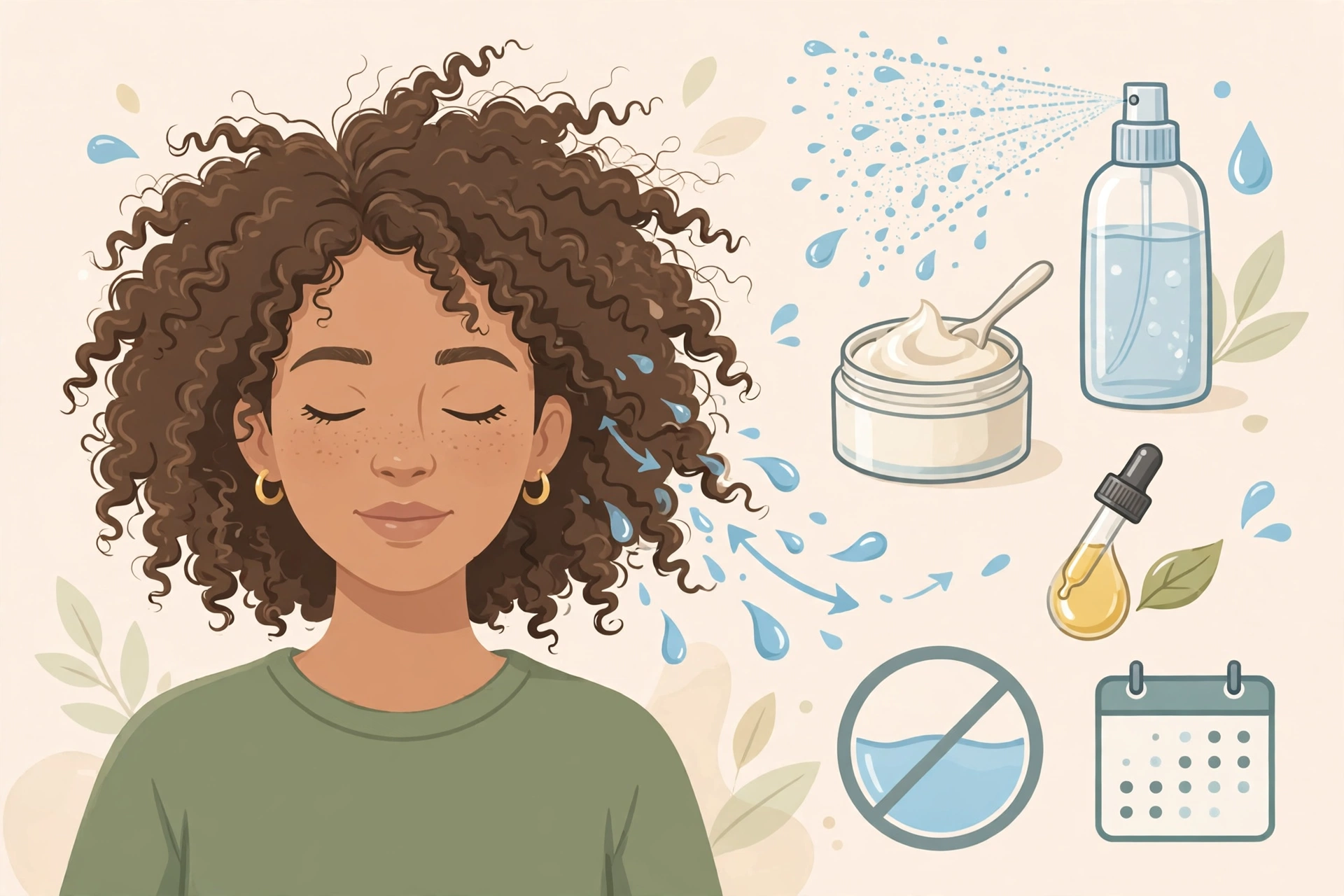
Curly and coily hair is often naturally drier because scalp oils do not move down bends and coils as easily. Washing too often can leave curls dry, frizzy, and hard to manage, but waiting too long can let sweat and product build up on the scalp. Most people with curly hair wash about once a week or every 5 to 10 days; coily hair often every 7 to 14 days, with the AAD setting a floor of at least once every 2 to 3 weeks for scalp health. Use a moisturising shampoo made for curly hair, wash in sections if hair is long or thick, and condition the lengths after every wash.
How often should you wash an oily scalp?
Wash daily or every other day, with a gentle shampoo on the scalp only. Washing oily hair regularly does not make it oilier, as commonly believed — the key is choosing a lightweight formula, avoiding conditioner at the roots, and rinsing thoroughly so residue does not build up. If oil returns within a day despite a gentle daily wash, that is a sign your scalp needs that frequency, not a sign you should wash harder.

How often should you wash a dry or sensitive scalp?
Wash 2 to 3 times a week to start, with a gentle, fragrance-free formula, lukewarm water, and fingertips only. Over-washing can worsen dryness and irritation, but under-washing can let flakes and build-up sit. If your scalp is sore, broken, or inflamed, skip scrubbing tools and use fingertips only, and see a dermatologist if it does not improve.
Frequently asked questions
How often should most people wash their hair?
Every 2 to 3 days is a sensible starting point for most people, then adjust by scalp oiliness and hair texture.
Is it OK to wash your hair every day?
Yes, if your scalp is oily or your hair is fine and straight. Use a gentle shampoo, lukewarm water, and fingertips, and condition the lengths.
How often should I wash curly hair?
About once a week, or every 5 to 10 days. Coily hair often every 7 to 14 days, and at least once every 2 to 3 weeks for scalp health.
Can dry shampoo replace washing?
No. Dry shampoo absorbs oil temporarily but does not clean your scalp. Wash with shampoo and water after one or two dry-shampoo uses.
Do flakes mean I should wash less?
Not necessarily. Flakes can mean build-up that needs a proper wash, or a condition that needs a different approach. If flakes persist, see a dermatologist.
Can I train my scalp to be less oily?
There is little reliable evidence for this. Wash as often as your scalp needs, gently, rather than forcing a schedule it rejects.
Related guides on Hair-Care.in
- How to Wash Hair Without Drying Scalp
- Sensitive Scalp Care Routine
- Best Shampoo for Oily Scalp
- Sulfate-Free Shampoo for Thinning Hair
Sources and limits
- American Academy of Dermatology — Tips for Healthy Hair
- Cleveland Clinic — How Often Should You Wash Your Hair
- Mayo Clinic — How Often Should You Wash Your Hair
Limits stated plainly: wash-frequency ranges differ between AAD, Cleveland Clinic, and Mayo Clinic because they are written for different hair types and audiences; this article shows the ranges side by side instead of merging them into one false rule.