Short answer: Wash hair in hard water with a chelating shampoo once every 7 to 10 days, a gentle shampoo on other wash days, lukewarm water, and a low-pH conditioner or diluted acidic rinse to finish. Hard water leaves calcium and magnesium on the hair, so the goal is to lift those minerals off, close the cuticle, and add moisture back — not to scrub harder or wash more often. A water softener is the only fix that changes the water itself; everything else manages the buildup.
This guide is written as a researcher, not a doctor. It is general information, not medical advice. If you have sudden, patchy, or severe hair loss, sores, or a scalp condition that does not improve, talk to a clinician.
What is hard water?
Hard water is tap water with a high level of dissolved minerals, mainly calcium and magnesium, picked up as water moves through rock and soil. The hardness is measured in milligrams per litre (mg/L) as calcium carbonate — the same number as parts per million (ppm). The United States Geological Survey (USGS) uses four bands:
| Water type | Hardness (mg/L as calcium carbonate) | What you notice |
|---|---|---|
| Soft | 0-60 | Soap lathers easily, little scale |
| Moderately hard | 61-120 | Some spotting on taps and glasses |
| Hard | 121-180 | Scale in kettles, soap scum, dull laundry |
| Very hard | Over 180 | Heavy scale, clogged aerators, stiff laundry |
Many cities in India, Pakistan, the Gulf, and parts of Saudi Arabia supply water in the hard to very hard range, often 200-600 mg/L. That is why this problem feels normal to so many people — the water itself is the same every day, so the damage builds up slowly and gets blamed on shampoo, weather, or age.
Hard water is not a health concern for drinking, according to the USGS. The problem for hair is on the surface of the strand, not inside the body.
How to tell if your water is hard
You do not need a lab test to suspect hard water. Look for this pattern — three or more of these together point to the water, not your products:
- Hair feels rough or straw-like within hours of washing, even after conditioner.
- Shampoo barely lathers, or leaves a slightly filmy, waxy feeling.
- Colour-treated hair fades faster than it should; blonde or grey hair turns yellow or brassy.
- Strands snap mid-length during brushing, with no white bulb on the broken end.
- A dry, tight, or itchy scalp, with flakes that do not settle with ordinary anti-dandruff shampoo.
- White limescale on taps, showerheads, and shower glass — this is the biggest clue, because it proves the water itself leaves deposits.
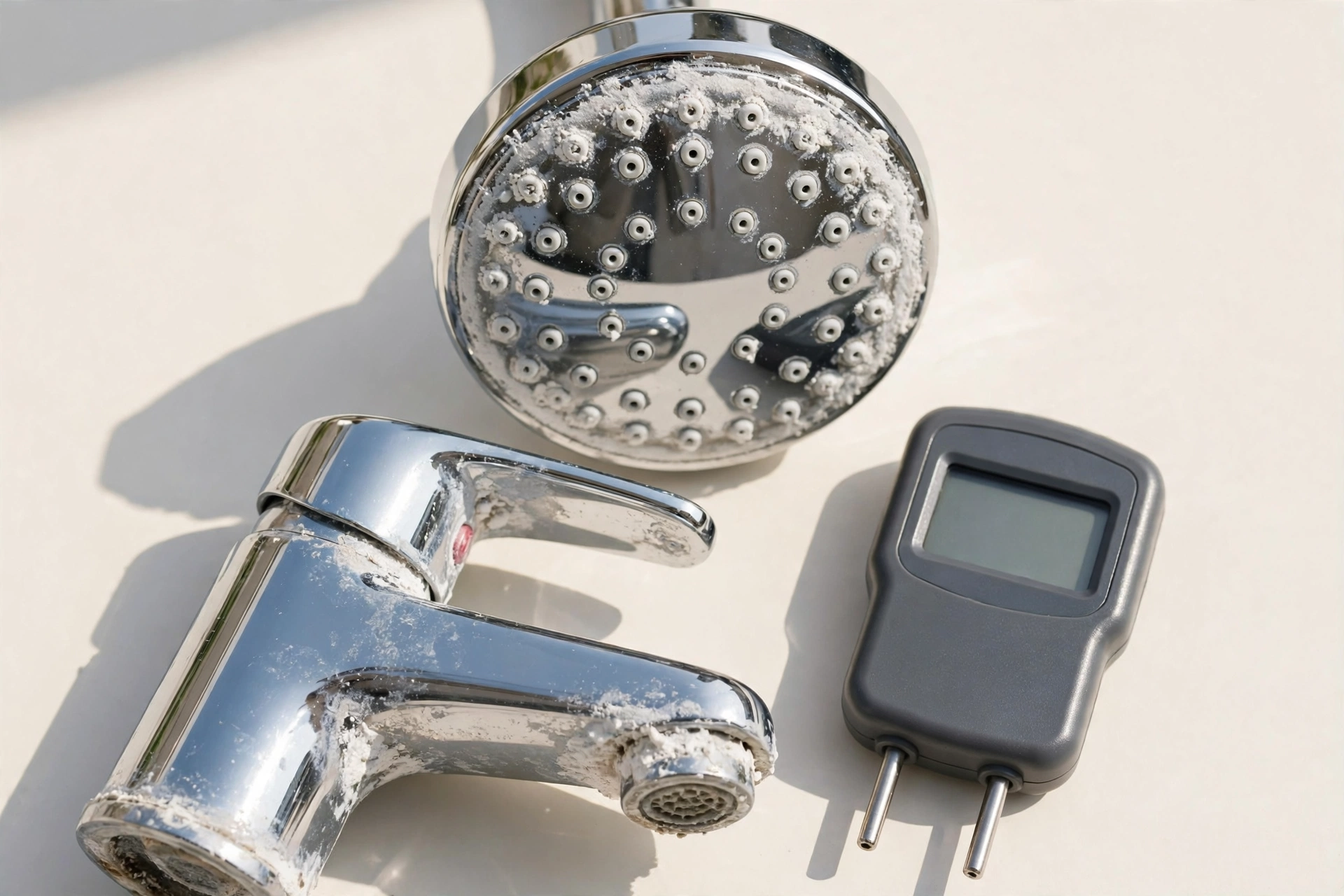
Two cheap checks confirm it:
- TDS meter: A small handheld meter costs little and measures total dissolved solids. A reading consistently above 150-200 ppm is worth treating as hard water for hair-care purposes; above 300 ppm is quite hard.
- Soap shake test: Fill a clear bottle halfway with tap water, add a few drops of pure liquid soap, and shake. Very little lather and milky, cloudy water means hard water. Soft water lathers easily and stays clear.
If your hair improves noticeably when you travel somewhere with softer water, that is another strong sign.
What hard water does to your hair — what the studies actually say
Here is the honest picture, because most guides pick one side and hide the other.
Calcium and magnesium ions carry a positive charge, and the hair surface carries a slight negative charge. The minerals are drawn onto the shaft, bind to the keratin, and form a film. When the same minerals meet shampoo, they form calcium stearate — the waxy scum you see on bathroom tiles — sitting on your hair and scalp. Hard water is usually alkaline, around pH 8, while hair and scalp sit at a mildly acidic pH of 4.5 to 5.5. The alkaline water lifts the cuticle, moisture escapes, and the strand feels rough and tangled.
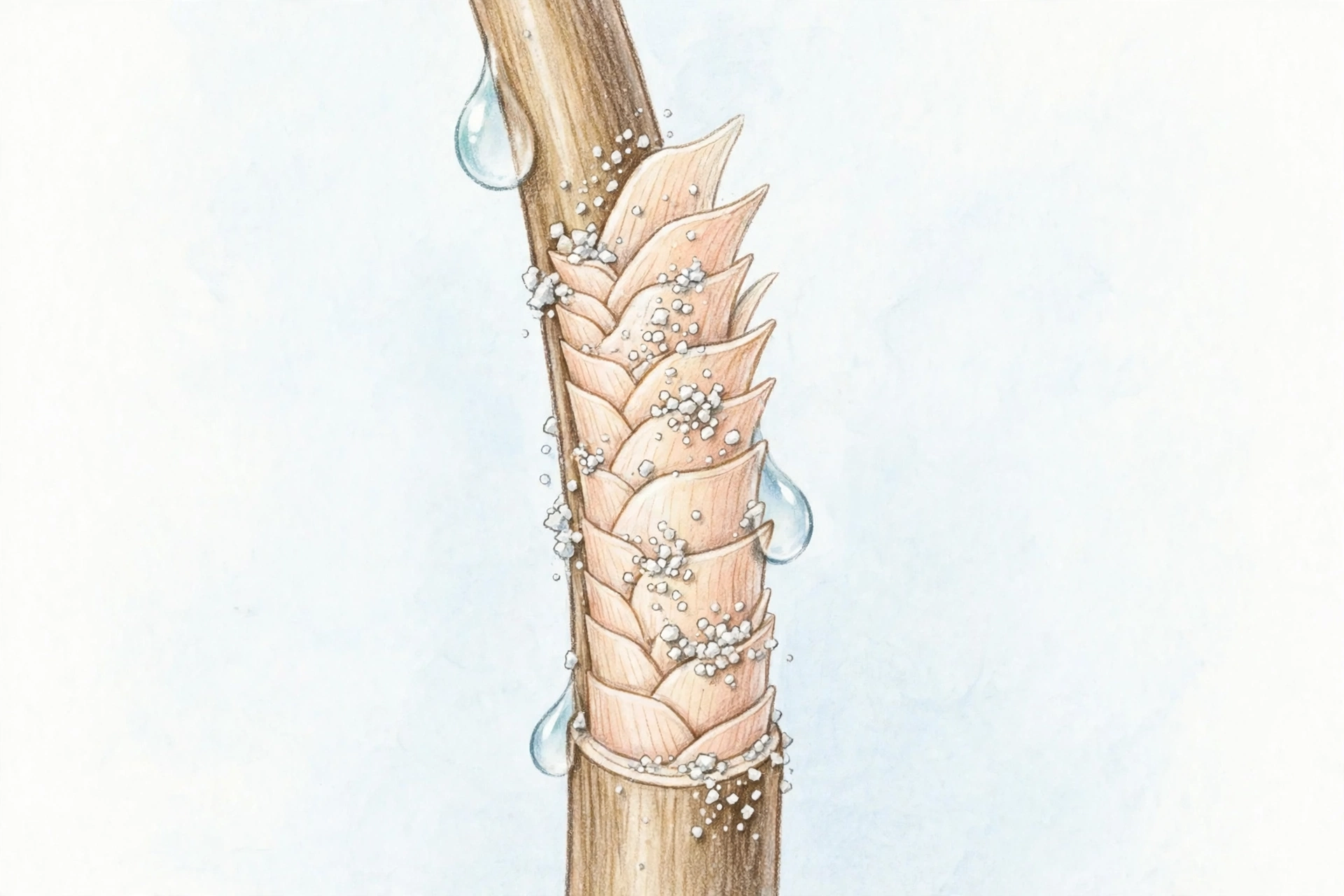
Four small laboratory studies measured what happens next, and they do not all agree:
| Study | What was tested | What it found |
|---|---|---|
| Srinivasan et al., 2013, International Journal of Trichology | Hair soaked in hard water (212.5 ppm) vs distilled water, 30 days | No significant difference in tensile strength (p = 0.858) or elasticity (p = 0.874) |
| Srinivasan and Rangachari, 2016, International Journal of Dermatology | Hair under a scanning electron microscope after hard-water treatment | About three times more calcium on the hair (0.804% vs 0.26%), a ruffled cuticle, and strands about 7% thinner |
| Luqman et al., 2016, Journal of the Pakistan Medical Association | 76 men, hair treated with hard water for 3 months | Significantly lower tensile strength (238.49 vs 255.36, p = 0.001) |
| Luqman et al., 2018, International Journal of Trichology | 70 men, hard vs deionised water, 30 days | Significantly lower tensile strength (234.16 vs 254.84, p = 0.001) |
Two studies found lower strength, two found no difference in strength — but all of them found mineral deposits on the hair. The studies used cut hair soaked in water, not real washing with shampoo, and none of them measured hair follicles. That matters for the question everyone asks next.
Does hard water cause hair loss?
Hard water does not cause true hair loss from the follicle. There is no good evidence that it shuts down follicles, shortens the growth cycle, or causes pattern hair loss. What it does is weaken the shaft and raise breakage, and breakage looks like thinning: short snapped pieces in the brush and shower, no white bulb on the end, hair that never seems to grow past a certain length.
There is a second effect people mistake for hair loss. Normal daily shedding is 50 to 100 strands a day. Mineral residue and soap film can glue shed hairs together, so they come out in a clump on wash day instead of a few at a time. It looks like a sudden shed, but it is often normal shedding released all at once.
The honest summary is this: hard water is a shaft problem, not a root problem. It makes hair dry, rough, brittle, and easier to snap. It does not kill the follicle. If hair fall continues for more than 8 to 12 weeks after you fix the water routine, or if it is patchy, sudden, or severe, the cause is probably something else — hormones, thyroid, iron, stress, or a scalp condition — and a clinician should check it.
Hard water can also make an existing scalp condition worse. If you already have eczema, psoriasis, or seborrheic dermatitis, the mineral residue and the drying effect can aggravate itching and flaking.
How to wash hair in hard water: the step-by-step routine
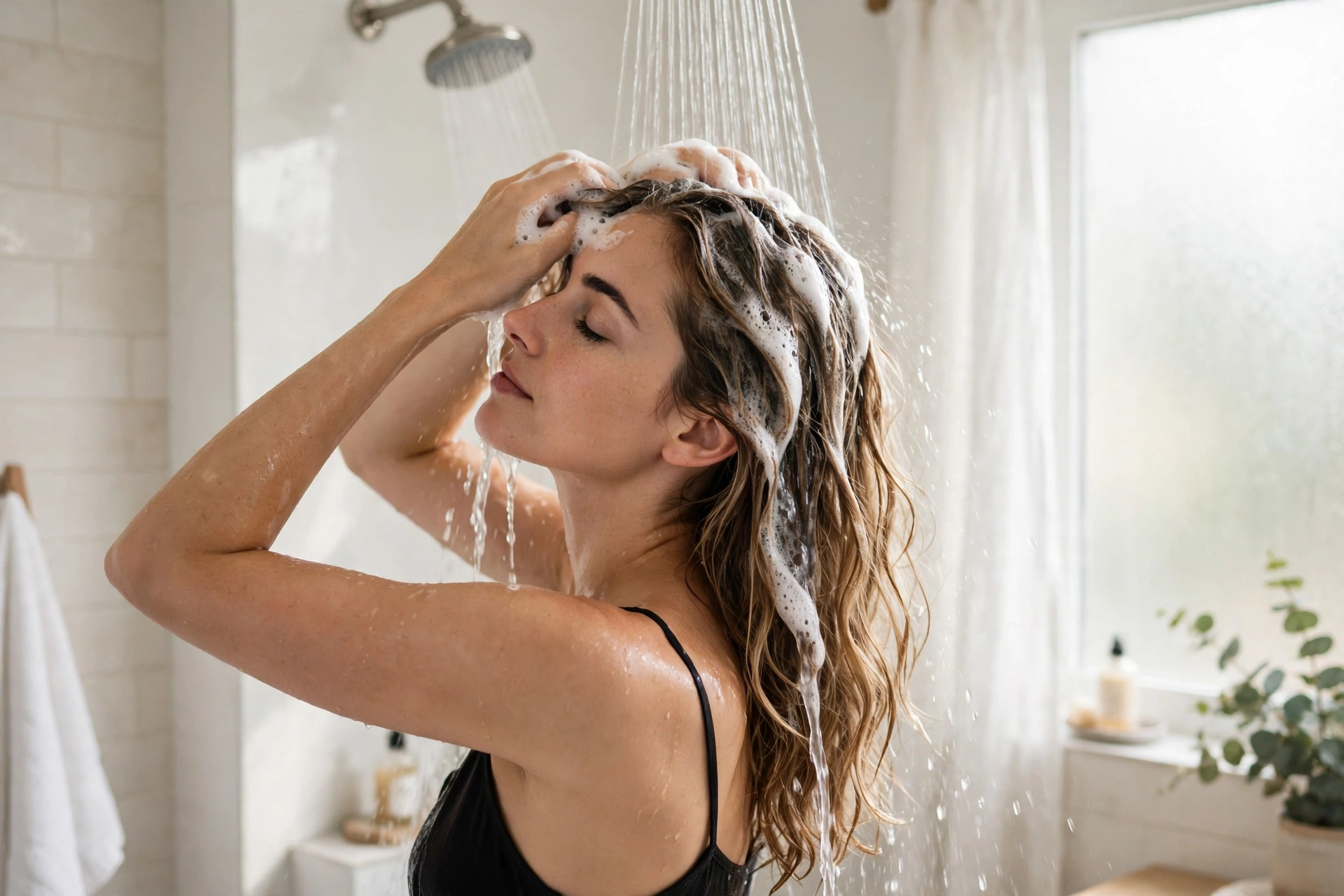
Step 1: Pre-rinse thoroughly with warm water
Spend at least 60 seconds soaking your scalp and hair before any product touches it. Warm water — not hot — helps lift surface dust and loosen sebum, and gives your cleanser a fair chance despite the minerals working against it. Very hot water opens the cuticle further and lets minerals in deeper, so keep it lukewarm.
Step 2: Use a chelating shampoo every 7 to 10 days
A chelating shampoo is the most targeted fix. It contains ingredients such as EDTA (ethylenediaminetetraacetic acid), citric acid, or sodium phytate, which bind calcium and magnesium ions and lift them off the hair shaft so they rinse away. A 2022 review in Skin Appendage Disorders concluded that chelating shampoos meaningfully reduce mineral buildup when used regularly.
Use it once every 7 to 10 days — not every wash. It is a stripping wash, and daily use will dry the hair out. Massage it into the scalp with your fingertips, leave it for 2 to 3 minutes so the chelating agents have time to bind the minerals, then rinse thoroughly.
Step 3: Use a gentle shampoo on other wash days
On the days between chelating washes, use a gentle shampoo and use less of it than you think you need. More shampoo in hard water means more soap scum, not cleaner hair. Apply it mainly to the scalp, where oil and buildup sit, and let the lather run down the lengths as you rinse. Do not pile the lengths on top of your head and scrub them — that causes tangles and breakage on already-roughened hair.
Step 4: Condition with a low-pH product
After rinsing the shampoo, apply conditioner to the mid-lengths and ends, not the scalp. A conditioner with a mildly acidic pH (around 3.5 to 4.5) helps close the cuticle that the alkaline water opened. Leave it for 2 to 3 minutes, then rinse. If your hair is very dry, a deep conditioning mask once a week after the chelating wash helps restore moisture.
Step 5: Finish with an acidic rinse
A diluted apple cider vinegar rinse is the cheapest finishing step: about 1 tablespoon of vinegar in a cup of water, poured over the lengths after conditioning, then rinsed out. The mild acidity helps dissolve remaining mineral film and smooth the cuticle. Do not use undiluted vinegar, and do not use it every wash — once a week is enough. Lemon juice works on the same principle, but vinegar is gentler and easier to dilute correctly.
Step 6: Final rinse with softer water if you can
If you keep a jug of filtered, distilled, or bottled water in the bathroom, use it for the last 30 seconds of rinsing. It is a small step, but it removes the last layer of minerals before they dry onto the hair. This is also the most practical option for people who cannot change their plumbing.
Step 7: Dry gently
Pat hair dry with a towel or a soft cotton cloth. Do not rub hard — wet, mineral-coated hair is at its weakest and roughest. Detangle from the ends upward with a wide-tooth comb, and keep heat low. A light leave-in conditioner on the lengths adds slip and protects against the friction that causes breakage.
Watch: Is Hard Water Ruining Your Hair?
Watch on YouTube: Video by Brad Mondo — “Is Hard Water Ruining Your Hair?” on YouTube.
Chelating vs clarifying shampoo: what is the difference?
People use these two words as if they mean the same thing. They do not.
| Chelating shampoo | Clarifying shampoo | |
|---|---|---|
| What it removes | Mineral deposits (calcium, magnesium, metals) by binding them | Product buildup, oils, and silicones with strong surfactants |
| Key ingredients | EDTA, citric acid, sodium phytate | Strong surfactants, sometimes no chelating agents |
| How often | Every 7-10 days | Every 2-4 weeks, or as needed |
| For hard water | Yes — this is the right tool | Partly — it cleans, but it does not bind minerals |
A standard clarifying shampoo will make hair feel cleaner for a day, but the minerals stay. If hard water is your problem, you need the chelating ingredient, not just a stronger cleanse. Check the ingredient list for disodium EDTA, tetrasodium EDTA, citric acid, or sodium phytate.
What does NOT work for hard water hair
Honest guides say what fails, not just what helps:
- Boiling the water. Boiling can reduce temporary hardness from bicarbonates, but it does not soften water properly — it can even concentrate sulfates, chlorides, and heavy metals as some pure water evaporates. It is not a practical or effective fix.
- Using more shampoo. More surfactant in hard water means more soap scum, not cleaner hair. Use less, rinse longer.
- A standard clarifying shampoo alone. It strips product buildup, but calcium and magnesium need a chelating agent to be lifted off.
- Oiling alone. A light pre-wash oil on the lengths can act as a barrier against mineral contact, but oil does not remove deposits that are already there.
- Washing more often. Washing daily in hard water means daily mineral exposure. Wash as often as your scalp needs, not more — and read our guide on how often to wash your hair to find your own frequency.
- A shower filter as a full fix. Showerhead filters can reduce chlorine and some sediment, and some people notice softer-feeling water. But most shower filters do not remove dissolved calcium and magnesium the way a water softener does. They are a partial help, not a solution — and their cartridges need regular replacement to keep working at all.
Shower filters and water softeners: the honest take
Only a water softener changes the water itself. A softener uses ion exchange to swap calcium and magnesium for sodium, and it treats all the water in the home. It is the real fix — and it is also the expensive one, needing installation, plumbing, and ongoing salt and maintenance. For a rented home or a tight budget, it is usually not realistic.
A showerhead filter is cheaper and easy to fit, and it is worth trying if your main complaint is chlorine smell or mild buildup. But go in with the right expectation: it will not turn very hard water soft. If a filter brand promises that it removes all hardness, that claim goes beyond what a shower filter can do.
The routine in this guide — chelating wash, gentle shampoo, acidic finish — is the practical middle path. It manages the buildup without plumbing, and it works even if you never buy a filter or a softener.
How often should you wash hair in hard water?
Hard water does not change the basic rule: wash as often as your scalp needs. Most people in hard-water areas do well washing 2 to 3 times a week, with the chelating wash once every 7 to 10 days. Washing every day in very hard water adds mineral exposure without adding cleanliness, and it dries the lengths out.
If your scalp gets oily quickly, wash the scalp when it needs it and keep conditioner off the roots. If your scalp is dry or flaky, wash less often and keep the water lukewarm. Our wash-frequency guide explains how to judge by your scalp, not by a calendar: How Often Should You Wash Your Hair?
If you wash without drying your scalp out is a separate skill in hard water, because the alkaline water already lifts the cuticle — our guide on how to wash hair without drying the scalp covers the gentle technique step by step.
When to see a clinician
Home care has limits. Talk to a clinician if:
- Hair fall continues for more than 8 to 12 weeks after you fix the water routine.
- Hair loss is patchy, sudden, or severe, or you see bald spots.
- The scalp has pain, sores, spreading redness, swelling, or crusts.
- Flaking, itching, or redness does not improve in about 4 weeks, or keeps getting worse — for dandruff, our ketoconazole shampoo guide explains the usual routine and its limits, but it is not a substitute for a clinician’s advice.
- You have a known scalp condition such as eczema or psoriasis and hard water makes it worse.
A clinician can check for the causes that water cannot explain — thyroid, iron, hormones, and scalp conditions — instead of letting you keep changing shampoos.
Frequently asked questions
Does hard water cause hair loss?
It causes breakage, not true hair loss from the follicle. Studies disagree on whether it lowers hair strength, but all of them find mineral deposits on the shaft. The breakage looks like thinning because snapped strands never reach full length. If shedding comes from the root with a white bulb, or in patches, that is a different problem.
How do I know if my water is hard?
White limescale on taps and showerheads, shampoo that barely lathers, and hair that feels rough right after washing are the main signs. A cheap TDS meter reading above 150-200 ppm, or the soap shake test, confirms it.
Does boiling water make it soft?
Not in any useful way. Boiling removes some temporary bicarbonate hardness but can concentrate other minerals, and it is not practical for every wash. A chelating shampoo and an acidic rinse do more, with far less effort.
What is the difference between chelating and clarifying shampoo?
Chelating shampoo binds and removes mineral deposits with ingredients like EDTA or citric acid. Clarifying shampoo removes product buildup with strong surfactants but does not bind minerals. For hard water, you need the chelating ingredient.
Are shower filters worth it for hair?
They can help with chlorine and some sediment, and some people feel a difference. They do not remove dissolved calcium and magnesium the way a water softener does, so do not expect them to solve very hard water on their own.
Is hard water hair damage reversible?
The mineral deposits are reversible — a chelating wash lifts them off, and the scalp pH recovers. Hair that has already snapped cannot be repaired, but new growth comes through undamaged if the routine is kept up. Most people notice softer, easier hair within 4 to 6 weeks of a consistent routine.
Bottom line
Hard water coats the hair with calcium and magnesium, lifts the cuticle, and makes strands dry, rough, and easy to snap. The studies disagree on how much strength is lost, but they agree the deposits are real — and none of them shows hard water killing hair follicles. The fix is simple and cheap: a chelating shampoo every 7 to 10 days, a gentle shampoo on other days, lukewarm water, and a low-pH conditioner or diluted vinegar rinse to finish. Wash by what your scalp needs, not by the calendar, and if the problem does not improve in 8 to 12 weeks, talk to a clinician — because then the cause is probably not the water.
If your scalp is sensitive as well as dealing with hard water, our sensitive scalp care routine shows how to keep the routine gentle while you deal with the minerals.
Sources
- Luqman et al., “To Evaluate and Compare Changes in Baseline Strength of Hairs after Treating them with Deionized Water and Hard Water and its Role in Hair Breakage,” International Journal of Trichology, 2018. https://pmc.ncbi.nlm.nih.gov/articles/PMC6028999/
- Srinivasan and Rangachari, “Scanning electron microscopy of hair treated in hard water,” International Journal of Dermatology, 2016. https://pubmed.ncbi.nlm.nih.gov/26711619/
- United States Geological Survey water hardness classification (soft 0-60, moderately hard 61-120, hard 121-180, very hard over 180 mg/L as calcium carbonate), via Water Hardness Data. https://www.tapwaterdata.com/water-hardness